What the products are
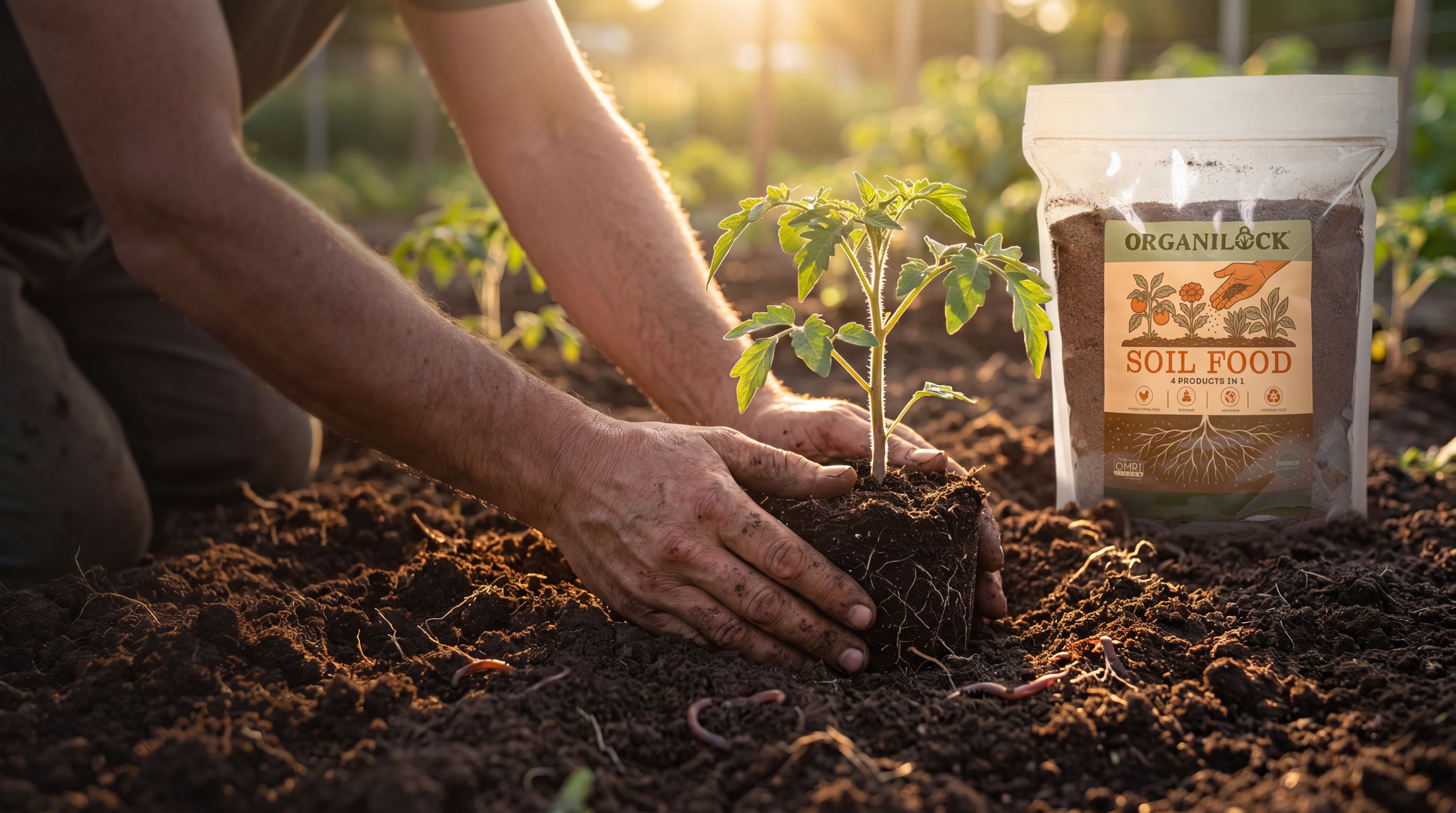
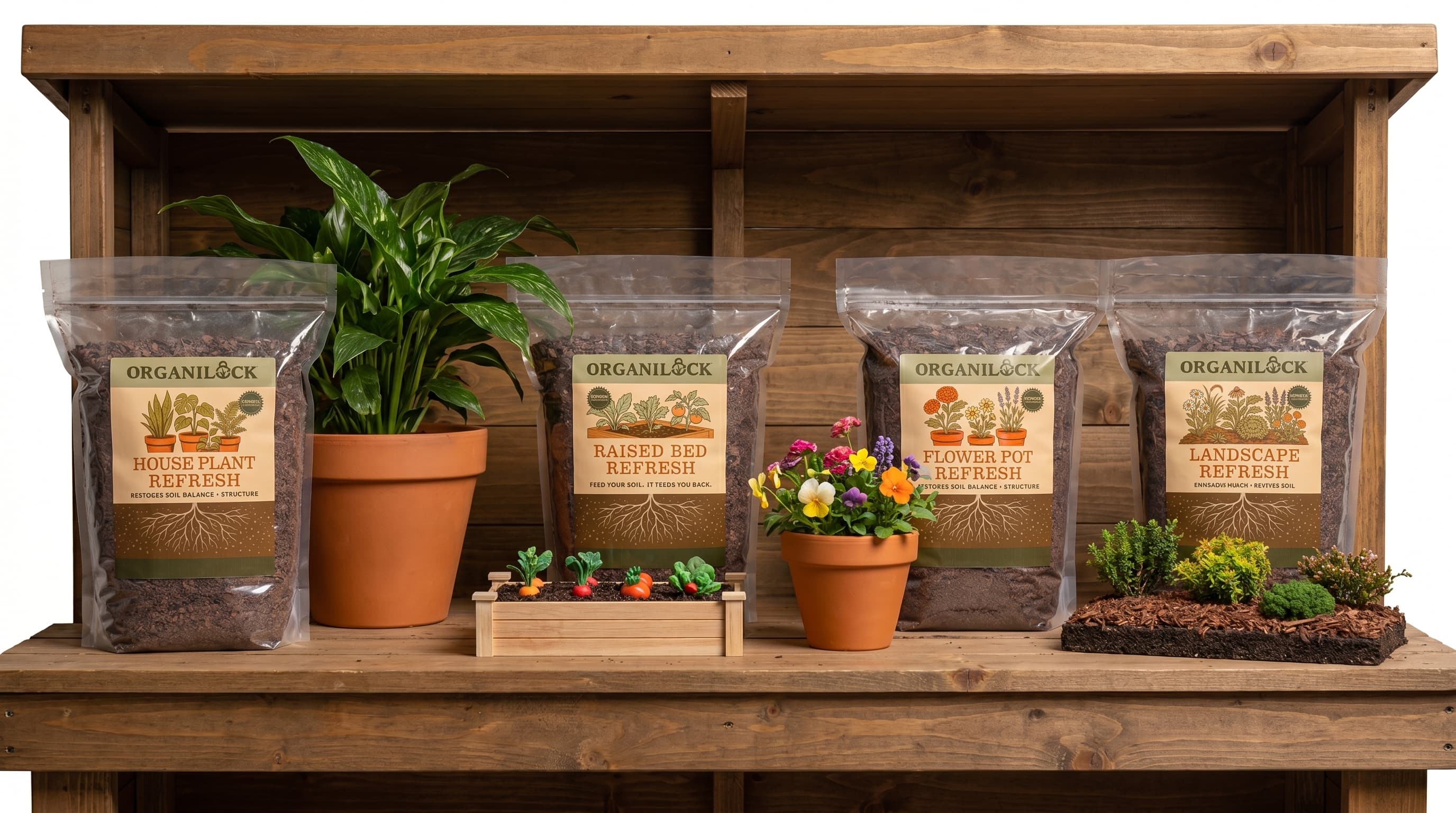
Soil amendment. Something you mix into (or sprinkle onto) the soil you already have to make it better - more life, more nutrients, better structure. It is not a soil you fill a bed or pot with; it is the upgrade. (OrganiLock's dry products - Soil Food and the Refresh line - are amendments.)
Fertilizer. A product that feeds the plant directly. An amendment can also act as a fertilizer, but its main job is building the soil so the soil feeds the plant.
Potting soil / potting mix. The growing medium you fill a container with. It is the base; an amendment is what you add to it.
Soil conditioner. A product that improves soil structure - how well it holds air, water, and roots.
Compost. Decomposed organic matter that adds nutrients and structure. A great partner to an amendment, not a substitute for one.
Inoculant. A product that adds living microbes (often just fungi) and nothing else. It introduces biology but does not feed it - which is why microbes from a bare inoculant often do not last.
On the label
NPK. The three big numbers on a fertilizer label - nitrogen (N), phosphorus (P), and potassium (K). Nitrogen drives leafy growth, phosphorus supports roots and flowers, potassium supports overall health. (Soil Food's guaranteed analysis is 4-2-1.)
Guaranteed analysis. The nutrient breakdown a product is guaranteed to contain, printed on the label.
OMRI Listed. Reviewed and listed by the Organic Materials Review Institute as allowed for use in certified-organic growing. It is not the same as "USDA Organic," which is a separate certification for the final crop. (Soil Food is OMRI Listed.)
Organic (two meanings). It can describe the ingredients (natural, carbon-based, not synthetic) or a formal certification. They are different - a product can be made from organic inputs without carrying an organic certification.
Slow-release vs. quick-release. Quick-release nutrition feeds the plant fast; slow-release feeds steadily over time (and, in living products, feeds soil microbes). Slow-release is gentler and will not burn.
The living soil
Soil biology / the soil food web. The living community in healthy soil - fungi, bacteria, and other tiny organisms that break down nutrients and trade them with plant roots. Feed it, and it feeds your plants.
Mycorrhizae. Beneficial fungi that partner with plant roots, effectively extending them to reach far more water and nutrients. There are two kinds: endomycorrhizae (which suit most vegetables and flowers) and ectomycorrhizae (which suit many trees and shrubs). Products that include both work for a wider range of plants.
Beneficial bacteria. Helpful microbes (such as Bacillus species) that make nutrients available to plants and support healthy roots.
Biochar. A stable, porous form of carbon that holds water and gives soil microbes a long-lasting place to live. Built into Soil Food and the Refresh line.
Whole-animal nitrogen. Nitrogen from a whole natural input rather than a single stripped-down meal - "whole food, not packaged food" - so it carries a fuller range of nutrients.
Regenerative. An approach that builds soil health over time instead of depleting it. Feeding the soil's biology is the heart of it.
How you use it
Top-dress. To sprinkle a product onto the soil surface around a plant (rather than mixing it in deep), then water it in.
Drench. To pour a diluted liquid feed at the root zone.
Foliar (spray). To spray a diluted liquid feed onto the leaves for fast uptake.
Leaching. When water carries nutrients down and out of the soil - fastest in containers and raised beds.
Tilth. The crumbly, workable structure of healthy soil that roots, air, and water move through easily.
Transplant shock. The stress a plant goes through when it is moved or planted, while its roots catch up. Healthy, biologically active soil helps it establish faster.