From the field
All articles
Short, useful, science-backed reads on soil health, inputs, and practice. Filter by topic, search by keyword, or sort to find your next read.
Showing 48 of 48 articles

Lesson 1 - Read Your Plants: The Old-Leaf vs New-Leaf Method
Your plants are talking to you all the time. A yellow leaf, a purple stem, a scorched edge, a stunted tip - each is a signal, and once you learn to read them you can catch a problem early and respond

Lesson 4 - The Raised-Bed Year: Seasonal Care
Great beds are not built in a weekend - they are tended across a year, in a rhythm that works with the seasons. Once you know that rhythm, raised-bed gardening becomes far less guesswork and far more

Lesson 4 - Keeping Containers and Houseplants Thriving
Containers and houseplants reward a little rhythm just as garden beds do - the difference is that their year runs by the pot and the season and the light, not by the garden calendar. This final lesson

Lesson 1 - The Long Game: Why Woody and Perennial Plants Are Different
Trees, shrubs, and perennials are the long-term residents of your garden - the bones of the landscape that, planted and cared for well, can outlive the gardener who put them in the ground. That perman

Lesson 4 - The Lawn and Landscape Year: Seasonal Care
A great lawn and landscape are tended across the whole year, in a rhythm that works with the seasons rather than against them. Once you know that rhythm - and one crucial detail about which grass you

Lesson 2 - Why Your Plant Looks Hungry (and It Is Often Not a Shortage)
Here is the most useful and most counterintuitive idea in this whole course: when a plant looks hungry, it is often not actually short on the nutrient it appears to be missing. The nutrient is frequen

Lesson 3 - Common Lawn and Landscape Problems and How to Fix Them
Every lawn and landscape runs into trouble - thin patches, weeds creeping in, plants that sulk, areas that just will not thrive. The encouraging news is that most lawn and landscape problems trace bac

Lesson 3 - Find Your Situation
OrganiLock keeps things simple with a small, purposeful family of products, and picking the right one comes down to a single question: where are you growing? This lesson matches your situation to the

Lesson 2 - The One Rule: Feed the Soil
If you remember only one thing from this entire Quick Start, make it this: feed the soil, and the soil feeds the plant. That single rule is the heart of how OrganiLock works and the simplest guide you

Lesson 1 - Why Soil Matters (the 2-Minute Case)
Welcome - you are about to learn the one idea that makes everything else in gardening easier. It takes about two minutes, and once it clicks, a lot of the confusion around fertilizers, products, and p

Lesson 3 - Fall: Feed the Soil for Next Year
Fall is the secret season of the living-soil gardener - the most overlooked, and arguably the most important, time of the whole year. While most people are winding down and tidying up, the gardener wh

Lesson 2 - Summer: Feed and Maintain
Summer is the garden at full tilt - the season of peak growth, peak harvest, and peak demand on your soil. The foundation you built in spring is now doing its work, feeding your plants as they hit the

Lesson 3 - Common Raised-Bed Problems and How to Fix Them
Even a well-built bed runs into trouble eventually - production slows, plants look off, the soil stops behaving. The good news is that raised-bed problems are usually a small, recognizable set, and mo

Lesson 3 - Caring for Established Trees, Shrubs, and Perennials
Once a tree, shrub, or perennial is established - past its first year or two and growing on its own - its care becomes pleasantly low-key, which is one of the joys of these long-lived plants. But "low

Lesson 4 - The Landscape Year and the Long View
Trees, shrubs, and perennials live on a longer clock than anything else in the garden, and caring for them well means thinking in years and decades, not weeks. This final lesson pulls the guide togeth

Lesson 3 - How and How Much to Apply
You have chosen your product; now let us put it to work. Applying OrganiLock is simple and, with the soil-building amendments, refreshingly forgiving. This lesson covers the how and the how-much for e

Lesson 2 - Which Product for Your Situation
Now that you know what each product does, choosing the right one is genuinely easy - it comes down to your situation. This lesson is the decision guide: tell it where you grow and what you want, and i

Lesson 1 - The OrganiLock Product System: What Each Product Is For
OrganiLock keeps its lineup small and purposeful on purpose, so that choosing is easy and you are never lost in a wall of confusing options. This course is the practical guide to picking the right pro

Lesson 4 - Healthy Soil as Your First Defense Against Pests and Disease
When a gardener spots a pest or a spot of disease, the instinct is to reach for a spray. But the most effective, lowest-effort defense against pests and disease starts long before that, in the soil an

Lesson 3 - Fixing Soil Problems: Compaction, Drainage, and Low Organic Matter
Sometimes the problem in your garden is not a nutrient at all - it is the physical home your plants are trying to live in. A perfectly fertilized plant will still struggle in soil that is hard as a br

The Biology-First Approach (and Where OrganiLock Fits)
If the soluble-only approach has hidden costs, what is the alternative? It is not "no nitrogen" - plants need nitrogen, and plenty of it. The alternative is nitrogen delivered the way nature delivers

How Nutrients Work Together
This is the lesson most fertilizer programs skip, and it is the most important one in the module. Up to now we have looked at nutrients one at a time, as if each acted alone. They do not. The presence

The Supporting Cast: Secondary and Micronutrients
Seventeen elements are essential to plants, meaning a plant cannot complete its life cycle without each one. We have covered the three macronutrients - nitrogen, phosphorus, potassium. This lesson cov

Phosphorus and Potassium: The Other Two Macros
Module 2 spent three lessons on nitrogen because it drives the most growth and the most trouble. But nitrogen is only the N in N-P-K, and a plant flooded with nitrogen and short on everything else wil

Same Molecule, Different System
Lesson 4 ended on a puzzle: if a nitrate ion is a nitrate ion no matter where it came from, why would the source of nitrogen matter? This lesson is the answer, and it is the heart of the whole course.

Reading Your Soil Test and Labels
You now understand what soil is, how its biology works, and what every nutrient does. This lesson turns that understanding into something you can use on a Tuesday afternoon, because two documents stan

Feeding Different Plants
All the science in this module leads to one practical question: what does the plant in front of you actually want? There is no single right way to feed, because a tomato, a carrot, a blueberry bush, a

Building Living Soil (Putting It All Together)
Every lesson in this course has pointed, in its own way, to a single conclusion: the most powerful thing you can do for your plants is build a living soil. Not chase a number, not dump a nutrient, not

What Soil Actually Is
Most people picture soil as dirt: inert brown stuff that holds plants upright. That picture is wrong in a way that changes everything about growing. Soil is a living, structured system - by some measu

Nitrogen, the Master Nutrient
Nitrogen drives more plant growth - and causes more confusion, waste, and water pollution - than any other nutrient. It is the element behind lush green leaves, the one most fertilizers are really sel

Organic Matter and Carbon: The Engine of Fertility
In Lesson 1 we said organic matter is only about 5% of a healthy soil by volume, yet it runs the other 95%. This lesson is about why. If there is one number to watch on a soil test and one thing to bu

The Living Soil: Meet the Soil Food Web
A single teaspoon of healthy soil can hold more living organisms than there are people on Earth - billions of bacteria, yards of fungal thread, and a whole food chain of larger creatures. This hidden

Which OrganiLock Product Is Right for You?
The short version OrganiLock makes three things, and they work as a system: Soil Food rebuilds tired or depleted soil from the ground up - the deep foundation. It also works as a top-dress to feed pl

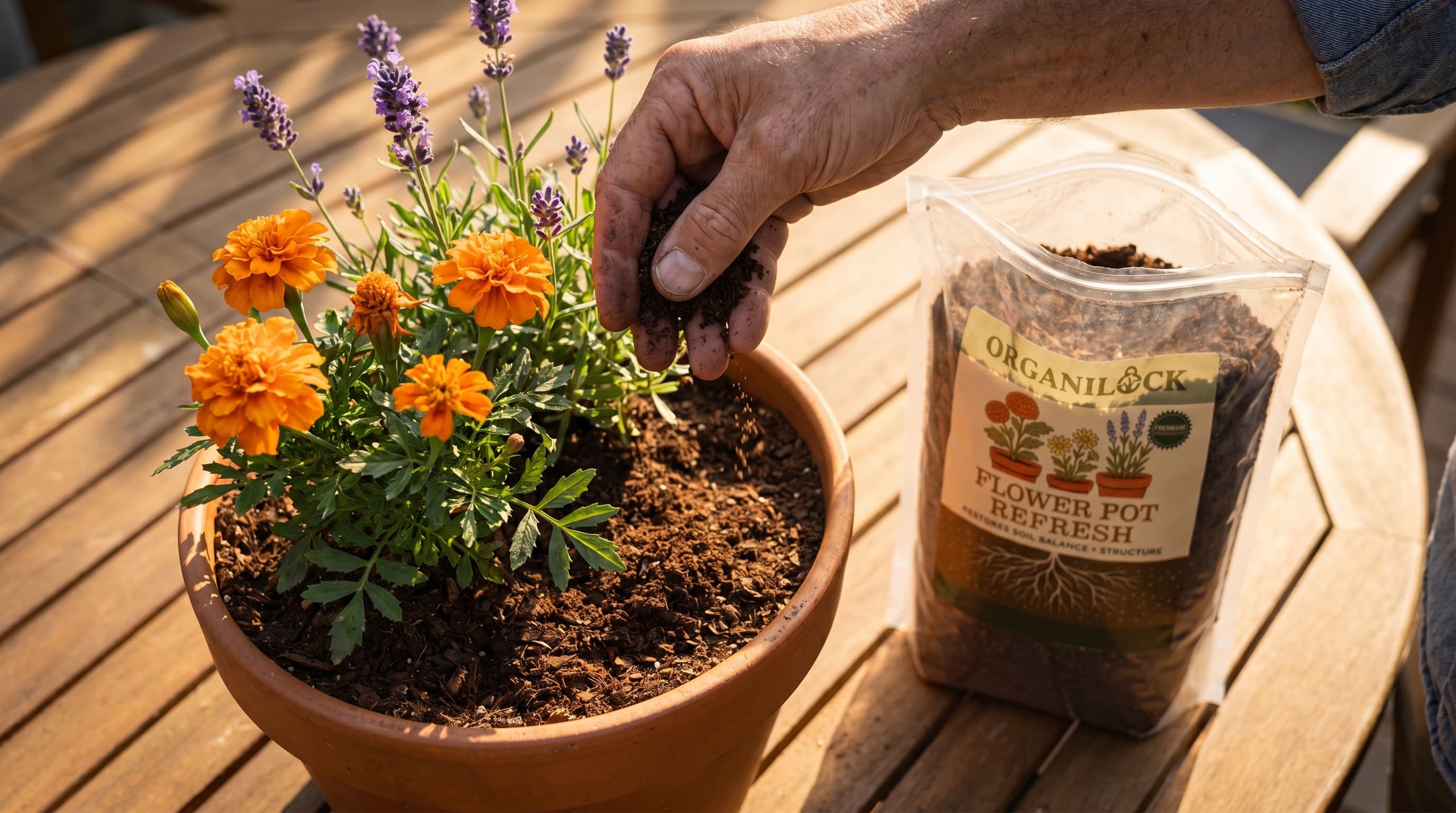
Flower Pot Refresh: Keep Containers Thriving
Why containers lose steam A pot is a closed little world. There's only so much soil, the roots fill it fast, and every time you water, nutrients run straight out the drainage holes. Potting mix is spe
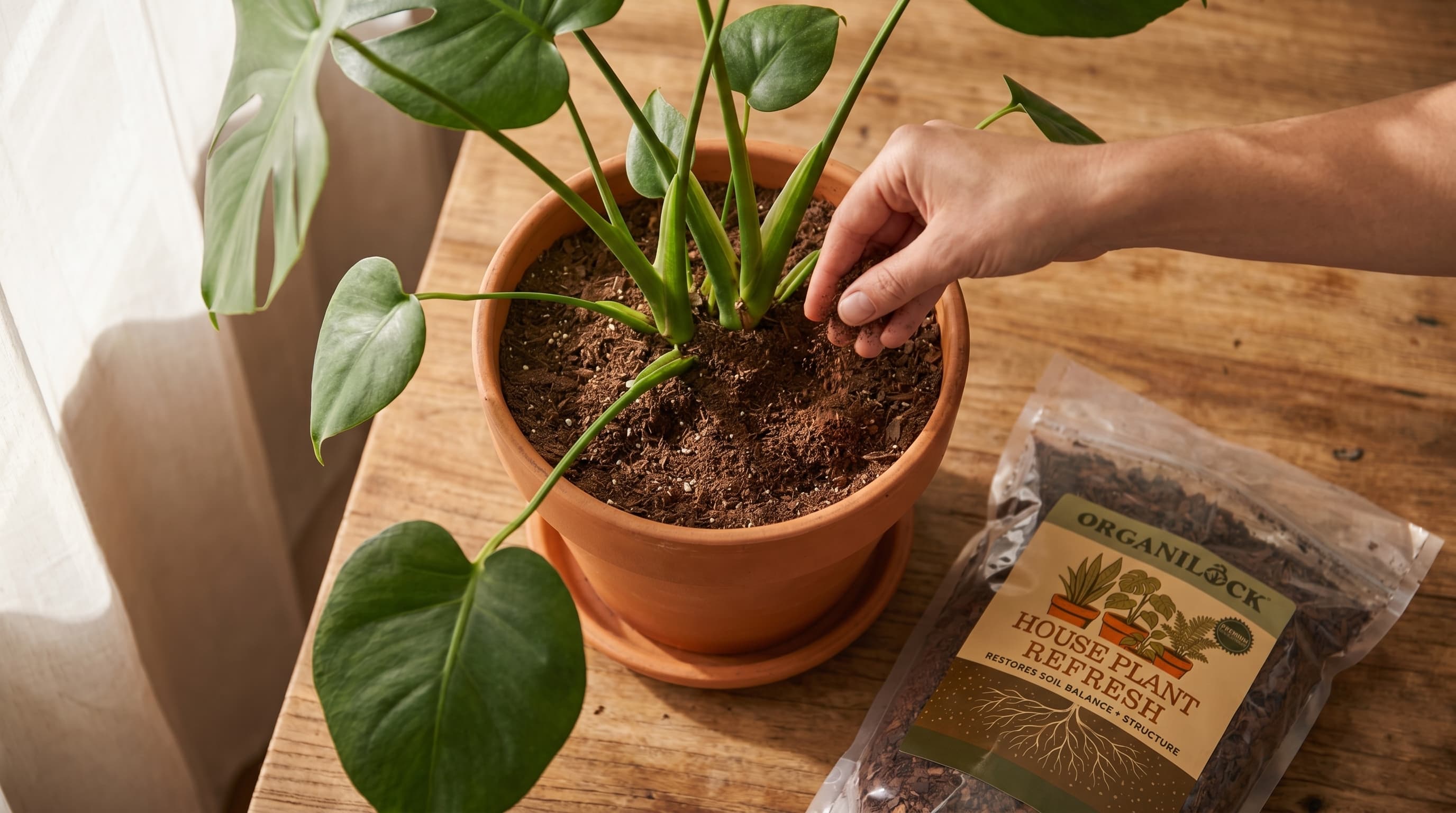
House Plant Refresh: Feed Your Indoor Plants
Why houseplant soil runs out Indoor potting mix has no way to renew itself. Outdoors, leaves fall, worms work, and rain brings fresh inputs; in your living room, none of that happens. Over months, the
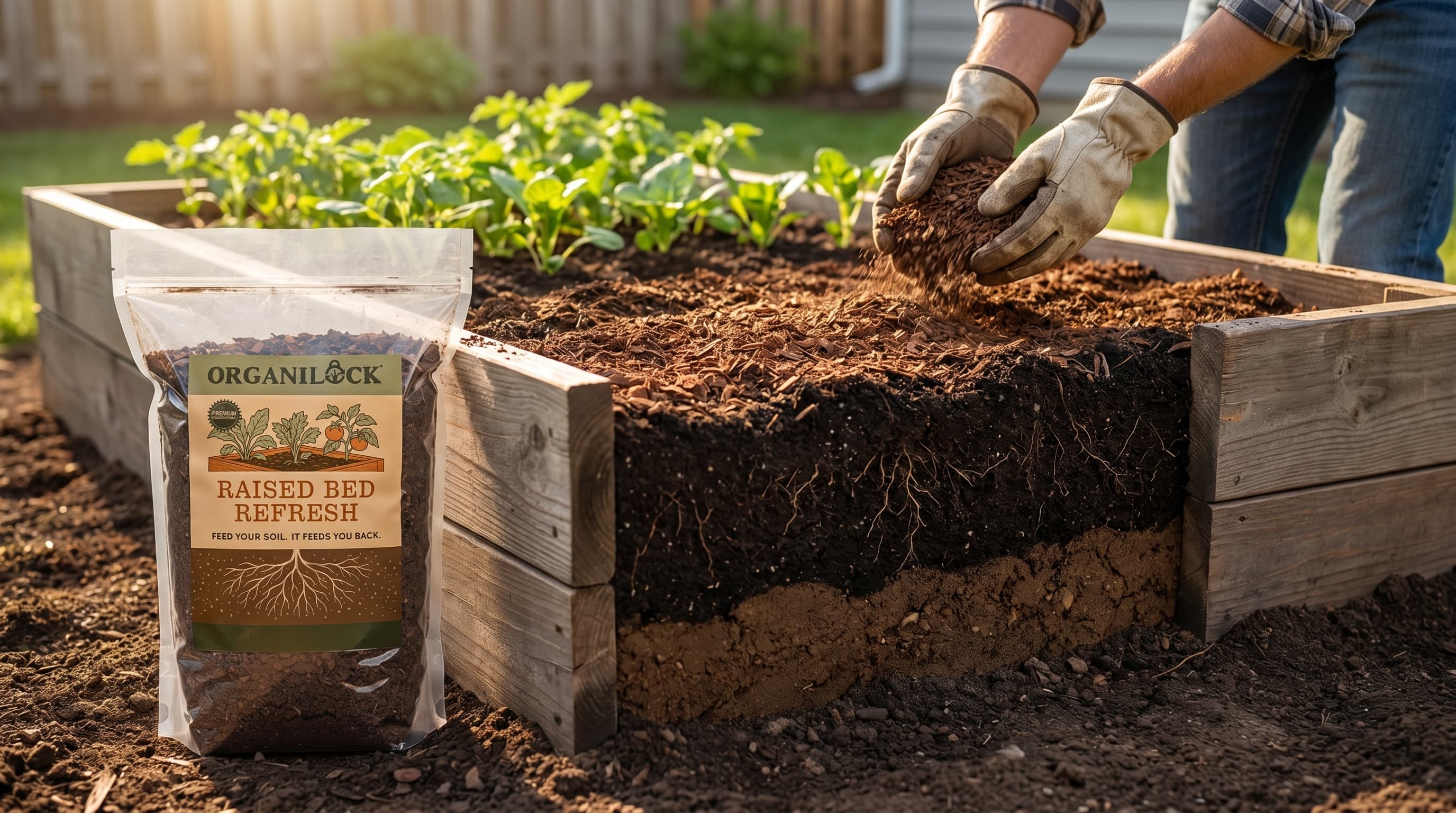
Raised Bed Refresh: How to Re-Feed Your Beds
Why raised beds need re-feeding Raised beds are the best way to grow a lot of food in a small space - great drainage, fewer weeds, soil you control, and a longer season. But that same great drainage i
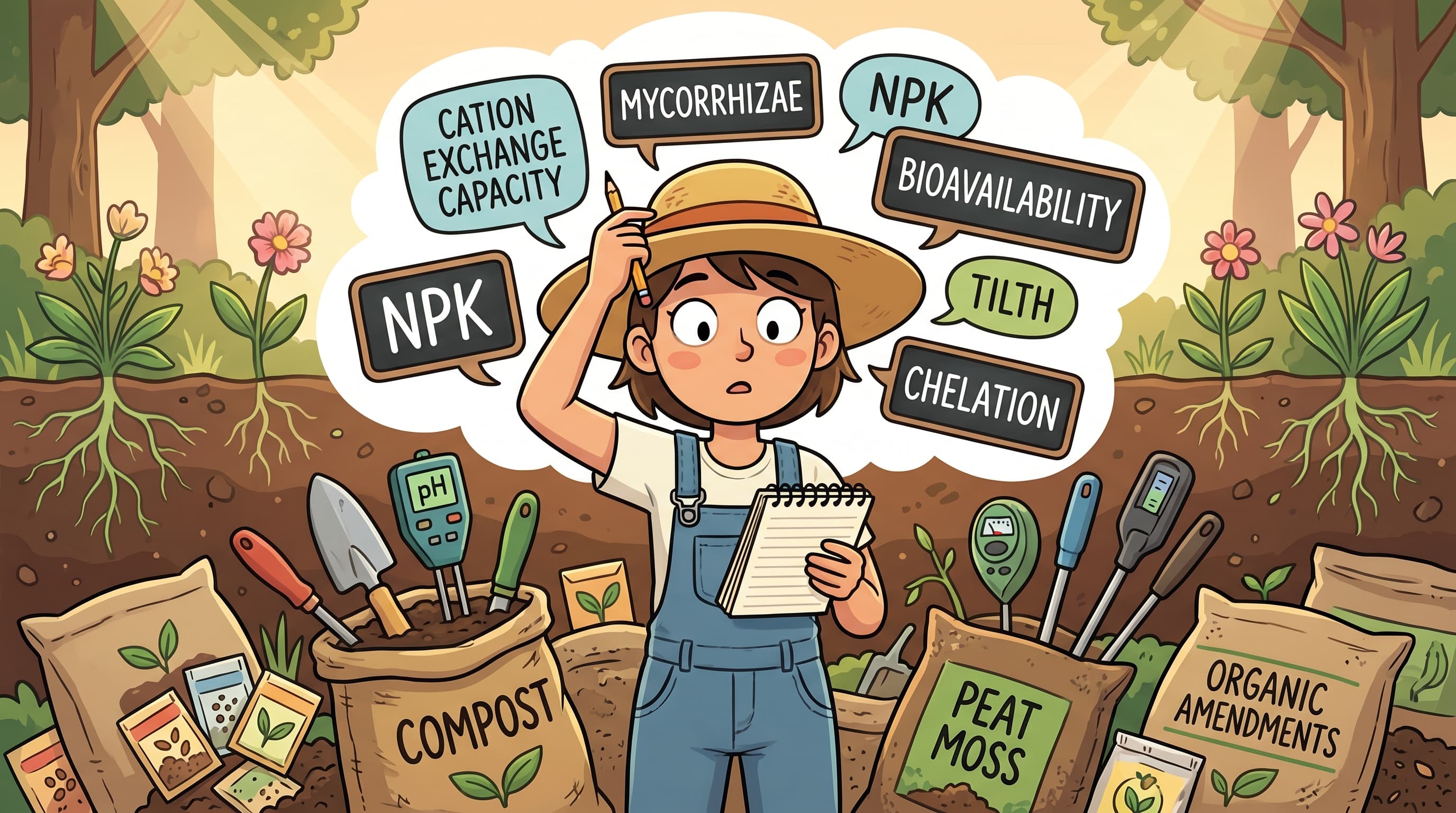
Soil and Growing Terms: A Plain-English Glossary
What the products are Soil amendment. Something you mix into (or sprinkle onto) the soil you already have to make it better - more life, more nutrients, better structure. It is not a soil you fill a b
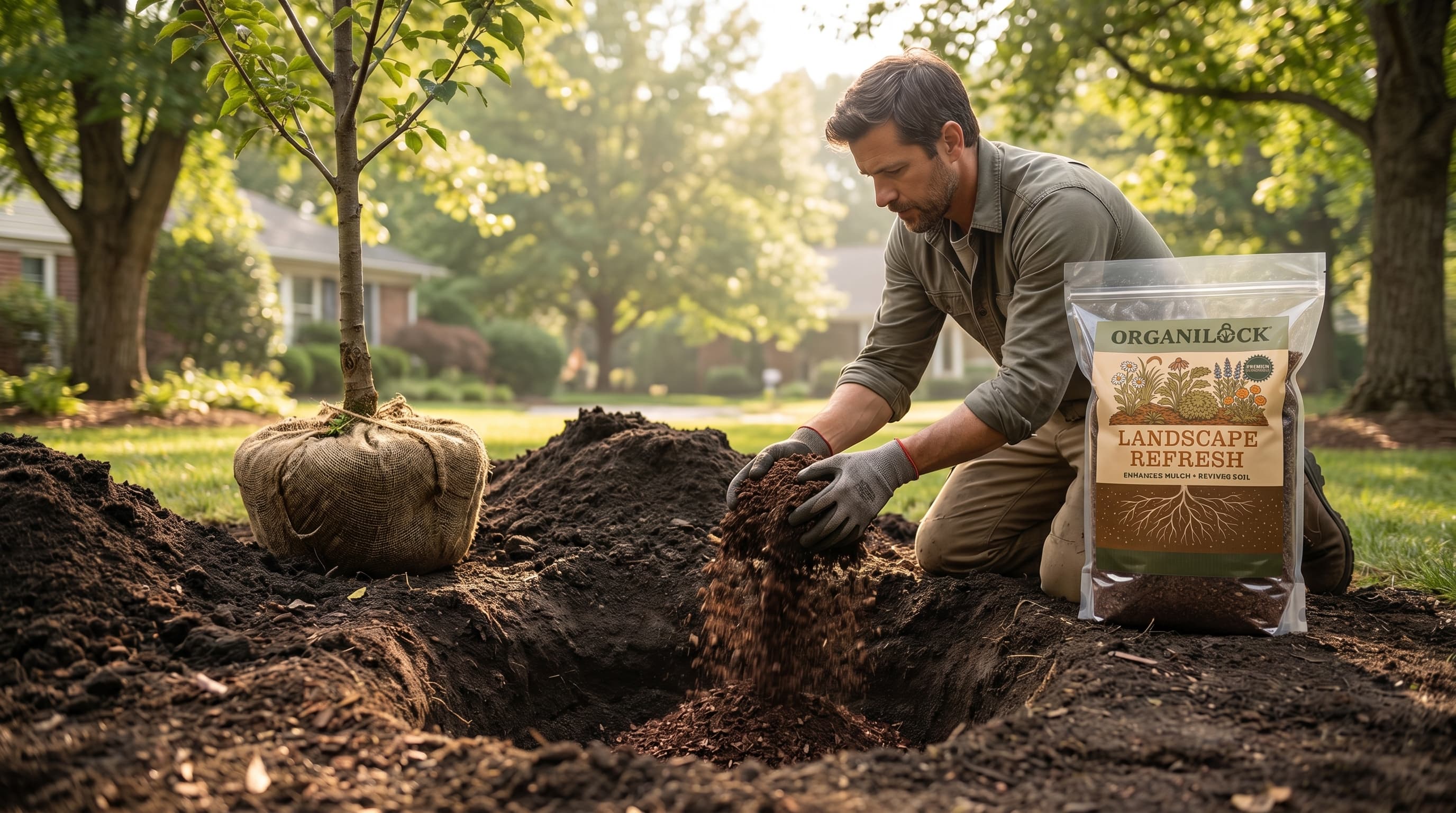
Landscape Refresh: Strong Starts for Trees and Shrubs
Why new plantings struggle A tree or shrub's first year is the hard one. When you plant, the soil around the roots is disturbed and often compacted - low on the biology a young root system needs right
The OrganiLock Approach: Why We Feed the Soil First
The big idea: feed the soil, not just the plant Most fertilizers feed your plants directly, for a few weeks at a time. OrganiLock does something different: we feed the living biology in your soil, and
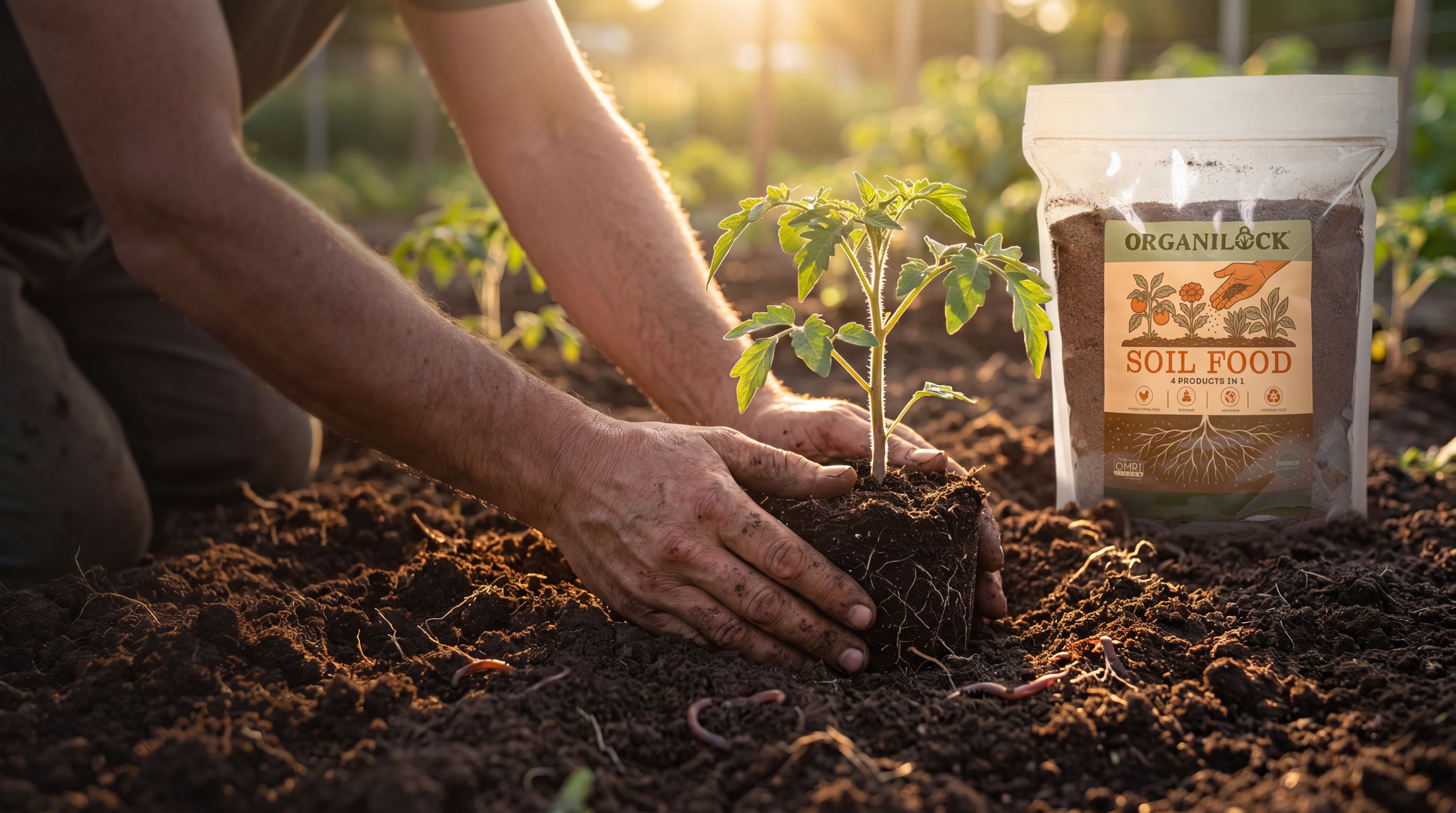
Product Fundamentals: The OrganiLock Approach
The problem we solve Most growing advice feeds the plant - soluble synthetic fertilizers that green things up fast - but does nothing for the soil. Over time the soil's living biology fades, and you'r

Soil Food: Feed the Soil, Feed Your Plants
Meet Soil Food Soil Food is OrganiLock's flagship - a dry, organic soil amendment you mix into your soil or sprinkle on top. Instead of feeding your plants for a few weeks like a synthetic fertilizer,
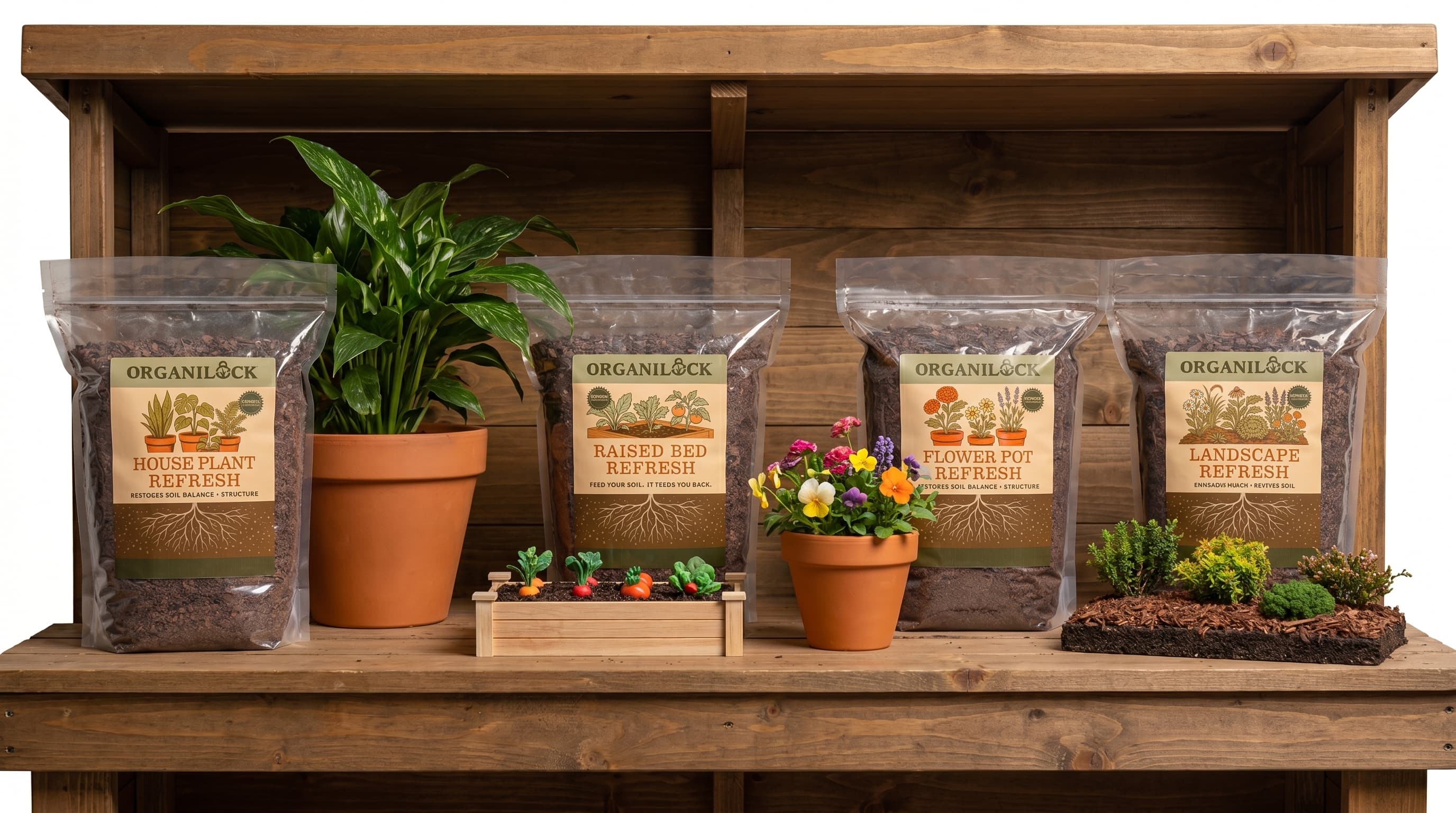
Product Fundamentals: Refresh
The problem we solve Soil gets tired. Every season of growing and watering pulls nutrients and biology out of it - but a gardener doesn't want to dig out a bed or repot every container to fix that. Re
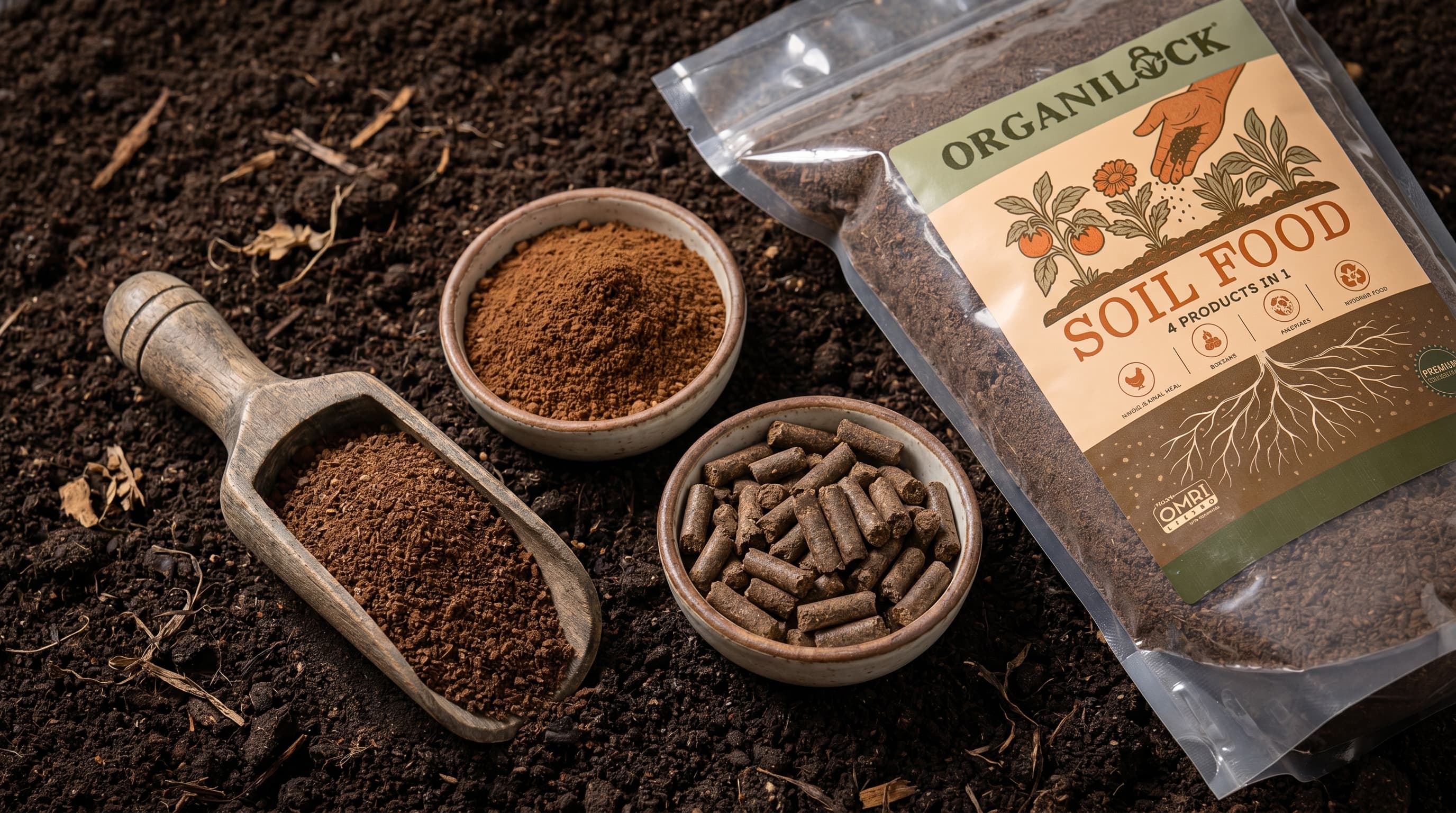
Product Fundamentals: Soil Food
What Soil Food is OrganiLock's flagship - a dry, whole-animal-based biological soil amendment and organic fertilizer (it works mixed into the soil or top-dressed on top). It is OMRI Listed for organic
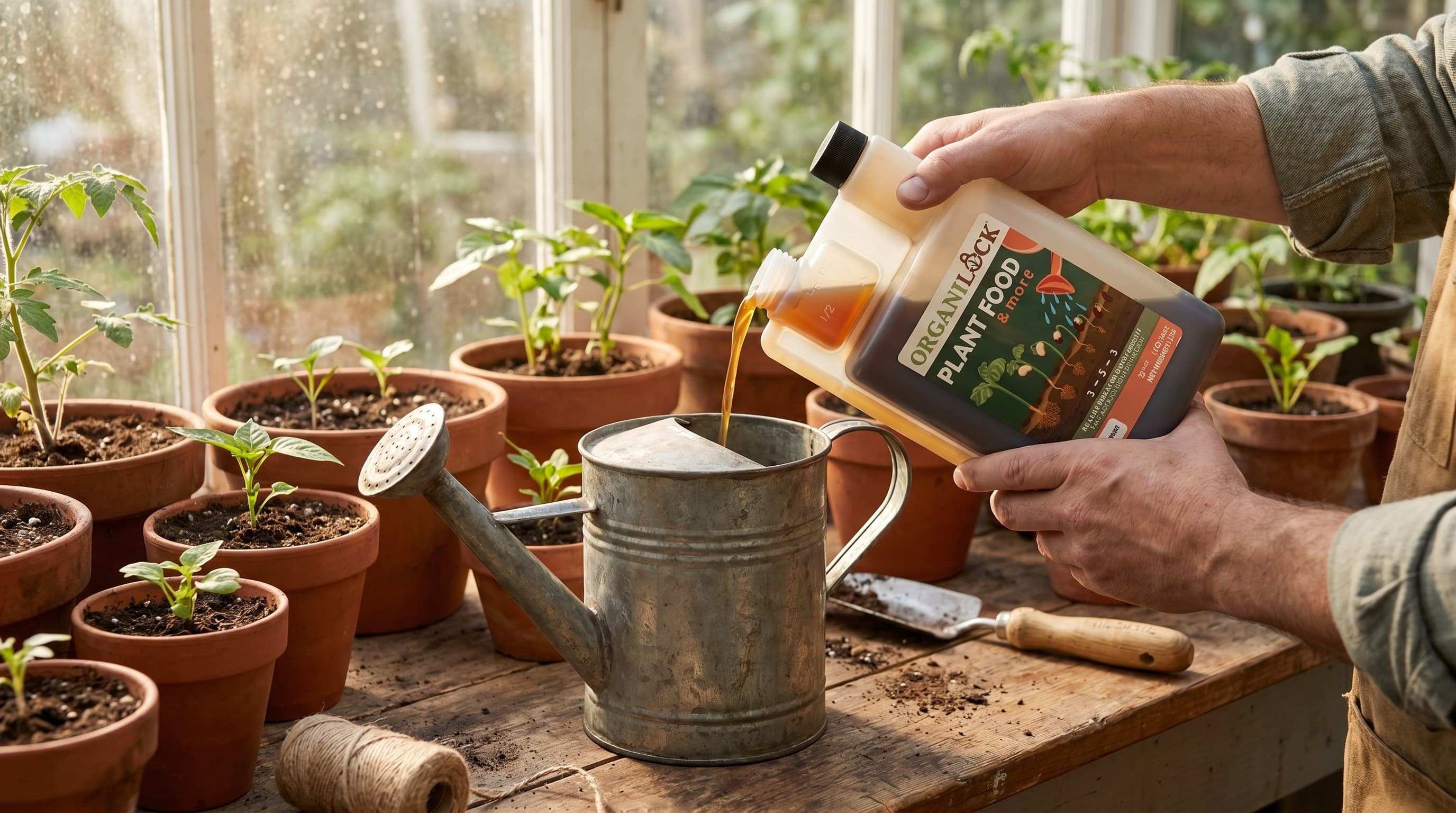
Plant Food: A Fast, Direct Feed for Your Plants
Meet Plant Food Plant Food is OrganiLock's fast-acting liquid feed - a concentrate you mix with water and either spray on the leaves or pour at the roots. Where Soil Food builds your soil over the sea
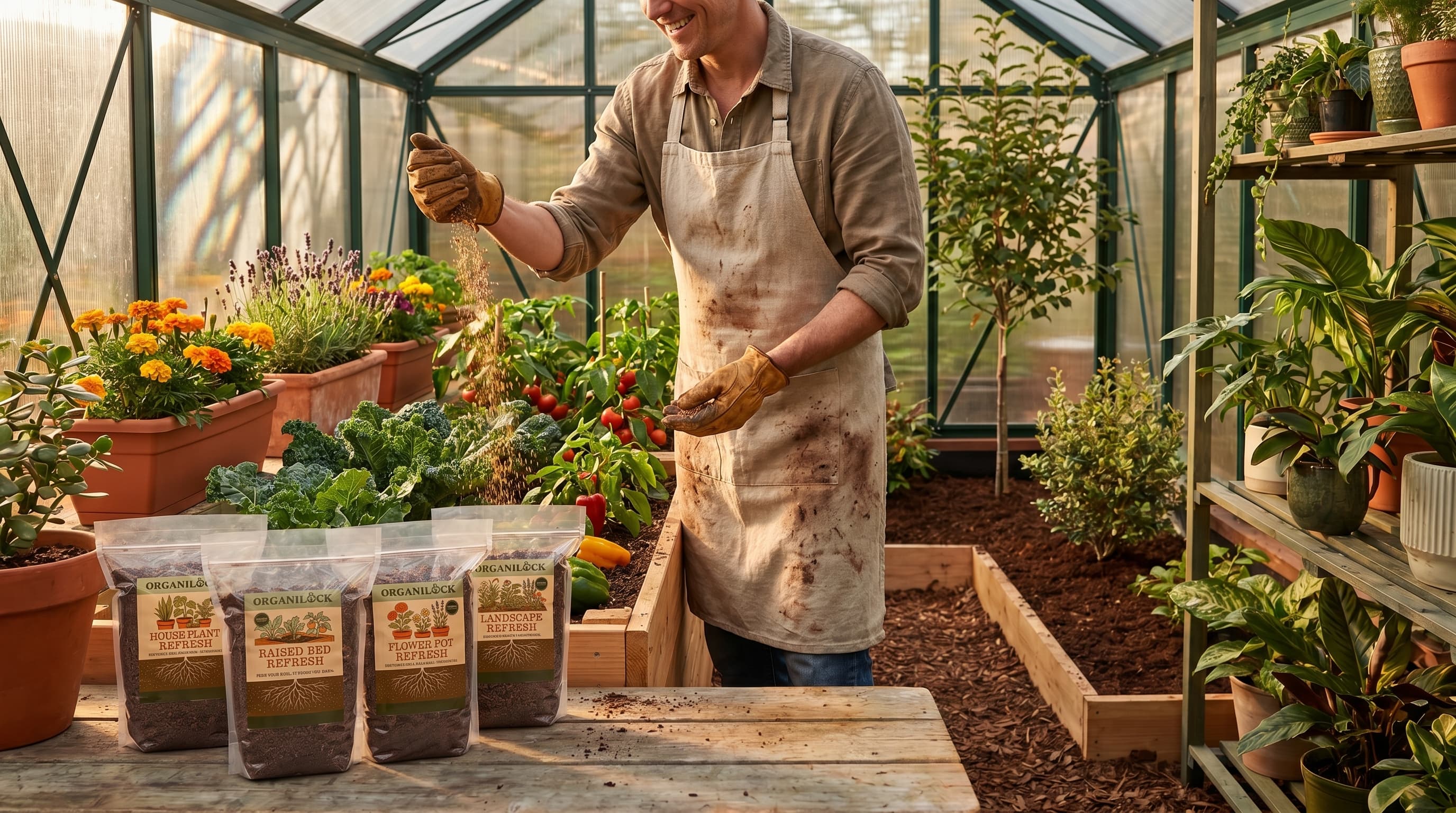
Refresh: Renew the Soil You Already Have
Re-feed the soil you already have Your soil works hard. Every season of growing and watering pulls nutrients and living biology out of it. Refresh is the easy way to put them back - a dry, organic ame
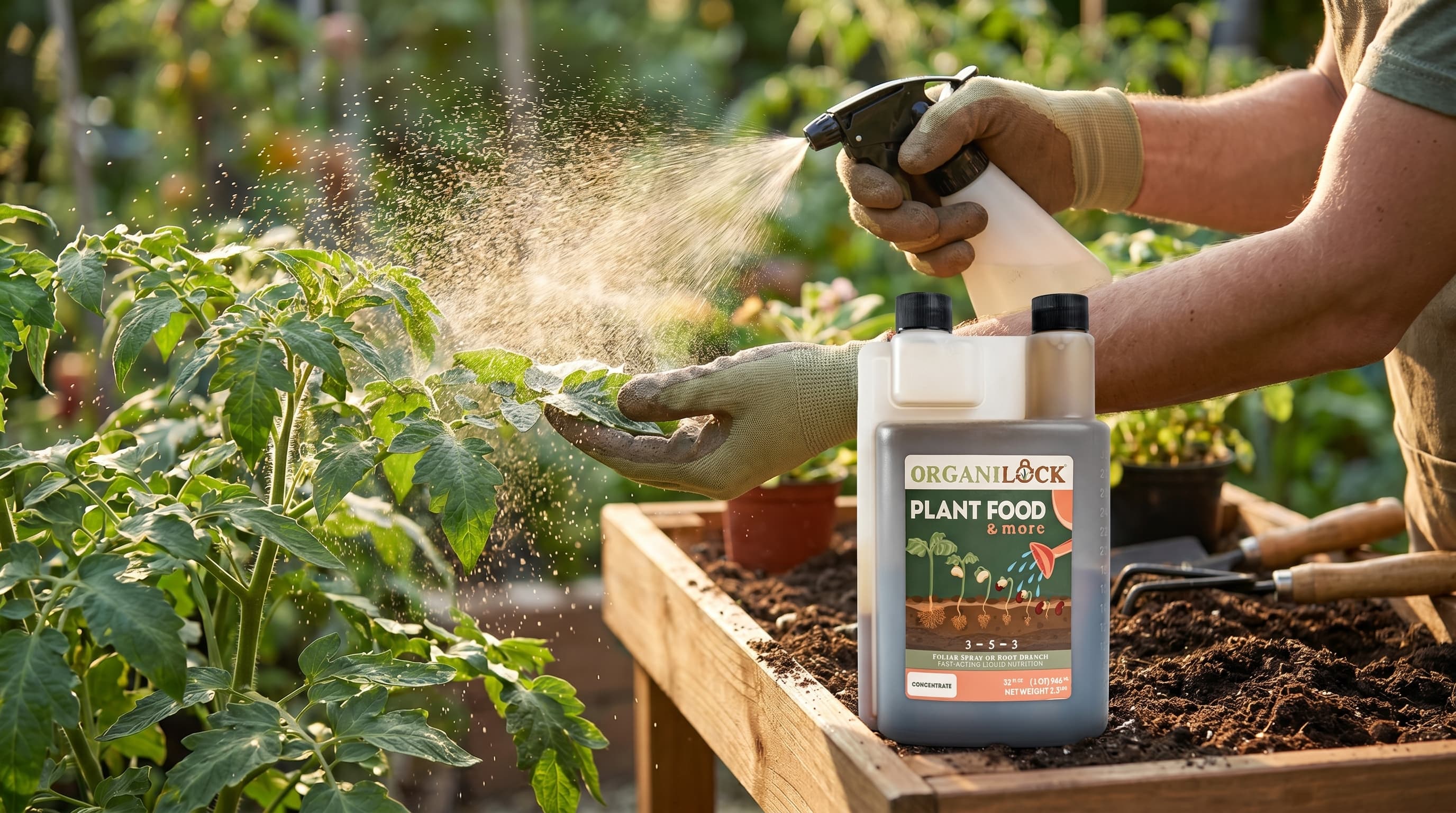
Product Fundamentals - Plant Food
The problem we solve Soil Food builds a living soil that feeds plants all season - but sometimes a grower wants a faster, more direct response: a transplant settling in, a mid-season push, a houseplan
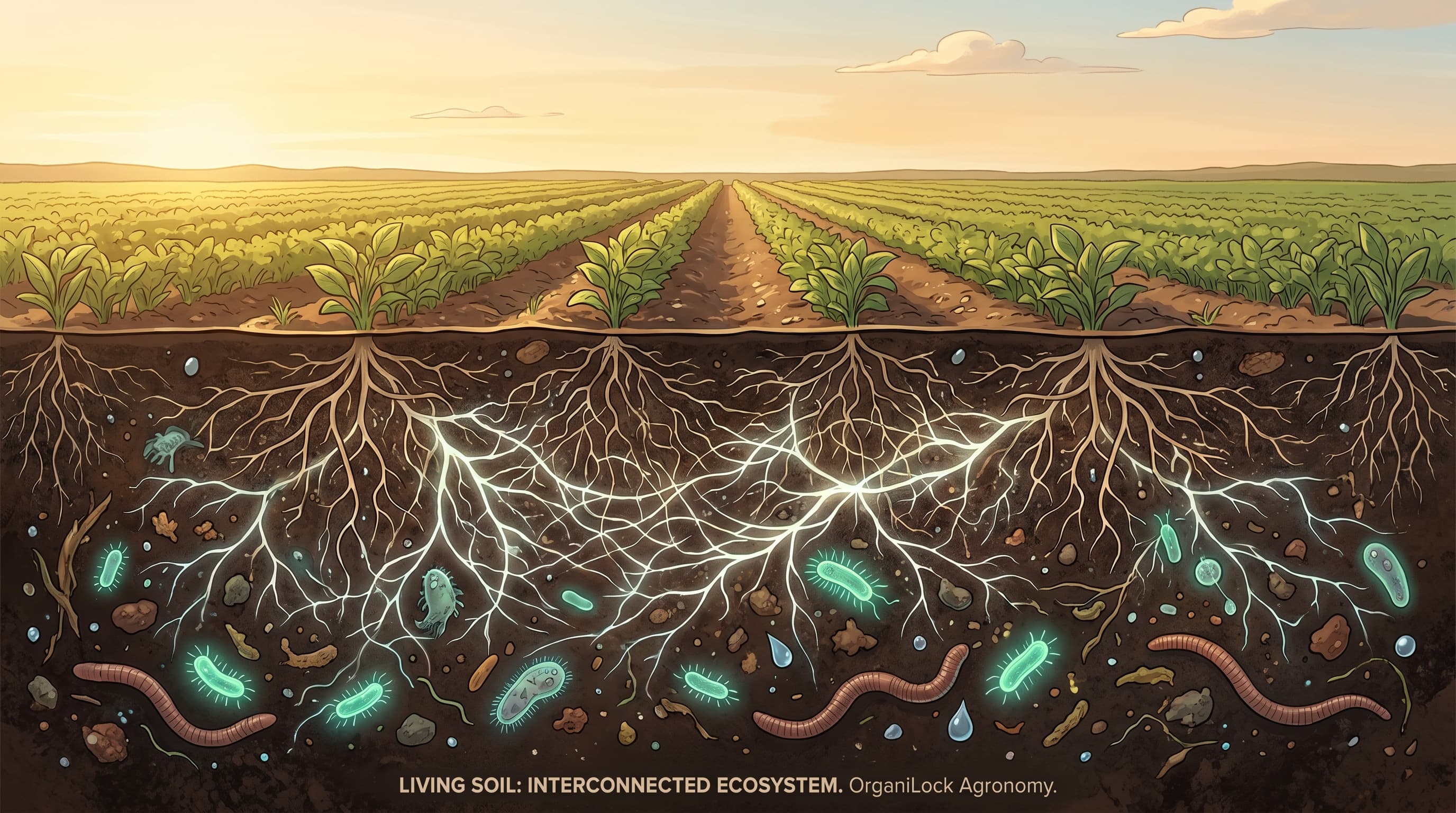
How Soil Microbiology Drives Nutrient Uptake
Most farmers and growers think of feeding plants as a simple math problem: add fertilizer, get growth. But the real story is far more interesting — and far more alive. The truth is that healthy plants
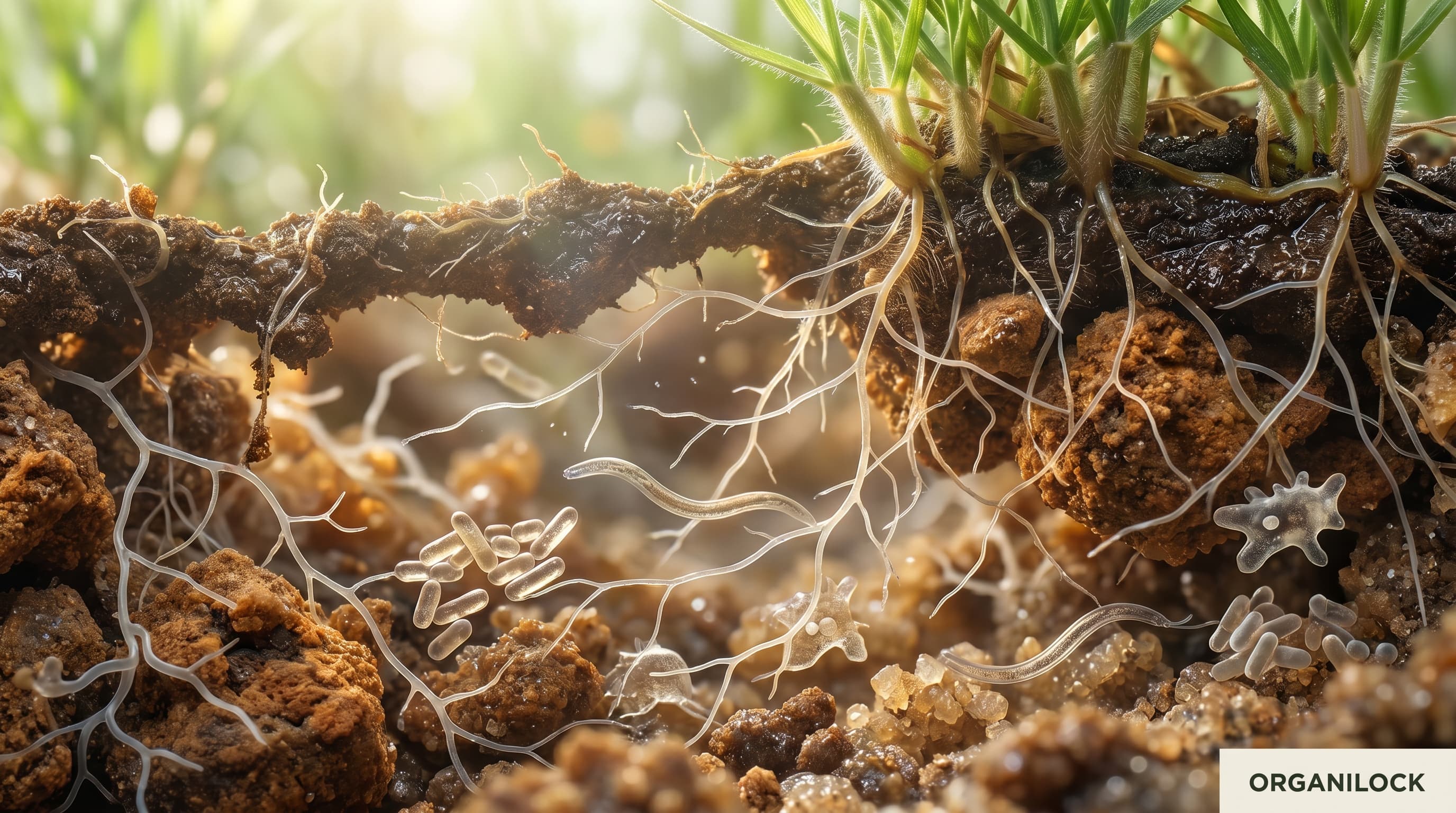
The Life in Your Soil: How Soil Biology Feeds Your Plants
Most conversations about plant growth start with nutrients — nitrogen, phosphorus, potassium — and the bags or bottles that deliver them. But beneath every healthy garden, farm, or lawn is something e