Why new plantings struggle
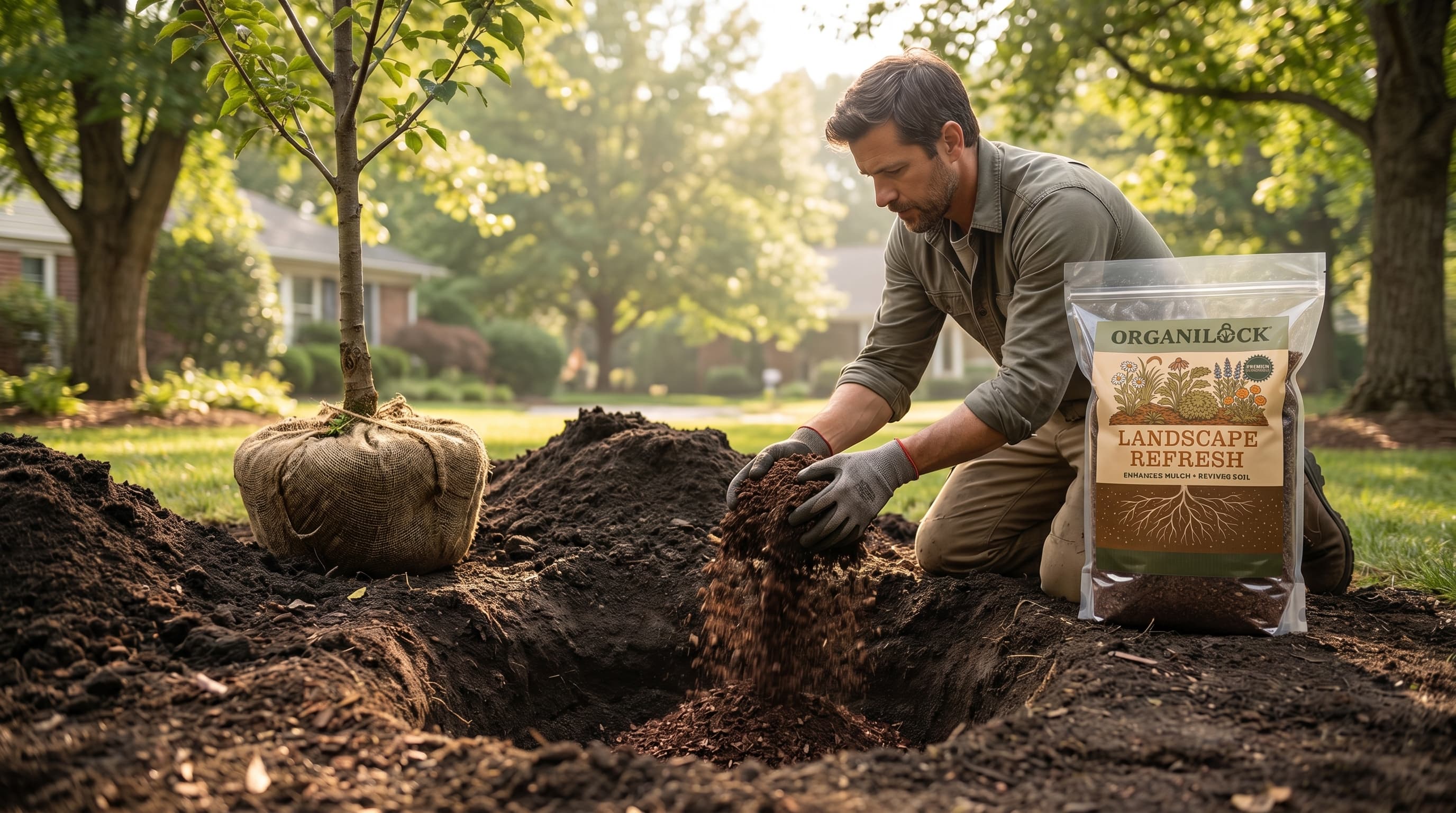
A tree or shrub's first year is the hard one. When you plant, the soil around the roots is disturbed and often compacted - low on the biology a young root system needs right when it needs it most. That's why so many new plantings sulk, drop leaves, or die back: not bad plants, just tired soil and a rough transition. Landscape Refresh feeds that soil to support strong establishment, and it helps tired soil under established trees and beds too.
What goes wrong in landscape soil
- It's compacted and disturbed around new plantings, so roots struggle to spread.
- Transplant shock - the roots can't take up water and nutrients fast enough to match the top growth.
- The biology is low exactly when new roots need partners to find water and nutrients.
- Under established trees and shrubs, years of growth leave the soil depleted and hard.
How to use Landscape Refresh
Landscape Refresh is a dry, granular amendment tuned for landscape use - easy to broadcast, low dust, and safe around roots. Its coarser particles add tilth as they feed.
- At planting: mix Refresh into the planting hole or the backfill soil as you set the plant.
- For established plants: top-dress it around the root zone (out toward the drip line, not piled against the trunk) and scratch it into the surface.
- Water it in well.
Apply as a Season Reset each growing season. There's no real burn risk, so it's safe to use right at planting time.
Troubleshooting common landscape problems
- New tree or shrub dropping leaves or sulking after planting? Transplant shock. Water it deeply and consistently, mix or top-dress Refresh into the root zone to jump-start establishment, and mulch.
- Established plant looking tired, thin, or slow? Depleted, compacted soil. Top-dress Refresh around the drip line and water it in.
- Water pools or runs off instead of soaking in? Compacted soil. Loosen the surface, work in Refresh, and add a mulch ring to hold moisture.
- Grass or weeds crowding a young tree? They compete for water and nutrients. Clear a mulched ring around the base (keeping mulch off the trunk).
Tips and tricks for strong plantings
- Dig the hole 2 to 3 times as wide as the root ball, but no deeper - set the plant so the root flare sits at or just above grade.
- Don't bury the trunk. Keep soil and mulch off the bark.
- Mulch in a ring, not a volcano - a 2 to 3 inch layer out to the drip line, pulled back a few inches from the trunk. Piled against the trunk it invites rot.
- Water new plantings deeply and regularly through the first full season - that's when establishment is won or lost.
- Right plant, right place - match the plant to the light, soil, and space so it thrives without a fight.
- Stake only if a tree truly needs it, and remove stakes after the first year so the trunk strengthens.
A simple seasonal rhythm
- Spring: feed beds and around trees and shrubs as growth starts; a good window for new plantings in many regions.
- Summer: keep new plantings watered deeply and maintain the mulch ring.
- Fall: a great time to plant (roots establish before winter); top-dress established plants going into dormancy.
- Winter: mulch protects roots; plan next season's additions.
How much you need
A 2 cu ft bag covers about 48 sq ft. For an exact amount, use the OrganiLock calculator. Need bulk by the cubic yard for a big job? Email sales@organilock.com.
Common questions
- New plantings or established? Both - mix it into the hole at planting, or top-dress around the root zone of established plants.
- When do I apply? At planting any time you plant, plus a seasonal top-dress for established beds and trees.
- Around mature trees? Yes - top-dress out toward the drip line, where the feeder roots are, not against the trunk.
- Big project? Bulk is available by the cubic yard - email sales@organilock.com.
Pair it with
Landscape Refresh supports establishment and feeds landscape soil. For a deeper soil rebuild on a tough site, Soil Food is the concentrated foundation. For a fast boost to a stressed transplant, Plant Food is the quick liquid feed. See the product page: Landscape Refresh.