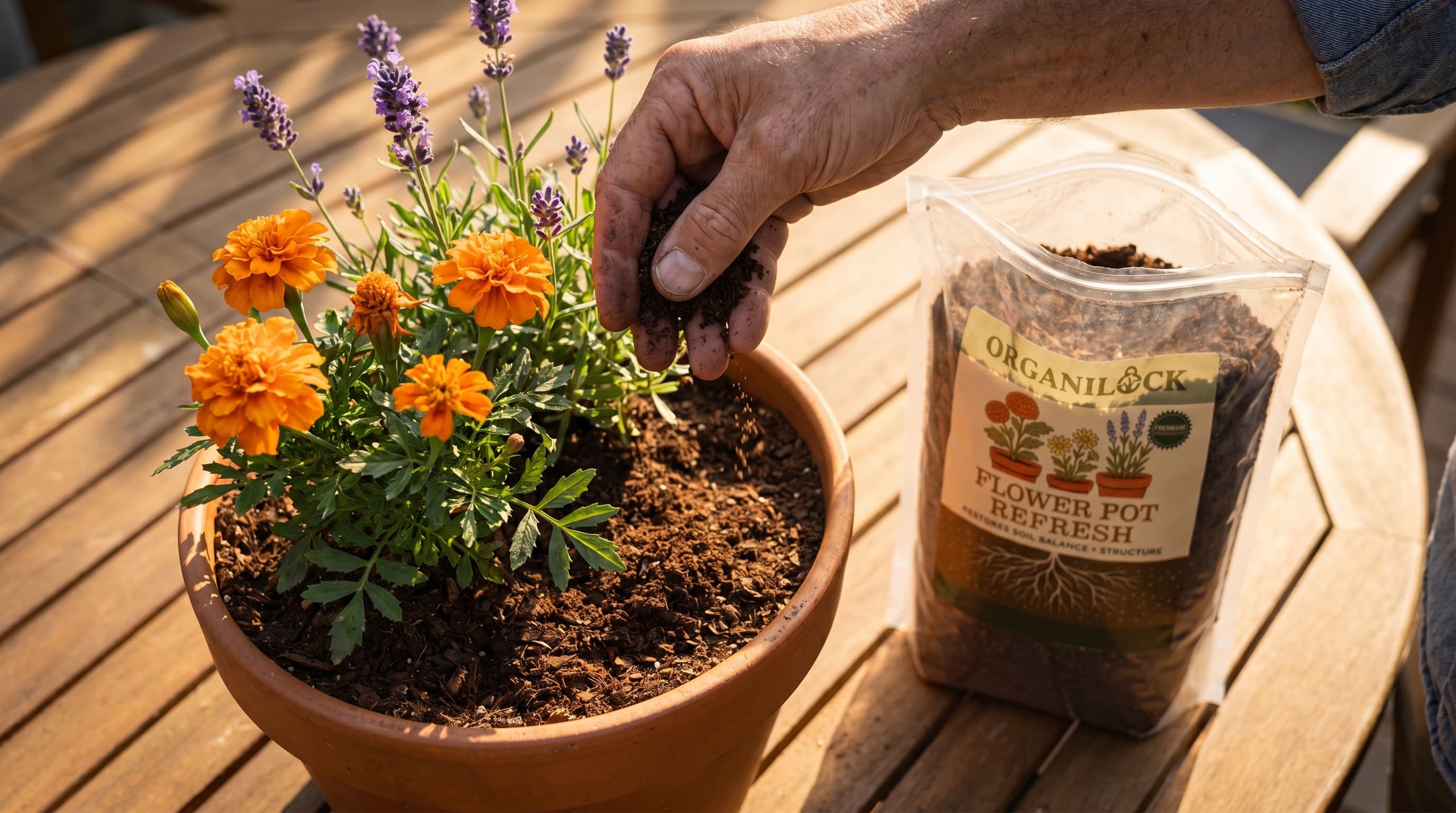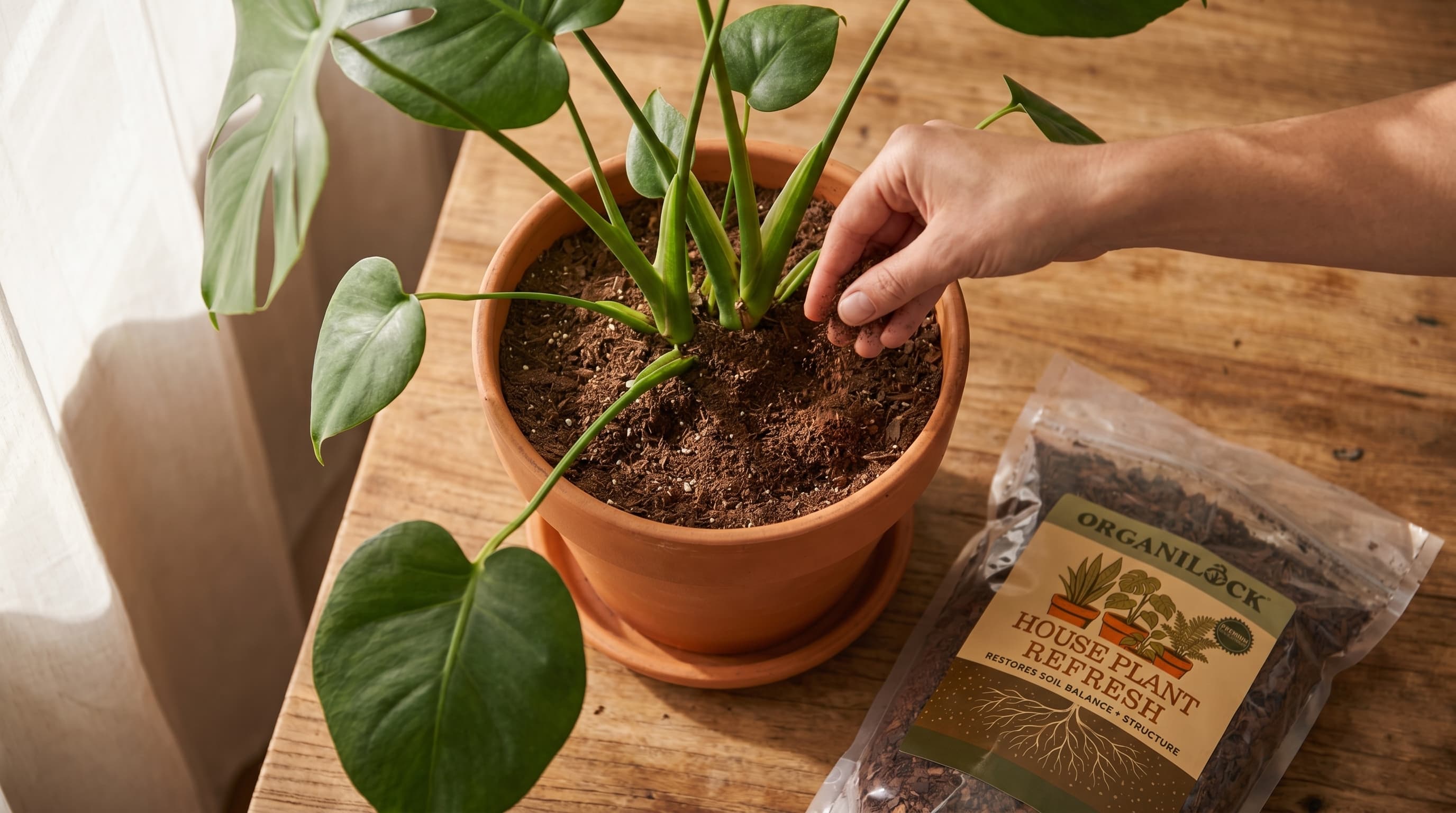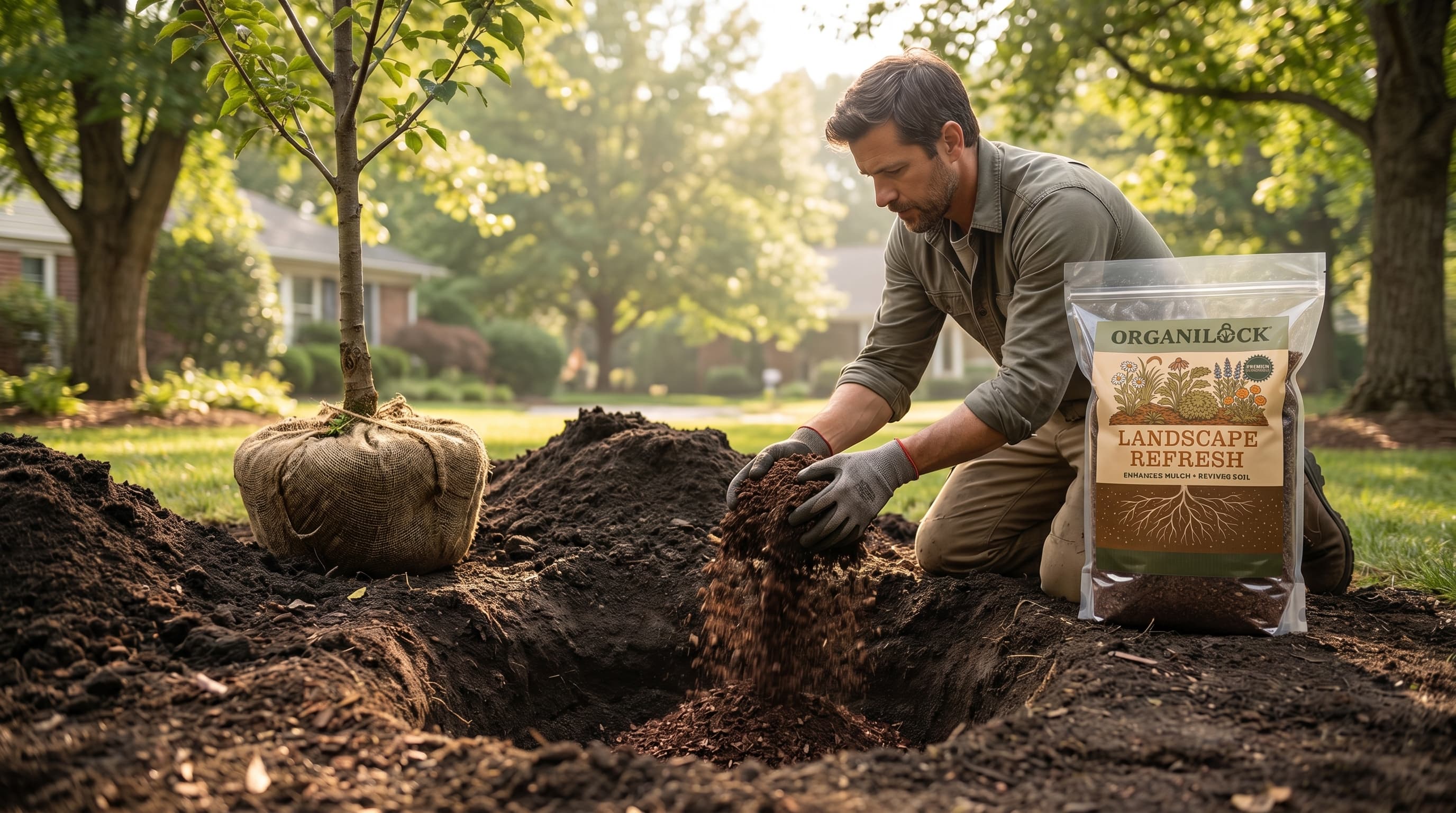
Why raised beds need re-feeding
Raised beds are the best way to grow a lot of food in a small space - great drainage, fewer weeds, soil you control, and a longer season. But that same great drainage is the catch: every time you water or it rains, nutrients wash down and out, and the living biology that makes soil productive fades faster than it does in open ground. After a season or two, even a bed that started rich can run tired. The good news - you almost never need to dig it out and start over. You just put back what the season took.
What goes wrong in a raised bed
A few things happen to raised-bed soil over time:
- It leaches. Fast drainage carries nutrients out the bottom, nitrogen first.
- It settles. Organic matter breaks down and the soil level drops a few inches a year.
- It compacts. Watering, weather, and the occasional footstep pack it down and squeeze out the air roots need.
- It loses biology. The fungi and bacteria that feed plants thin out without a fresh food source.
- The edges dry out. Bed walls heat up and wick moisture, so the outer few inches dry first.
Most of these get blamed on "bad soil" and fixed by buying new soil - when the real fix is feeding the soil you already have.
Re-feed, don't replace: how to use Raised Bed Refresh
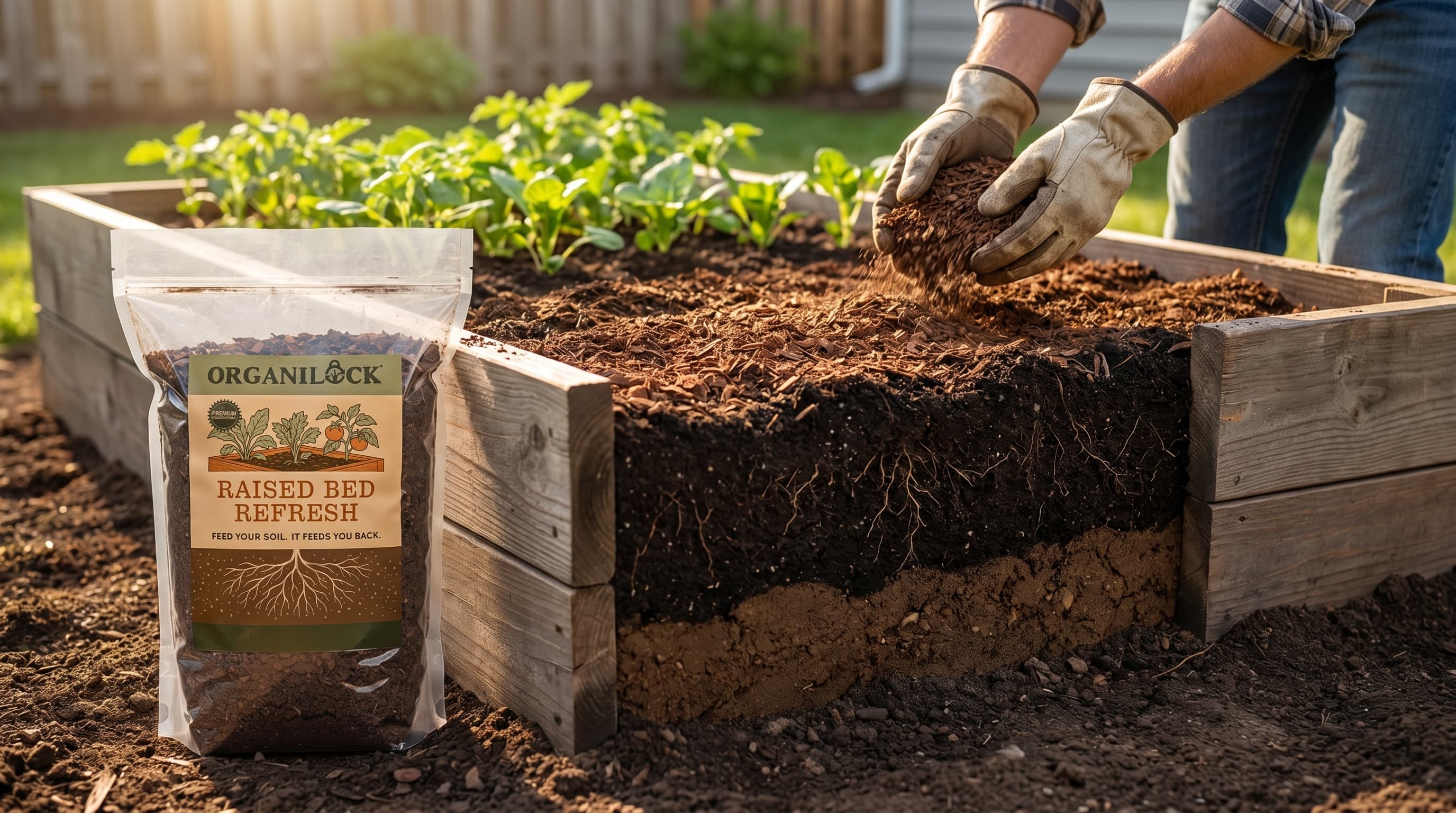
Raised Bed Refresh is a dry, granular amendment you work into the soil you've got - it puts the living biology and nutrition back, and its coarser pine-bark particles add depth and tilth as they feed. To use it:
- Spread Refresh evenly over the bed.
- Mix it into the top 4 to 6 inches.
- Water it in to settle it and wake up the biology.
Do this as a Season Reset at the start of each growing season, and again as a lighter fall reset after you pull spent plants. It works even better if you give the bed a light top-dress once a month through the growing season - it keeps the soil in top condition. For a brand-new bed, mix it into your fresh fill before planting; for an established bed, just spread and work it into the surface. There's no real burn risk, so you don't have to be precise.
Troubleshooting common raised-bed problems
- Lower leaves yellowing, plants pale and slow? Usually leached-out nitrogen (or overwatering). Re-feed the soil and ease off the water.
- Bed dries out within a day of watering? High drainage plus sun and dry edges. Mulch the surface (mixing in a little Refresh helps), water deeply and less often, and build up organic matter over time.
- Growth stalled even though you're watering and feeding? Compacted, tired soil with little biology left. Loosen the top few inches and re-feed it with Refresh.
- Soil level keeps dropping? That's organic matter doing its job and breaking down. Top the bed back up each season - and if you need to add real volume, combine Refresh with your favorite compost or soil conditioner.
- Hard, crusty surface that sheds water? Compaction. Fluff the top inch or so, mix in some Refresh, and keep it mulched.
- Same pests or diseases every year? Often a sign of growing the same plant family in the same spot in depleted soil. Rotate what you grow, and rebuild the soil's health.
Tips and tricks for healthier raised beds
- Top off the level every spring with Refresh - or a mix of Refresh and compost or a soil conditioner - to raise the bed back up and re-feed it in one step.
- Rotate crops by family year to year (tomatoes/peppers, then beans, then leafy greens) to break pest cycles and even out nutrient demand.
- Mulch bare soil - pine bark, straw, shredded leaves, or compost. It holds moisture, blocks weeds, moderates temperature, and feeds the soil as it breaks down.
- Water deeply and less often instead of a daily splash. Deep watering pushes roots down and makes plants more resilient.
- Stay out of the bed. Reach in from the sides so you never compact the soil your roots live in.
- Fluff, don't till. A deep till tears up soil structure and fungal networks; loosening the top few inches is gentler and just as effective.
- Give roots room - aim for at least 6 to 12 inches of good soil depth, more for potatoes, carrots, and other deep roots.
A simple season-by-season rhythm
- Early spring: Season Reset - top off the level, work Refresh into the top few inches, water in, then plant.
- Summer: keep it mulched and give it a light top-dress of Refresh through the season, water deeply, and give heavy feeders a mid-season boost if they want one (a liquid like Plant Food, or a light top-dress of Soil Food, works well here).
- Fall: pull spent plants, do a lighter Refresh reset or sow a cover crop, and mulch the bed for winter.
- Winter: let it rest. Keep it covered, and plan next year's rotation.
How much you need
A 2 cu ft bag covers about 48 sq ft - roughly one and a half 4x8 beds. A 12 qt bag covers about 10 sq ft. For an exact amount for your beds, use the OrganiLock calculator.
Common questions
- Do I need new soil every year? No. Healthy raised-bed soil lasts for years if you re-feed it each season.
- When should I apply it? At the start of the season is the main one, with a lighter fall reset after harvest.
- Can I use it mid-season? Yes - work it into the surface around your plants and water it in.
- New bed or established bed? New: mix it into your fresh fill before planting. Established: spread it and work it into the top few inches.
Pair it with
Refresh re-feeds the soil you have. If you're restoring a badly depleted bed or starting from scratch, Soil Food is the deeper rebuild. For a fast, direct boost mid-season, Plant Food is the liquid feed. See the product page: Raised Bed Refresh.