The final step in getting the most from OrganiLock is turning what you have learned into a simple routine - a rhythm you can repeat without thinking, that keeps your garden fed and improving year after year. The good news is that the routine is genuinely light: a couple of feedings a year, a boost when wanted, and a habit of feeding the soil. This lesson pulls the system together into an easy practice you can settle into for the long haul.
The core routine: spring and fall
At its simplest, the OrganiLock routine has two anchor points across the year: spring and fall. In spring, before or as you plant, feed the soil - mix Soil Food into a new bed or pot, or top-dress the matched Refresh onto an established one, and water it in so the living soil is ready to feed your plants through the season. In fall, after the season winds down, feed the soil again to rebuild what the season used up and to keep the biology working through the cooler months. That fall feeding is the step most people skip and the one that matters most, because it means you start each spring with richer soil rather than tired soil. Two feedings a year, spring and fall, is the backbone of the whole routine - everything else is optional fine-tuning.
Maintaining through the season
Between those anchor points, light maintenance keeps things humming, especially for containers and houseplants that deplete faster. A monthly top-dress of the matched Refresh through the growing season keeps a container's small soil fed, and a Plant Food boost at label rate is there whenever a plant is growing hard and wants a faster feed. The key is to keep it gentle and steady rather than heavy and anxious - a living soil does most of the work, and your role is just to keep it topped up. Houseplants are the exception to watch: they slow down in the low light of winter, so feed them much less or not at all in the off-season, and ramp back up in the brighter growing months. Read the season and the plant, feed generously when things are growing, and ease off when they rest.
A sample first year
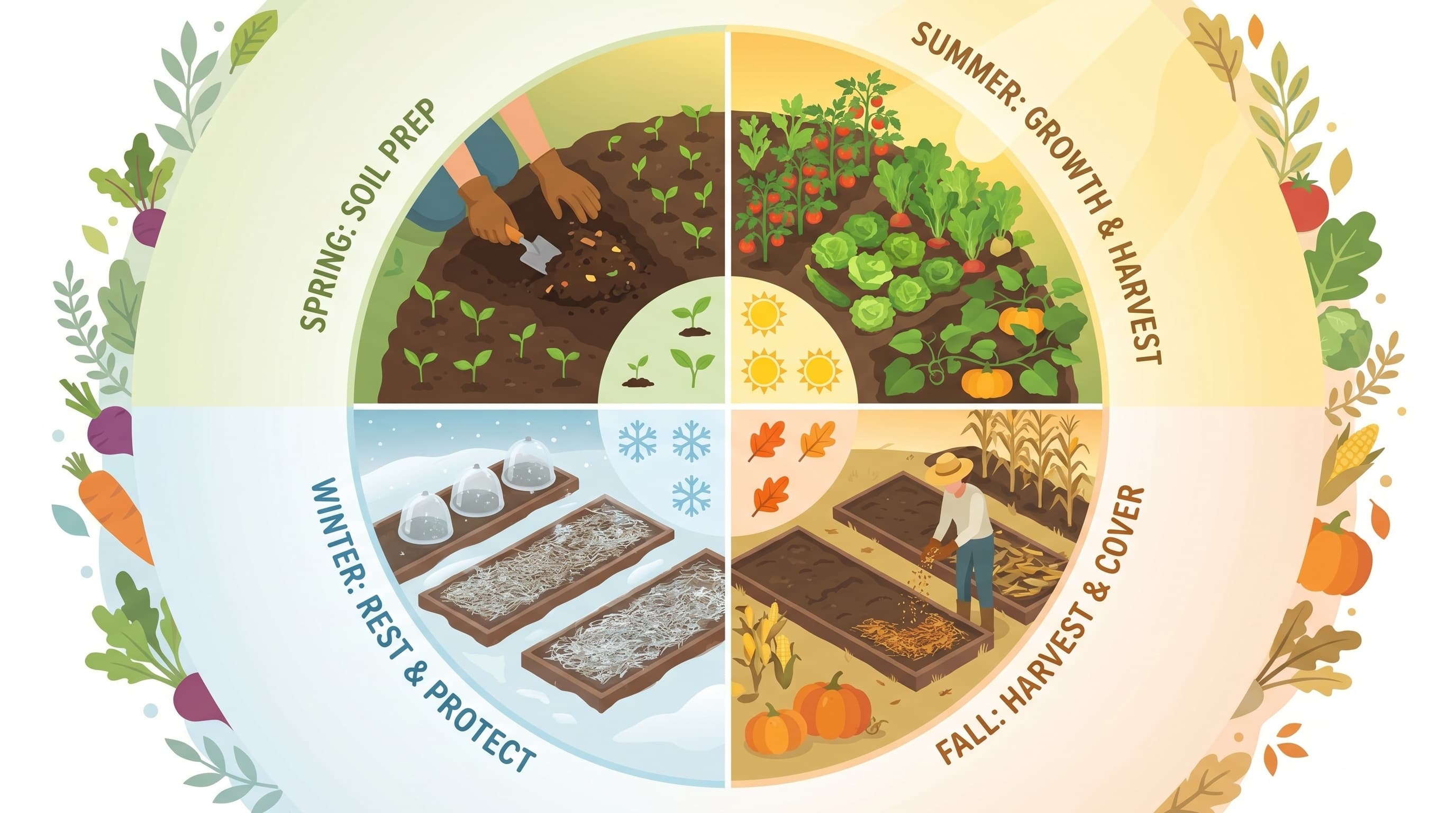
To make the routine concrete, here is what a simple first year might look like for a typical garden. In spring, you build: mix Soil Food into your beds (or top-dress Raised Bed Refresh on established ones) and into your containers, and water everything in as you plant. Through summer, you support: keep things watered, top-dress your containers with the matched Refresh about monthly, and reach for Plant Food at label rate when a heavy producer wants a boost. In fall, you give back: after harvest, work an amendment into the beds and containers so the soil rebuilds over winter, and mulch or cover bare soil. In winter, you rest and plan: little is needed beyond protecting the soil and deciding what to grow next year. That is a full, sensible first year - and notice it is really just spring-build, summer-support, fall-feed, winter-rest. Repeat that loop and each year starts from richer ground than the last.
The whole system, in one routine
Put together, your routine simply walks the build-maintain-boost system across the year. You build the living soil with Soil Food when you start or rebuild; you maintain it with the matched Refresh at the spring and fall anchor points and a light monthly top-dress for containers; and you boost with Plant Food at label rate whenever a plant wants a faster feed. You do not have to do all of it - many gardeners get wonderful results with just Soil Food in spring and fall - but the fuller the routine, the more precisely you can give each part of your garden what it needs. Think of it as a gentle annual rhythm rather than a chore list: feed the soil in spring, support it through summer, feed it again in fall, and let the living soil reward you.
Fitting it to your life
The best routine is one you will actually keep, so fit it to how you garden rather than to an ideal. A simple way to make it stick is to tie the feedings to natural moments you already mark: feed the soil when you do your spring planting, and again when you clean up the garden in fall. Those are events you are doing anyway, so attaching the soil feeding to them means you rarely forget. For container and houseplant growers, a loose monthly reminder for a quick top-dress is plenty. You do not need a complicated schedule or a spreadsheet - a couple of well-timed feedings a year, hung on moments you already observe, is the entire commitment. The goal is a rhythm so light and natural that it becomes second nature, not another chore competing for your attention. Make it easy on yourself, and you will keep it for years.
Do as much or as little as you want
Finally, give yourself permission to scale the routine to your interest and your time. At the simplest end, just feeding the soil with Soil Food in spring and fall will serve most gardens wonderfully - that alone is a complete, effective practice. At the fuller end, you can layer in seasonal Refresh top-dresses, container maintenance, and Plant Food boosts to fine-tune each part of your garden. Both are valid; the difference is precision, not pass-or-fail. A busy gardener with the simple two-feedings routine and a casual eye will grow a beautiful, healthy garden; an enthusiast who wants to dial everything in has the tools to do so. Start wherever fits your life right now, and let the routine grow with your interest. The soil-first approach rewards consistency far more than complexity, so a simple routine you keep beats an elaborate one you abandon every time.
The payoff: a garden that compounds
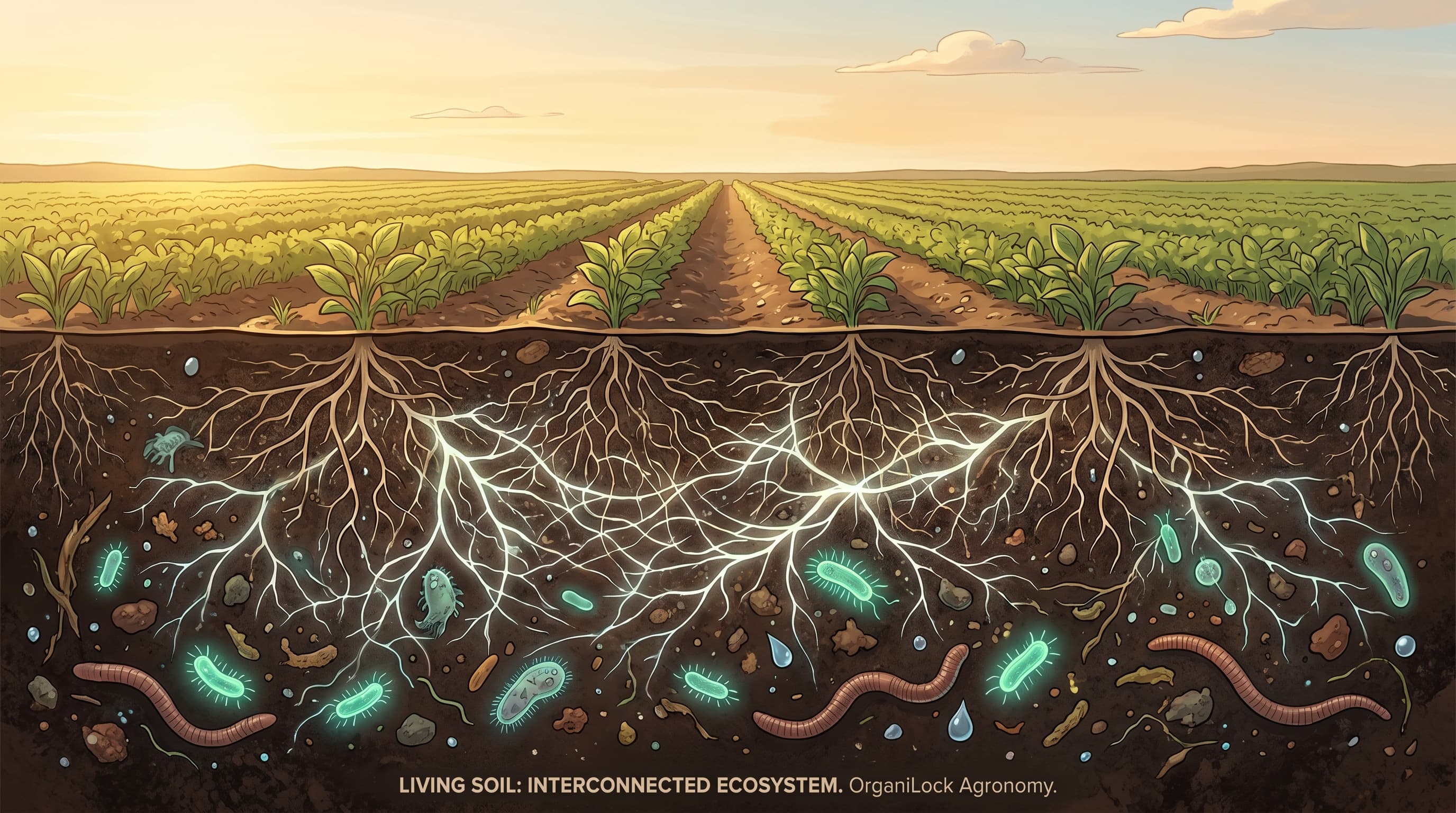
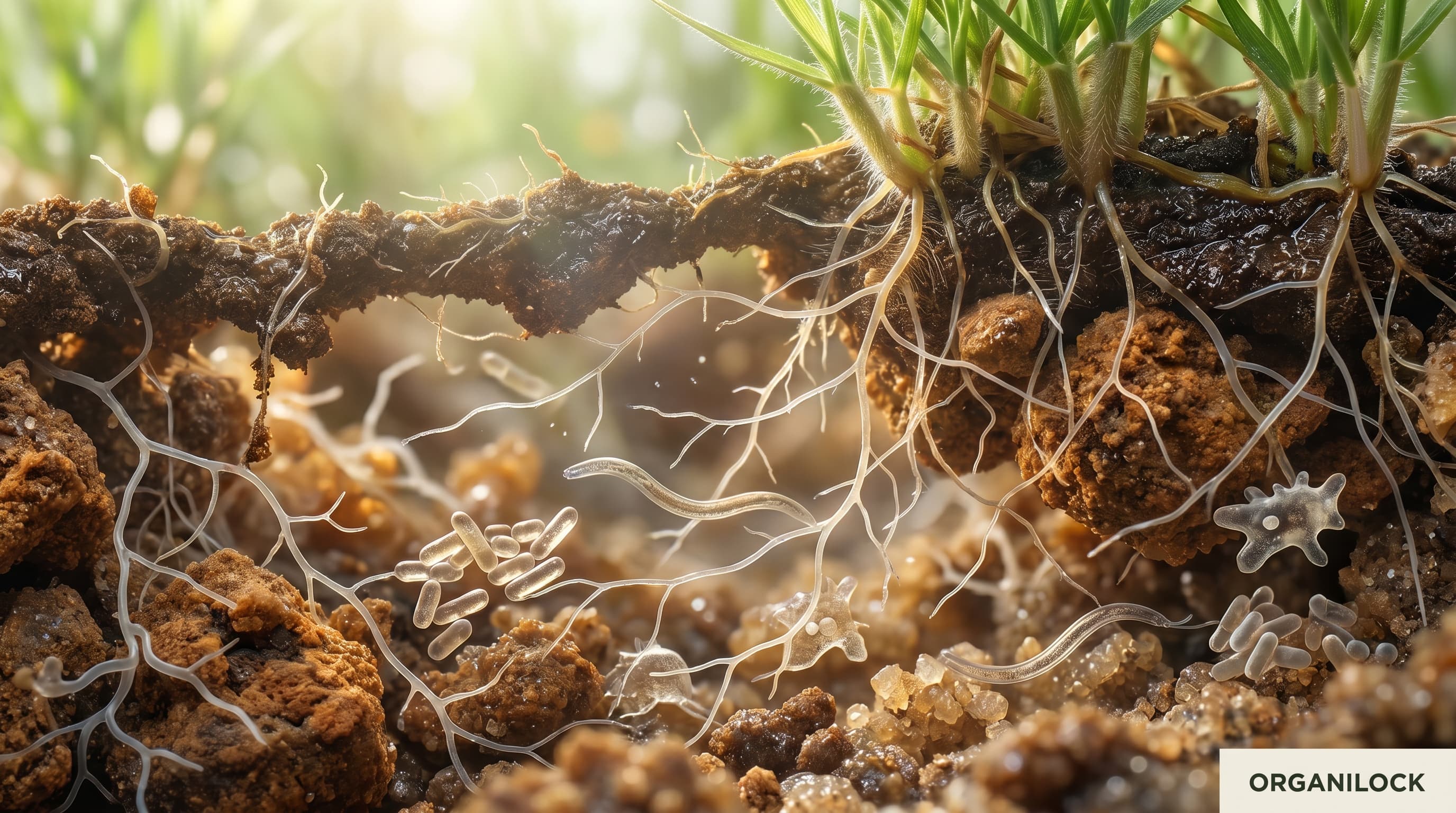
Here is why building the routine is worth it. A garden fed this way does not just hold steady - it compounds. Each season the organic matter deepens, the soil biology strengthens, the structure improves, and your beds, pots, and landscape grow more productive, more resilient, and more forgiving while asking less troubleshooting of you. That is the opposite of the common experience of soil that declines until you give up and replace it. By keeping the simple routine - feed the soil, maintain it, boost when wanted - you are not running in place; you are building something that genuinely gets better the longer you tend it. And that, in the end, is the whole reward of growing the OrganiLock way: not a quick fix, but a living soil that you feed, and that feeds your garden, for years.
Plain-English takeaway: Build a light, repeatable routine around the build-maintain-boost system: feed the soil at the two anchor points (spring and fall - the fall feeding is the one most people skip and it matters most), top-dress Refresh lightly through the season for containers, boost with Plant Food at label rate when wanted, and ease off for resting houseplants in winter - and the garden compounds, getting better every year.