When a gardener spots a pest or a spot of disease, the instinct is to reach for a spray. But the most effective, lowest-effort defense against pests and disease starts long before that, in the soil and in the overall health of the plant. This lesson is about that foundation. To be completely clear up front: OrganiLock products are soil and plant nutrition - they are not pesticides, and nothing here is a claim that any product kills, controls, or repels pests, weeds, or disease. What good nutrition and living soil genuinely do is grow more resilient plants, and resilient plants have fewer problems. That is general gardening wisdom, and it is the honest, useful place to start. Think of it the way you think about your own health: eating well and staying strong does not make you immune to getting sick, but it stacks the odds in your favor and helps you bounce back faster. Plants are no different, and the gardener who works on the foundation spends far less time reacting to emergencies on the surface.
Pests and disease prefer stressed plants
A consistent pattern in gardening is that pests and diseases hit stressed, weak plants hardest, and pass over vigorous, well-grown ones more often. A plant that is properly fed, properly watered, and rooted in healthy soil simply has more resources to withstand and recover from an attack. Nutrition plays a direct role here: potassium, the "quality nutrient" from the soil-science lessons, is closely tied to a plant's stress tolerance and toughness, and a balanced supply of all nutrients keeps tissue strong rather than soft. None of this makes a plant immune - healthy plants still get pests and disease - but it tilts the odds, and over a season that tilt is the difference between a minor nuisance and an overwhelmed garden.
The living soil and plant health
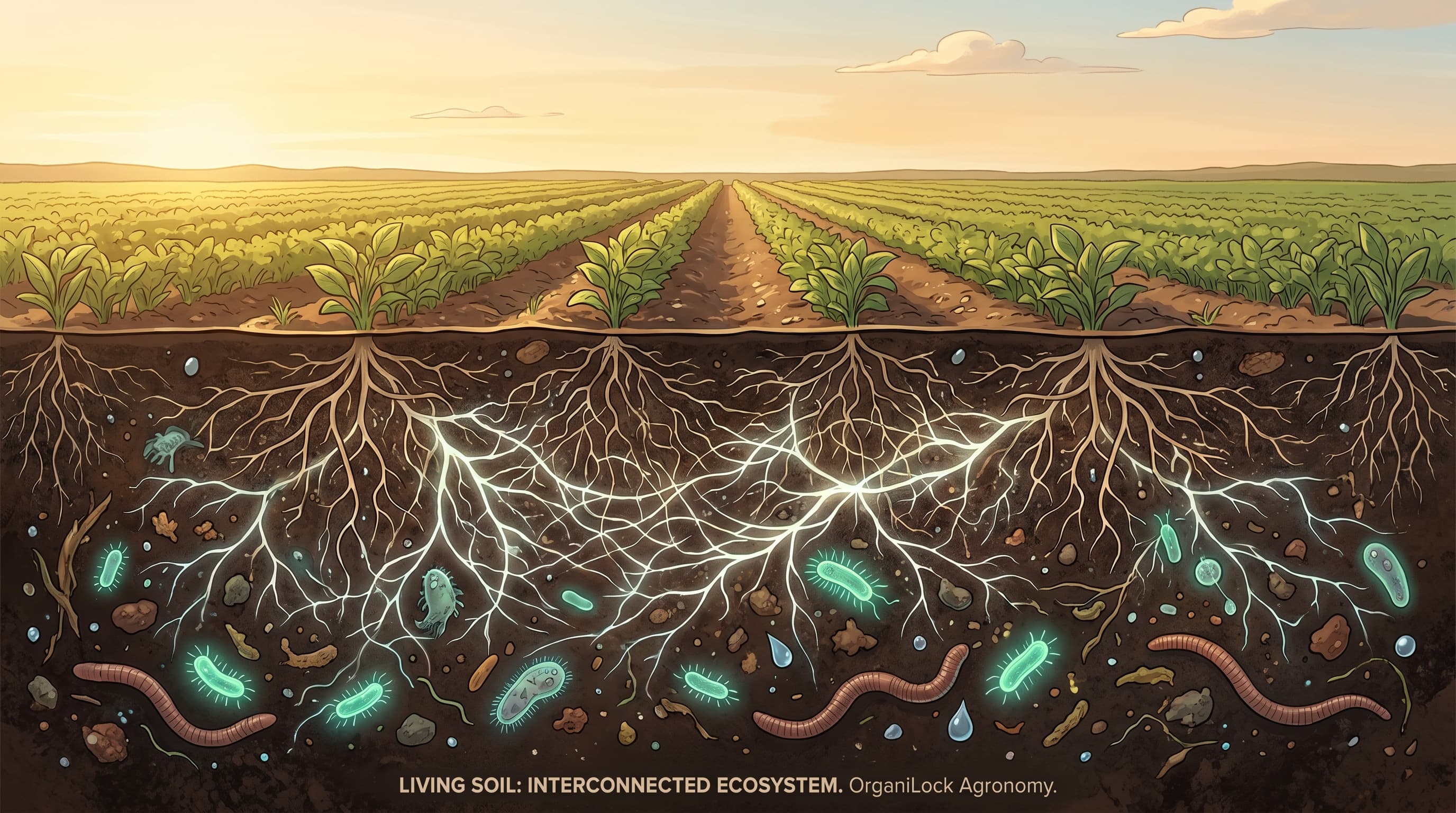
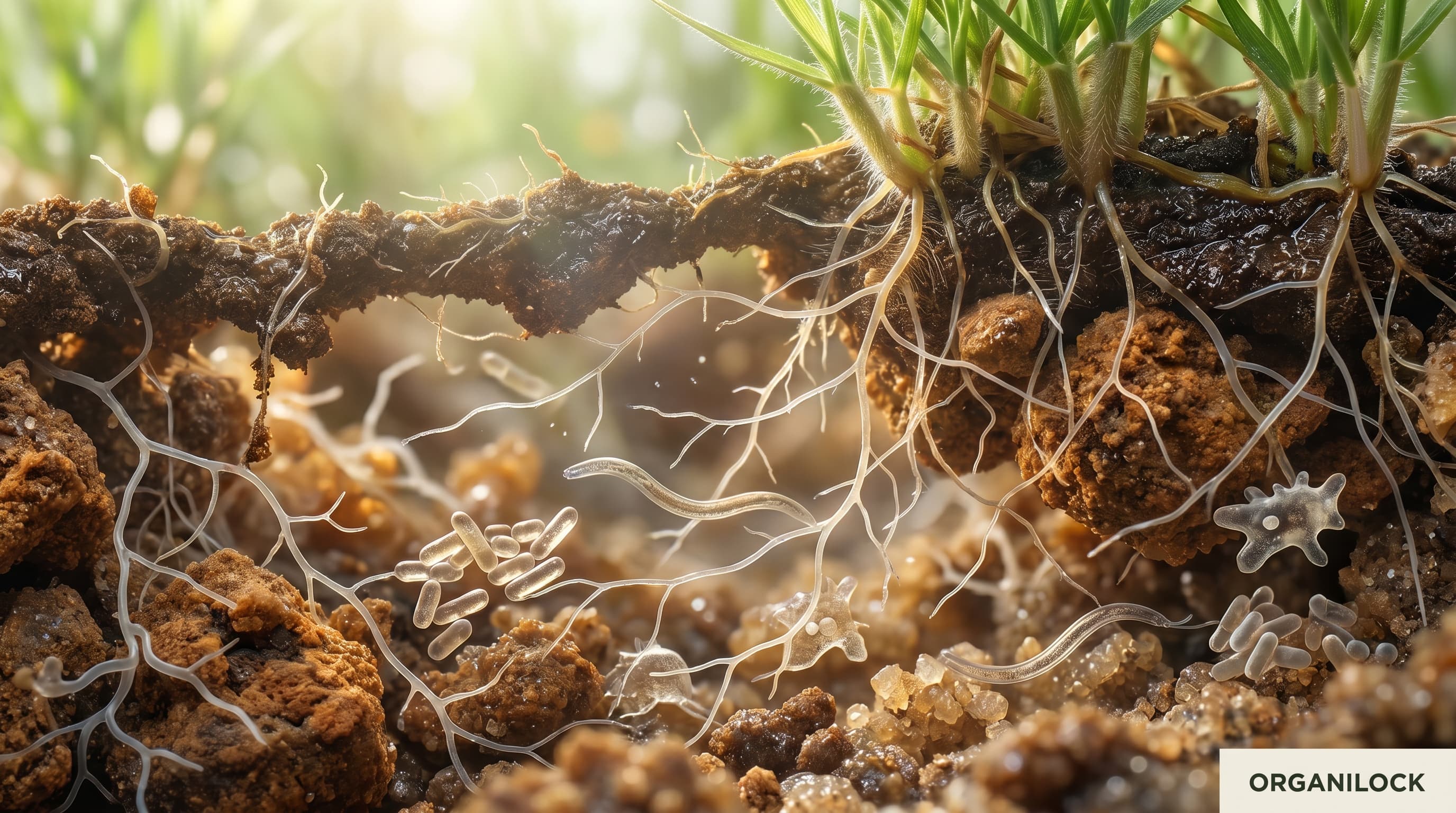
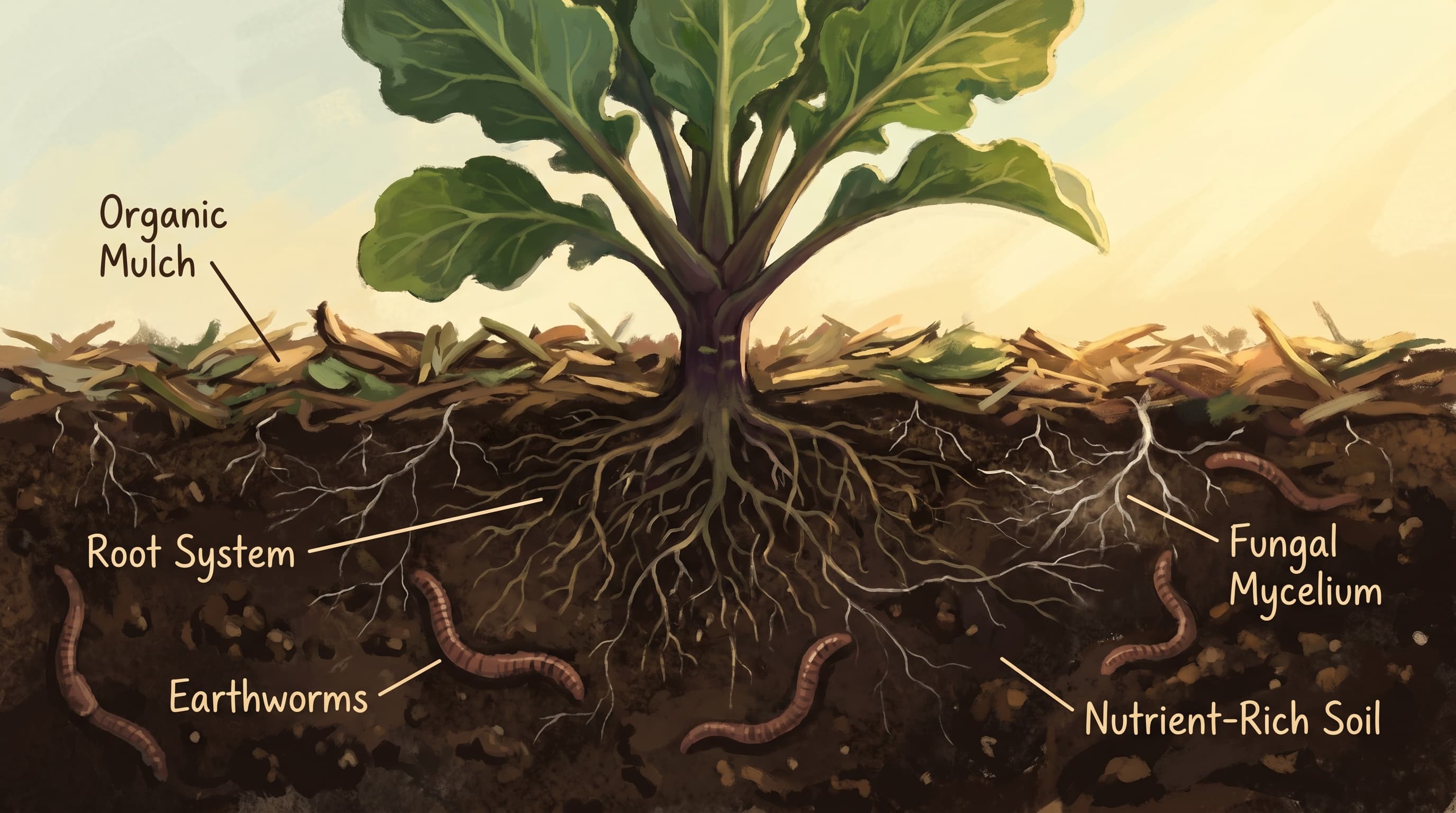
A soil full of life supports healthier plants in several general ways: a diverse, active soil biology helps roots take up a balanced diet, competes for space and resources in the root zone, and is part of what keeps a soil ecosystem in a healthy equilibrium rather than tilted toward a single problem. A soil that has been reduced to pure chemistry - fed soluble nutrients but stripped of its biology and organic matter - tends to grow weaker, more vulnerable plants over time. This is one more reason the biology-first approach pays off: building a living soil is building the conditions for resilient plants. To keep this honest and accurate, hold the line firmly - this is about growing strong plants in a healthy system, not about any product acting on a pest. The soil grows the plant's defenses; it is not a defense applied to a pest.
Do not over-feed nitrogen
Here is a specific, practical point that surprises people: too much nitrogen can actually invite pests. Heavy soluble nitrogen pushes fast, soft, sappy growth - lush and green, but tender and full of the simple sugars and free nitrogen that sap-feeding pests like aphids thrive on. A plant grown on a flood of soluble nitrogen can be a magnet for trouble, while the same plant grown on a steady, balanced diet from living soil grows tougher tissue that is less appealing. This is a direct link between the balance lessons and pest pressure: feeding for slow, steady, balanced growth is not just better for the soil, it genuinely tends to mean fewer pest problems than chasing the biggest, greenest flush.
Weeds and what they tell you
Weeds are worth a word here, with the same honest framing: this is about reading your garden, not about any product acting on weeds. Weeds are opportunists that move into bare, disturbed, or struggling soil, and which ones show up can actually tell you something - certain weeds thrive in compacted ground, others in soggy or acidic soil - so a weed problem is sometimes a signal about the soil's condition as much as a nuisance in itself. The durable, honest defenses against weeds are cultural, not a spray you reach for: keep the soil covered with mulch or desirable plants so weeds have nowhere to establish, avoid leaving bare disturbed ground, and pull or cut weeds before they set seed. A healthy, planted, mulched, living soil simply offers weeds less opportunity. As with pests, OrganiLock is nutrition for your soil and plants - it makes no claim to control weeds, and a real weed problem is managed by these cultural practices and, where needed, the right labeled tool.
Make room for the good guys
A garden is an ecosystem, and a lot of pest pressure is quietly handled for free by beneficial insects - ladybugs, lacewings, predatory wasps, ground beetles, and pollinators - when you give them a place to live. Broad, indiscriminate spraying tends to wipe out these allies along with the pests, which can leave you worse off as pest populations rebound with nothing to check them. You encourage the good guys the same way you grow healthy plants: plant a diversity of species, include some flowers that feed beneficial insects, avoid reaching for harsh blanket treatments, and tolerate a low level of pest activity so there is something for predators to eat. A balanced, diverse, living garden regulates itself far more than a sterile monoculture does - another way the biology-first, whole-system mindset pays off above ground as well as below it.
The cultural-practice toolkit
Beyond soil and nutrition, the real day-to-day toolkit for managing pests and disease is cultural - the choices you make about how you grow:
- Right plant, right place: a plant suited to your light, soil, and climate is a healthy plant; a struggling, mismatched one is a target.
- Spacing and airflow: crowded plants stay damp and trade diseases; good spacing lets leaves dry and reduces fungal problems.
- Water at the base, in the morning: wet leaves overnight invite disease; watering the soil rather than the foliage keeps leaves dry.
- Sanitation and rotation: remove diseased material, keep the garden tidy, and rotate where crops grow so problems do not build up in one spot.
- Diversity: a mix of plants supports a more balanced garden ecosystem than a single large block of one crop.
These practices are unglamorous, but together they prevent far more problems than any reactive treatment solves.
Disease basics: prevention beats cure
Plant diseases deserve their own brief word, because they behave differently from pests and are even more about prevention. Most garden diseases are fungal (think powdery mildew, blights, rusts, and root rots), with some bacterial and viral problems mixed in, and the hard truth is that once a disease has taken hold there is often no cure - you manage it and limit the spread rather than reverse it. That is exactly why the prevention side matters so much. Most fungal diseases need moisture on the leaf to get started, so the single most effective habit is keeping foliage dry: water the soil rather than the leaves, water in the morning so any splashes dry quickly, and space plants for airflow so leaves are not sitting damp against each other. Add good sanitation (remove and discard diseased material rather than composting it), rotate where susceptible crops grow, and choose disease-resistant varieties where you can. A healthy plant in living soil resists infection better and shrugs off minor cases, but no amount of good soil substitutes for these cultural habits - and none of this is a product claim, it is simply how disease is kept at bay in any garden.
When it really is a pest or disease
Sometimes, despite a healthy soil and good practices, a real pest or disease shows up - and the honest answer is that nutrition is not the tool for that job. When it happens, the sensible sequence is: first, identify what you are actually dealing with, because the wrong treatment wastes effort and can do harm; then start with the least-disruptive cultural fix (handpicking, pruning out affected parts, improving airflow, removing the host); and for anything that looks like a real infestation or a serious disease, consult your local university extension office or a qualified professional, who can identify the problem and recommend an appropriate, properly-labeled solution. OrganiLock's job in your garden is to build the healthy, living soil that grows resilient plants - the strong foundation that means you face these moments less often. For the moments themselves, identification and the right tool for that specific problem are what you need.
Plain-English takeaway: Your first defense against pests and disease is a healthy plant in living soil - well-fed (but not over-fed on nitrogen), well-watered, and well-grown plants resist trouble better - backed by cultural practices like spacing, airflow, base watering, sanitation, and rotation; OrganiLock builds the soil that grows resilient plants, but it is nutrition, not a pesticide, so identify real problems and turn to your extension office or a professional for them.