Everything in this course has pointed to one habit: stop guessing, and test. A soil test is the single best small investment a serious grower can make - it turns the whole diagnostic guessing game into a few clear facts, and it routinely saves money by stopping you from feeding nutrients you already have plenty of. This final lesson shows you how to get a test, what is on the report, and how to read and act on it. Once you can read a soil report, you are no longer reacting to symptoms - you are managing your soil on purpose.
Why test at all
A soil test answers, with actual numbers, the questions the rest of this course taught you to ask: Is my pH in the right band, or is it locking nutrients up? Which nutrients are genuinely low, which are fine, and which are in excess? How much organic matter do I have to work with? Without a test, you are matching leaf colors to fertilizer bags and hoping - which, as you have seen, is exactly how soils drift out of balance. With one, you spend your money and effort only where they will actually help. For most home gardens, a single test every few years (and a fresh one whenever you are troubleshooting a persistent problem) is plenty.
Where to get one and how to sample
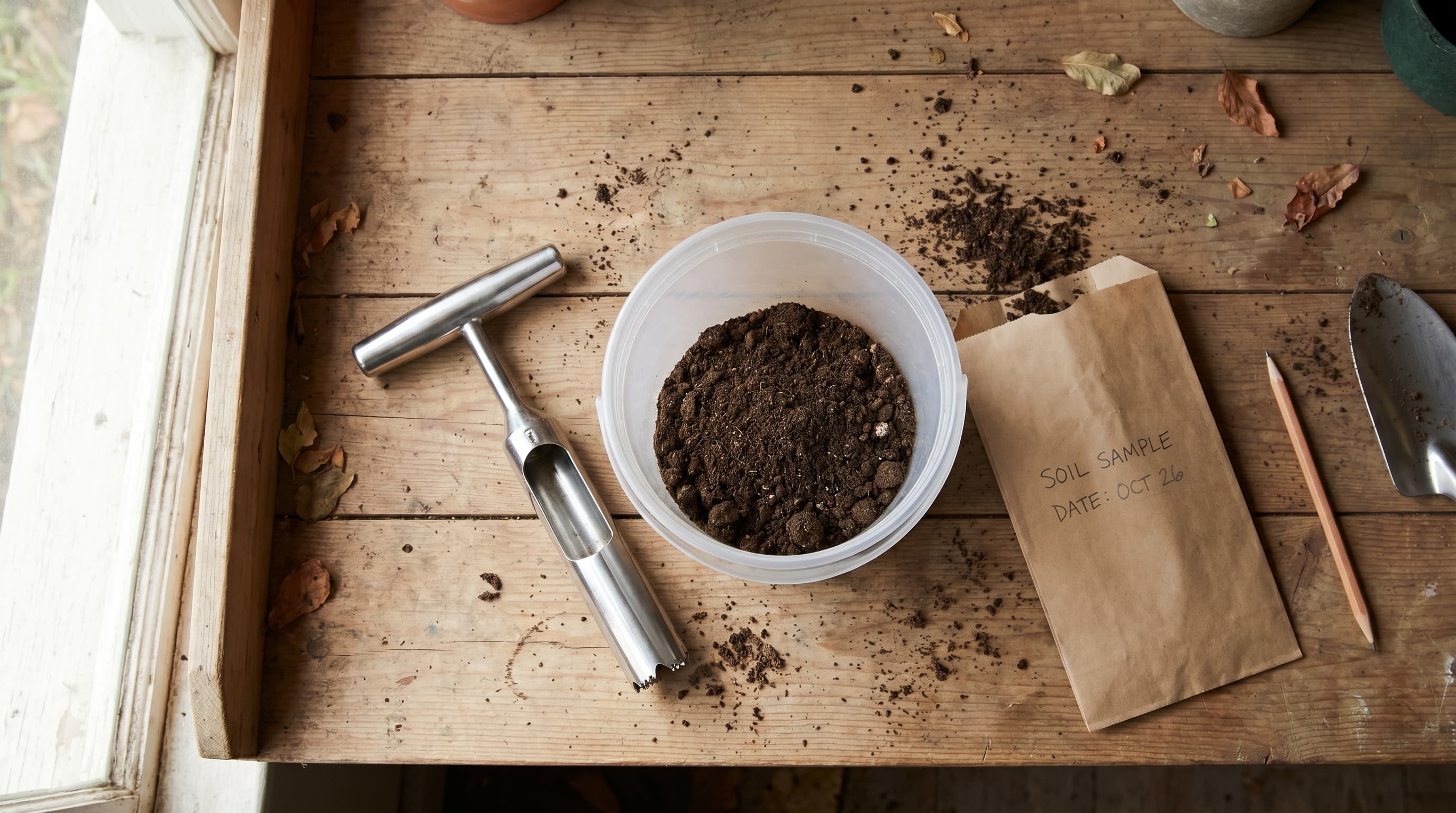
The best value in soil testing is almost always your local land-grant university extension service, which offers reliable, low-cost tests and recommendations tuned to your region. To get a result that means something, the sample matters as much as the test:
- Take a composite sample: collect small amounts of soil from several spots across the area you are testing and mix them together, so the result reflects the whole bed rather than one odd patch.
- Sample at root depth - generally the top several inches for a garden bed - not just the surface.
- Keep it clean: use a clean tool and container, and avoid contaminating the sample with fertilizer residue, mulch, or your hands.
- Test problem areas separately: if one bed behaves differently, give it its own sample rather than blending it into the average.
Reading the report, in order
A soil report can look intimidating, but you read it in a sensible order, starting with the things that control everything else:
- pH first - it is the master gate. If pH is outside the roughly 6.0 to 7.0 band, fixing it (lime to raise it, sulfur or acidifying inputs to lower it) often "releases" nutrients already present, so you correct pH before you chase any individual nutrient.
- Organic matter percentage - the best single indicator of your soil's long-term health and its capacity to hold water and nutrients. A low number is your cue to build organic matter, which improves nearly everything else.
- Nutrient levels - phosphorus, potassium, and the secondary nutrients, usually reported as low, sufficient, or excess. Remember the Law of the Optimum: each nutrient has a deficiency range, a sufficiency range, and a luxury-or-toxicity range, and the goal is to keep each one in its sufficiency band, not to maximize any single number. Many established gardens read high in phosphorus (so stop adding it) and lower in potassium.
- Cation exchange capacity (CEC) - a measure of how much nutrient your soil can hold; a low CEC (sandy soils) means nutrients leach easily and you feed little-and-often, while building organic matter raises it.
How often, and tracking over time
You do not need to test constantly. For most home gardens, a soil test every two to three years is plenty to stay on top of pH and the slow-moving numbers like organic matter, with an extra test any time you are chasing a stubborn problem or starting a new bed. The real value compounds when you keep your old reports and watch the trend: is your organic matter creeping up as you build it? Has the pH you limed drifted back? Did that high phosphorus finally come down once you stopped adding it? A single test is a snapshot; a series of them is a story, and the story is what tells you whether your soil is actually getting healthier year over year. Date your reports, keep them together, and a few minutes comparing them teaches you more about your own garden than any general advice can.
A few report surprises to expect
When their first report comes back, gardeners are often surprised by a few things, so it helps to expect them. The most common: phosphorus is high, not low - years of "balanced" fertilizer and bloom boosters leave most established gardens with more phosphorus than they need, which is the report telling you to stop adding it. Another: the nutrient the plant seemed to lack reads as sufficient, confirming that the real issue was pH, water, or balance rather than a true shortage. And many reports show organic matter lower than the gardener hoped, which is not bad news but a clear, actionable target. None of these are failures - they are exactly the kind of fact-based correction the test exists to provide, replacing a guess with a number you can actually act on.
Acting on the results
A report is only useful if it changes what you do. The sensible sequence flows straight from how you read it: correct pH first if it is off; build organic matter if it is low; add a targeted nutrient only where the report shows a genuine shortage, and skip the ones that are already sufficient or high. Resist the urge to "round up" and add a little of everything - that is exactly the balance-wrecking habit the course has warned against. Follow the report's recommendations (extension reports usually include them), make your changes, and re-test in a couple of years to see how your soil has responded. Managing by test rather than by habit is the difference between a soil that gets better every year and one that drifts.
Where OrganiLock fits
A soil test will often tell you what this course has been building toward: your soil is low in organic matter and needs its biology and structure rebuilt, more than it needs another dose of a single soluble nutrient. That is exactly the job OrganiLock's amendments are made for - Soil Food and the Refresh line add whole-food organic matter, beneficial biology, and biochar to rebuild a tired soil into a living one, worked into the soil you already have. (Remember the honest product fences from your reading: Soil Food is OMRI Listed; the Refresh products and Plant Food are not OMRI Listed; and for exact rates and which product suits your setting, the OrganiLock calculator and the product label are your guide.) Use the test to know your soil, build a living soil to fix the root cause, and let the broad, balanced nutrition a healthy soil provides solve most of the symptoms you came in chasing.
The cheapest tool in the shed
It is worth saying plainly: a soil test is almost certainly the highest-value, lowest-cost tool you own as a gardener. For the price of a single bag of fertilizer, it can save you from buying several bags you did not need, tell you the one thing (often pH) that was quietly undermining everything, and replace years of frustrated guessing with a clear plan. Gardeners spend freely on products and tools and skip the one cheap step that would tell them what they actually need - which is exactly backwards. If you take one habit from this entire course, let it be this: test before you guess. Everything else in diagnosis gets easier, cheaper, and more accurate once you are working from facts instead of hunches.
Bringing it together
You now have the full diagnostic arc. Read the plant (old leaves or new?), suspect the real causes (pH, balance, water - not always a true shortage), check the soil as a physical home (organic matter, compaction, drainage), grow resilient plants as your first defense, and confirm it all with a soil test you can actually read. Diagnosis is not magic and it is not guesswork - it is a small set of honest questions asked in the right order, ending in a test that turns guesses into facts. Ask them in that order and you will fix the cause instead of feeding the symptom, season after season.
Plain-English takeaway: A soil test ends the guessing - get one from your land-grant extension with a clean composite sample, then read it in order (pH first as the master gate, then organic matter, then nutrient levels in their sufficiency bands, then CEC), correct pH and build organic matter before chasing single nutrients, and use a living-soil approach to fix root causes rather than feeding symptoms.