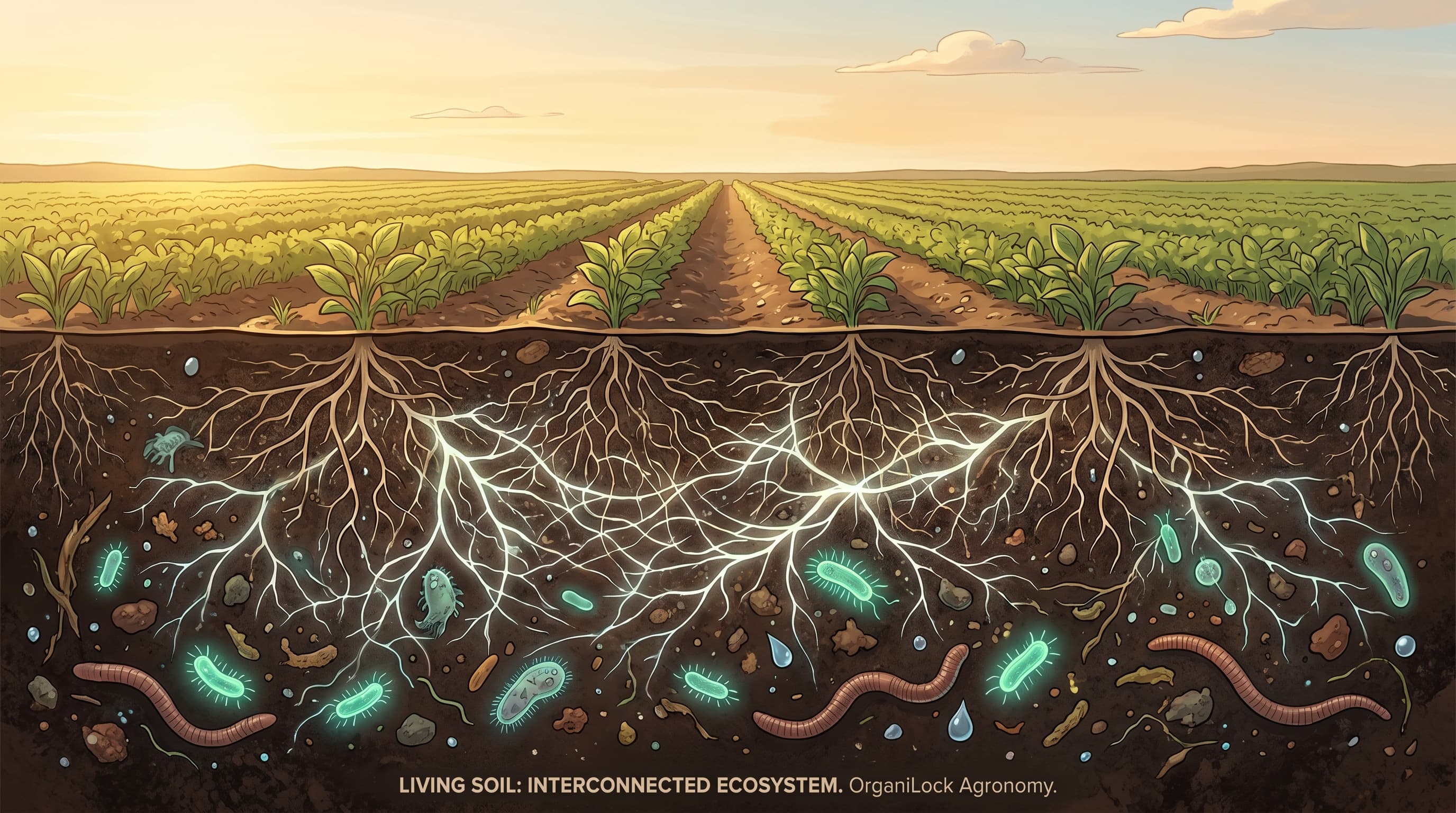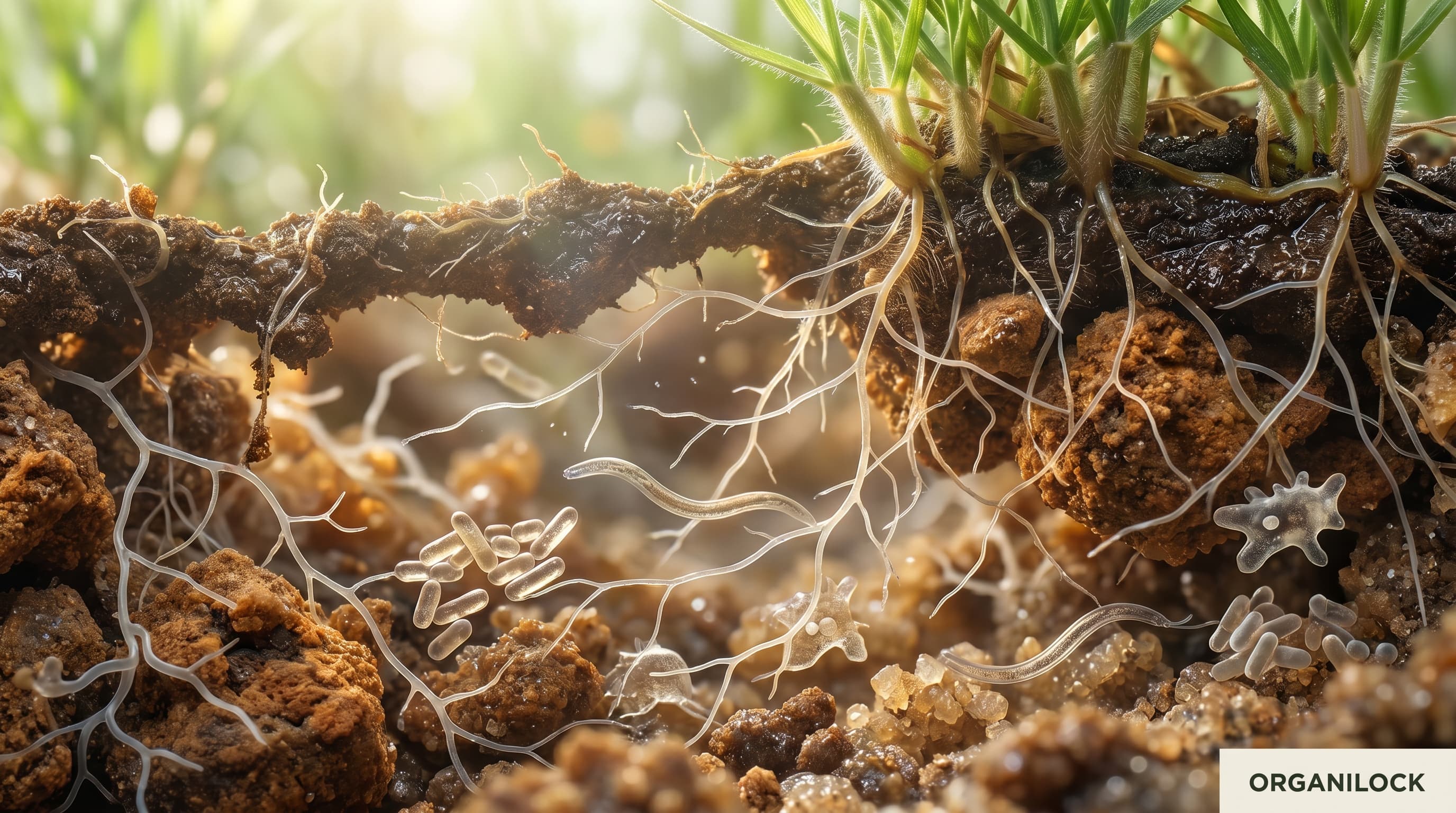
Growing in containers and houseplants is wonderfully rewarding and a little unforgiving, because a pot is its own small world. A finite scoop of soil in a container behaves very differently from the soil in a garden bed, and once you understand those differences, container growing becomes far easier and a lot less mysterious. This first lesson is about why pots are different - and the one insight that changes how you care for them: you can refresh the soil instead of always replacing it.
The upside of growing in pots
It is worth starting with why containers are worth the extra attention, because the advantages are real and they are why so many people grow this way. Containers let you garden anywhere - a patio, a balcony, a doorstep, a windowsill - with no garden bed required, which makes growing possible for renters, apartment dwellers, and anyone short on ground. They give you complete control over the soil, since you fill the pot with exactly the mix you want rather than fighting whatever native dirt you have. They are mobile: you can move a pot to chase the sun, shelter it from a storm, or bring a tender plant indoors for winter. And they put plants exactly where you want them - flowers by the door, herbs by the kitchen, greenery on a windowsill. Houseplants add their own rewards, bringing living green into your home year-round. The trade-off for all that flexibility is the limited-soil challenge this lesson is about - but once you understand and work with it, container growing gives you a garden almost anywhere, on your terms.
The limited-soil reality
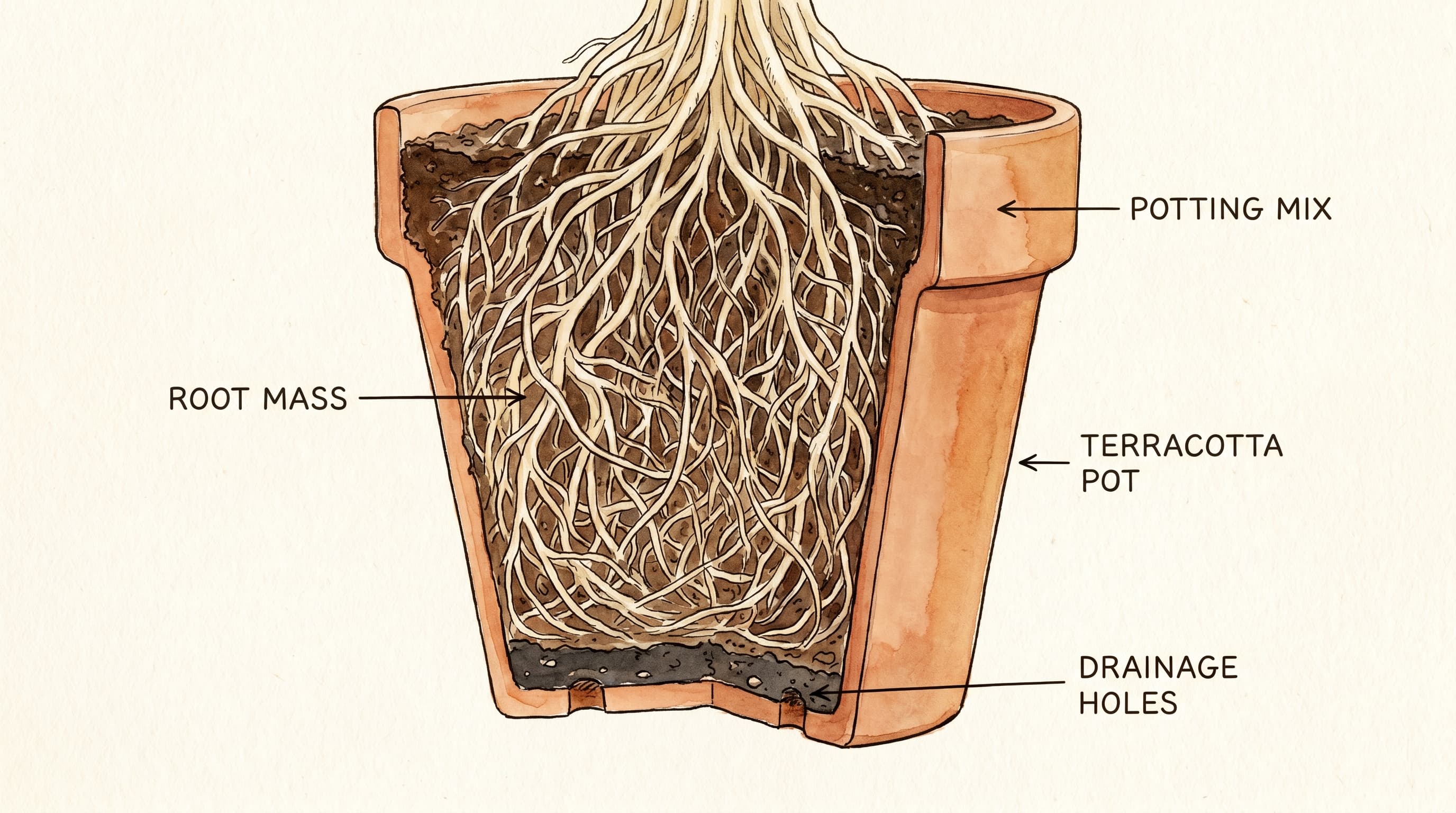
The defining fact of a container is that the soil is limited. Where a garden bed opens onto the ground beneath it, a pot is a closed box of soil with hard walls and a few holes in the bottom. That small, finite volume changes everything: roots fill it quickly and then have nowhere else to go, the nutrients in it get used up fast because there is so little of it, and the whole thing dries out and rewets far more quickly than open ground. A plant in a pot is entirely dependent on the small amount of soil you gave it and the care you provide - it cannot send roots off to find water or nutrients elsewhere. That dependence is why container plants need more attentive feeding and watering than the same plant in the ground, and why getting the soil right matters even more in a pot than in a bed.
Everything leaches faster
Because a container is small and drains out the bottom, every time you water, some nutrients wash straight through and out with the drainage. Over weeks of watering, that steady leaching depletes the soil noticeably - which is a big part of why a potted plant that started strong can fade by midsummer even in good mix. The flip side of the same coin is salt buildup: if you over-feed a container with soluble fertilizer, the salts can concentrate in that small soil volume faster than they would in the ground, scorching roots and leaf edges. So a pot is caught between two opposite risks - nutrients washing out too fast, and salts building up if you over-correct - which is exactly why the gentle, steady, soil-building approach suits containers so well. You are not chasing a moving target; you are keeping a small, living soil topped up and in balance.
The pot itself: drainage and size
Before the soil even goes in, the pot you choose shapes how the whole thing behaves, and two features matter most. Drainage is non-negotiable: a pot needs holes in the bottom so excess water can escape, because a pot without drainage holds water against the roots and drowns them - the single most common way container plants die. If you love a decorative pot with no holes, use it as a cover-pot ("cachepot") with a draining nursery pot tucked inside, and empty any water that collects. Size matters too, and bigger is not automatically better: a pot far too large for a small plant holds more soil than the roots can use, so it stays soggy and invites rot, while a pot far too small dries out constantly and binds the roots. Aim to pot a plant into a container a size or two up from its root ball, and step it up as it grows. The material has its own personality as well - unglazed terracotta breathes and dries fast (forgiving of overwatering, demanding of attention in heat), while glazed and plastic pots hold moisture longer. None of this is complicated, but getting the pot right spares you a season of fighting problems the pot created.
The potting mix matters, but it is not forever
Start a container with a good-quality potting mix - light, well-draining, and meant for containers (garden soil alone is too dense for a pot and compacts into a brick). But here is what people often miss: that mix is not permanent. Over a season or two it breaks down, compacts, loses its structure, and gets mined of nutrients and biology, until the once-fluffy mix is a dense, tired, lifeless plug that the plant struggles in. The mistake is treating potting mix as a one-time, set-and-forget purchase. Like any soil, it needs tending - and the good news is that tending it is far easier than people assume.
The refresh-don-t-repot insight
Here is the insight that makes container care so much easier: you usually do not have to dump everything out and repot to give a plant fresh soil. Most of the time you can refresh the soil the plant already has - feeding and rebuilding it in place around the established roots, without the disruption and shock of a full repot. Your plant has its roots settled in its home; rather than tearing that apart, you renew the soil around them. This is exactly what the Refresh amendments are built for: Flower Pot Refresh for outdoor containers and planters, and House Plant Refresh for indoor plants, are dry granular amendments you top-dress onto the existing soil (or mix in when you do repot) to re-feed it with organic matter and biology. They are the upgrade you add to the soil you already have, not a potting soil you fill the pot with. Adopt the refresh mindset and you will keep your containers thriving with a fraction of the effort.
What a good potting mix actually is
Since the mix is the soil your container plant lives in, it is worth knowing what a good one does. A quality potting mix is light and fluffy enough to hold air around the roots, holds moisture without staying soggy, and drains freely - a balance of water-holding and air that garden soil, which compacts into a dense, airless mass in a pot, simply cannot provide. That is why you never fill a container with garden soil or topsoil alone. A good mix gives you the right physical home; what it often lacks, especially as it ages, is living biology and a steady nutrient supply, which is exactly the gap a soil-building amendment fills. Think of it as two jobs: the potting mix provides the structure (air, water, drainage), and an amendment like Refresh provides and renews the life and the feeding. Start with a good mix for the structure, then keep it alive and fed - and you have living soil in a pot, which is the whole goal.
Indoor and outdoor: shared challenge, extra indoor wrinkles
Outdoor containers and indoor houseplants share the core container challenge - limited soil, fast leaching, the need for attentive care - but indoors adds a few wrinkles worth flagging up front. Indoor plants live in lower light and grow more slowly, especially in winter, so they need less feeding than an outdoor pot in full summer sun. And because they share your living space, indoor growers care about things outdoor growers ignore: whether an amendment smells, whether it invites fungus gnats, and whether it is safe around pets and kids. The next lessons handle all of these honestly. For now, hold the shared foundation: whether a pot lives on a sunny patio or a windowsill, it is a small world of soil that depends on you to keep it alive and fed.
Plain-English takeaway: A container is a small, closed world of soil: nutrients deplete and leach out fast while salts can build up if you over-feed, and the potting mix breaks down over time - so the key skill is to refresh the soil in place around established roots (with an amendment) rather than always repotting, with indoor plants needing extra care around light, odor, gnats, and safety.