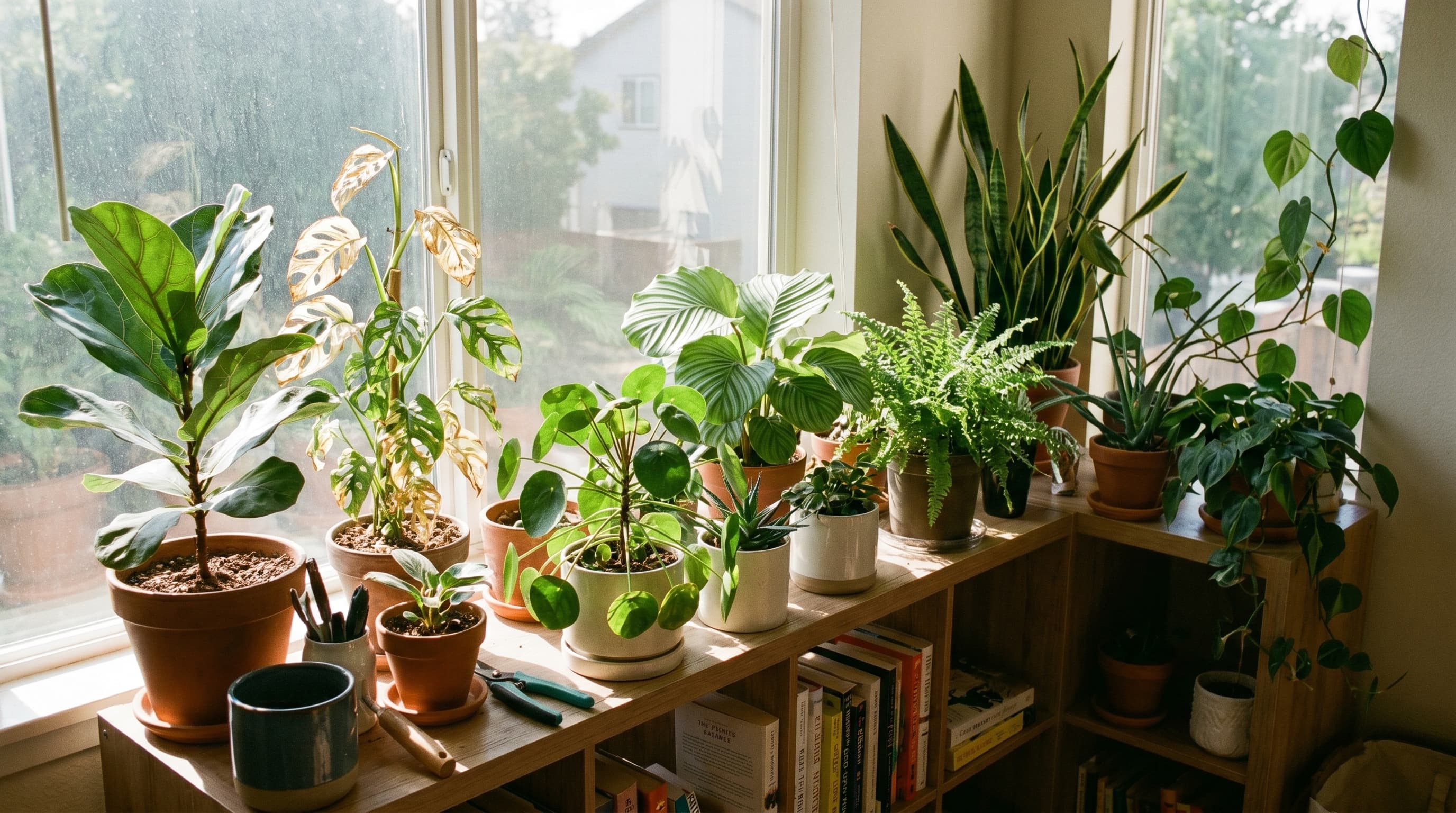
Container and houseplant troubles tend to come from a short, recognizable list, and the great majority trace back to two things: water and soil. Once you can spot the usual suspects, you will fix problems quickly and, better still, prevent most of them. This lesson walks the common container and houseplant problems and the honest fix for each, drawing on the diagnostic thinking from the Diagnose and Fix course - and being clear, where it matters, about what OrganiLock products do and do not do.
Overwatering: the number-one killer
More container and houseplants are killed by too much water than by any other cause, which surprises people who assume a struggling plant must be thirsty. In a pot, overwatering - whether from watering too often or from a pot with no drainage holes - leaves the soil soggy, drives the air out, and suffocates and rots the roots. The plant then yellows, wilts, and declines in a way that looks exactly like underwatering, tempting the worried owner to water even more and finish the job. The fixes are simple but essential: make sure every pot has drainage holes, never let a pot sit in a saucer of standing water, and let the soil dry appropriately between waterings (for most houseplants, until the top inch or two is dry). When a potted plant is struggling and the soil is wet, the answer is almost always less water, not more.
Underwatering and drying out
The opposite problem is real too, because a small soil volume dries out fast - especially in unglazed terracotta pots, small containers, and hot summer conditions outdoors. An underwatered plant wilts, its soil pulls away from the pot edges, and it cannot take up nutrients that can only move in water. The fix is consistent, thorough watering: water until it runs from the drainage holes so the whole root ball is wetted, then let it dry to the right point and repeat, rather than giving frequent shallow sips. Building the soil's organic matter helps here too, because a soil richer in organic matter holds moisture more evenly and buffers a pot against drying out between waterings - one more quiet benefit of feeding the soil rather than just the plant.
Salt buildup from over-feeding
As the last lesson covered, a closed pot concentrates salts when over-fed, so salt buildup deserves a place on any container problem list. The signs are a white crust on the soil or rim and scorched leaf edges, and the cause is too much soluble fertilizer in too little soil. The fix is to flush the pot thoroughly with plain water to wash the salts out, ease off the feeding, and rely on the gentle slow-release refresh routine. If you take one habit from this guide, let it be a healthy suspicion of over-feeding whenever a container plant looks stressed.
Fungus gnats, honestly
Fungus gnats - those tiny flies hovering around houseplants - are the single most common indoor-plant complaint, so let us handle them clearly and honestly. Fungus gnats breed in consistently moist soil rich in organic matter, so they are fundamentally a moisture-management issue, not a feeding one. The honest, effective approach is cultural: let the top of the soil dry out between waterings (the gnats need that surface moisture to breed), water from the bottom when you can so the surface stays drier, avoid leaving soggy soil, and remove any decaying plant matter. To be completely straight, as your other lessons stressed: OrganiLock products are soil and plant nutrition, not pest control, and nothing here kills or repels fungus gnats. What good soil care does is grow a healthy plant and, through sensible watering, deny gnats the soggy conditions they need - and for a genuine, persistent infestation, the usual labeled houseplant remedies (sticky traps and the like) are what you reach for. Manage the moisture and you manage most gnat problems before they start.
Light problems hiding as plant problems
Especially indoors, a great many "plant problems" are really light problems, and no amount of feeding or watering will fix them - so it is worth ruling light in or out. A plant getting too little light grows leggy and stretched, reaches toward the window, drops its lower leaves, and pales, no matter how well you feed it; the fix is more light (a brighter spot, or a grow light), not more fertilizer. A plant getting too much harsh light for its kind shows scorched, bleached, or crispy patches where the sun hits hardest; the fix is to move it back from the glass or to a gentler exposure. Each plant has its own light preference, and matching the plant to the light it actually has is one of the most important and most overlooked parts of container and houseplant success. Before you diagnose a soil or feeding problem, ask whether the plant is simply in the wrong light - because that is a fix no product can make, and a surprisingly common one.
Tired soil, rootbound plants, and yellowing that is not hunger
A few more common issues round out the list. Tired, depleted potting mix shows up as a plant that has simply stopped thriving in soil that has gone dense and lifeless - the cue to refresh the soil (top-dress an amendment) or, if the plant has also outgrown its pot, to repot. A rootbound plant - roots circling the pot, water running straight through, growth stalling - genuinely needs a larger pot and fresh mix, not just feeding. And as always, a yellowing plant is often not hungry at all: in containers, the usual culprits are overwatering, salt buildup, or the pot being root-bound, far more often than a true nutrient shortage. Before you feed a struggling container plant, run the checklist - is it too wet, too salty, too root-bound, or genuinely depleted? - because, just as in the Diagnose and Fix course, feeding a problem that was never about nutrients only makes it worse.
Reviving a struggling pot, step by step
When a container plant is clearly struggling and you are not sure why, a simple sequence beats guessing - and notice that feeding comes last, not first. Start with water: feel the soil. If it is soggy, you are likely overwatering; let it dry out, check that the pot drains, and never let it sit in water. If it is bone-dry and pulling from the edges, water thoroughly and more consistently. Next, look at the soil surface and leaf edges: a white crust and scorched tips mean salt buildup, so flush the pot with plenty of plain water and ease off feeding. Then consider the roots and the pot: if roots are circling out the drainage holes and growth has stalled, the plant is root-bound and needs repotting, not feeding. Check the light: a leggy, stretching, pale plant indoors usually wants a brighter spot. Only after ruling out water, salt, roots, and light should you conclude the plant is genuinely depleted and refresh the soil. Working the list in that order fixes the real problem instead of feeding a plant that was never hungry - and it is the same disciplined approach the Diagnose and Fix course teaches, scaled to a pot.
Most problems are prevented, not cured
The encouraging truth about container and houseplant troubles is that the great majority are prevented rather than cured, by a handful of simple habits. Use pots with drainage and the right size; choose a good light-and-water-balanced mix; water thoughtfully - thoroughly, then letting the soil dry to the right point - rather than on a rigid daily splash; feed gently and steadily instead of in heavy doses; match each plant to the light it actually has; and keep the soil alive with regular refreshing rather than letting it run down. Do those things and you will rarely meet the problems in this lesson, because you will have removed the conditions that cause them - the soggy soil, the salt buildup, the depleted mix, the wrong light. Good container growing is far more about prevention than rescue, and the prevention is genuinely easy once it becomes habit. Set a pot up right and tend it gently, and it largely takes care of itself.
Plain-English takeaway: Most container and houseplant problems are water and soil: overwatering is the number-one killer (let soil dry, ensure drainage), underwatering and salt buildup are the next suspects, fungus gnats are a moisture-management issue handled culturally (OrganiLock is nutrition, not a gnat killer), and a yellowing plant is usually too wet, too salty, or root-bound rather than hungry - so run the checklist (water, salt, roots, light, then feed) before you reach for fertilizer.