Containers and houseplants reward a little rhythm just as garden beds do - the difference is that their year runs by the pot and the season and the light, not by the garden calendar. This final lesson pulls the guide together into an ongoing care routine for both outdoor containers and indoor houseplants, settles the refresh-versus-repot question, and ends with the payoff: thriving pots kept going with the renew-don't-replace approach.
The outdoor container season
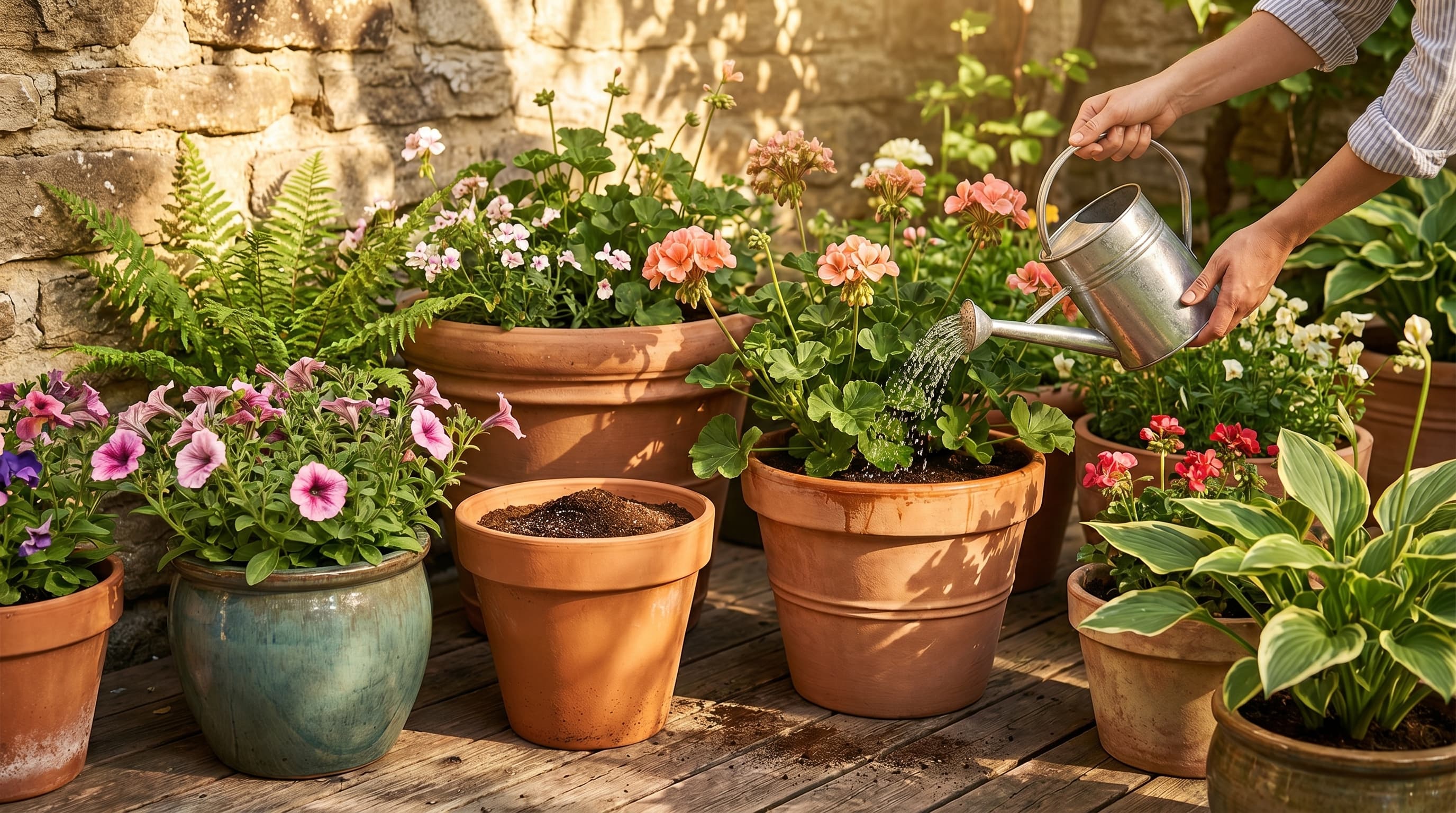
Outdoor containers follow the growing season closely, and a simple rhythm keeps them lush. In spring, start with good mix in a clean, well-draining pot, and work a soil-building amendment in as you plant so the soil is alive from the start. Through summer - the demanding season for pots in full sun - water consistently and often (small pots may need it daily in heat), top-dress Flower Pot Refresh about monthly to keep the soil fed, and reach for a Plant Food boost at label rate when a heavy bloomer wants it. As fall arrives and growth slows, ease back on feeding and watering, and bring any tender plants indoors before frost if you want to keep them. The whole season is just that loop - plant into living soil, keep it watered and gently fed through the heat, then wind down - and a container tended this way stays beautiful from spring through fall.
The houseplant year
Houseplants run on a quieter, light-driven rhythm, and matching their care to it prevents a lot of trouble. In the brighter, warmer months of spring and summer, most houseplants are in active growth and appreciate regular care - a monthly top-dress of House Plant Refresh to keep the soil fed, consistent watering, and the occasional Plant Food boost at rate for a plant that is really growing. In the low light of fall and winter, most houseplants slow down or rest, and their needs drop sharply: feed much less or not at all, and water less often, because a resting plant in dim light cannot use a summer feeding schedule and will only suffer from soggy, over-fed soil. The most common houseplant mistake of all is treating winter like summer - watering and feeding a dormant plant as if it were growing. Read the plant and the season: feed and water generously when it is growing, back right off when it is resting.
Bringing outdoor plants indoors for winter
One seasonal moment trips up a lot of growers: moving a tender container plant indoors before frost to overwinter it. The transition is a shock - the plant goes from bright outdoor light and fresh air to dimmer indoor light and drier, stiller heat - so a little care eases it through. Bring plants in before the first frost, not after a cold snap has already damaged them. Check them over first for hitchhiking pests and remove any, so you do not bring problems indoors. Expect some adjustment: a plant may drop a few leaves as it acclimates to lower light, which is normal. And then treat it like the houseplant it now is for the season - much less water and little to no feeding through the low-light winter months, because it has slowed down and cannot use a summer schedule. Come spring, you can harden it back off and move it outdoors again as the weather warms. Many a treasured patio plant lives for years this way; the key is a gentle transition and the discipline to back off water and feeding once it is inside and resting.
Refresh versus repot
A question every container grower eventually asks: do I refresh the soil, or repot? The honest answer is that you do both, on different timelines. Refreshing - top-dressing an amendment onto the existing soil - is the regular, gentle maintenance you do throughout the growing season to keep the soil fed and alive without disturbing the plant; it is the everyday tool, and it is enough most of the time. Repotting - moving the plant into a larger pot with fresh mix - is the occasional bigger job you do when a plant has genuinely outgrown its container (rootbound) or when the mix has broken down so far that refreshing is no longer enough, typically every year or two for a vigorous plant. Think of refresh as the regular tune-up and repot as the occasional overhaul. Most of your plant care is refreshing; repotting is the bigger reset you reach for when the plant tells you it is time.
Right plant, right pot, right spot
A surprising amount of container success is decided before you ever feed anything, by three simple choices. Right pot: one with drainage holes and sized to the plant (a pot far too large stays soggy; one far too small dries out and binds roots). Right soil: a good, living mix you then maintain, not a dense brick of garden soil. And right spot: a plant matched to the light it actually has, because no amount of perfect feeding will save a sun-lover languishing in a dark corner or a shade plant scorching on a hot windowsill. Get these three right and the plant is set up to thrive; get them wrong and you will spend the season fighting problems that good placement would have prevented. Feeding and care matter, but they work best on top of a sensible setup.
Everyday grooming and care
Beyond feeding and watering, a few small habits keep container and houseplants healthy and looking their best. Pinch or snip off dead and yellowing leaves and spent flowers - it tidies the plant, redirects its energy into healthy growth, and removes the decaying material that can harbor problems. Wipe dust off broad houseplant leaves now and then, since a dusty leaf cannot photosynthesize well (a plant in dim indoor light needs all the light-gathering it can get). Rotate pots a quarter-turn every so often so plants grow evenly toward the light rather than leaning. Pinch back leggy growth to encourage bushier, fuller plants. And keep an eye out as you tend them - the gardener who handles their plants regularly catches a watering problem, a salt crust, or the first signs of trouble early, while it is still easy to fix. None of this takes long, and together these little touches are much of the difference between plants that merely survive and plants that genuinely thrive.
Starting a new container right
Since so much of container success is decided at the start, it is worth a quick word on setting up a new pot well, because a good beginning saves a lot of rescuing later. Choose a clean pot with drainage holes, sized a step up from the plant's roots. Fill it with a good, light potting mix rather than dense garden soil, and work a soil-building amendment in as you plant so the soil is alive and feeding from day one. Settle the plant at the same depth it was growing before (burying the stem too deep invites rot), firm the mix gently, and water it in thoroughly so the whole root ball is wetted and the soil settles around the roots. Then place it in the right light for its kind. A container set up this way - good pot, living mix, right depth, watered in, right light - starts strong and is far easier to keep thriving than one thrown together and corrected later. A little care at planting pays off all season.
The payoff: thriving pots, the renew-not-replace way
Here is where it all comes together. Container and houseplant growing has a reputation for being finicky, but most of that reputation comes from treating pots as disposable - letting the soil run down, then dumping it and starting over, season after season. Tend a container the way this guide describes - good setup, sensible watering, gentle steady feeding, and regular refreshing of the soil in place - and your pots and houseplants thrive with far less effort and expense than the dump-and-replace approach. You keep the soil in the pot alive and feeding rather than treating it as something to be discarded; you renew rather than replace. That is the whole philosophy of growing in living soil, simply scaled down to a pot on a patio or a windowsill: feed the soil, even a small one, and the soil feeds your plants - beautifully, and for the long haul.
Plain-English takeaway: Containers and houseplants thrive on a rhythm matched to the season and the light: feed and water generously when growing, back off hard when resting (the big winter-houseplant mistake is treating winter like summer); refresh the soil regularly and repot occasionally when rootbound; set up right (drainage, good mix, matched light); and keep the small soil alive and renewed rather than dumping and replacing it.