A great lawn and a healthy landscape look like a lot of work - and if you go about them the conventional way, they are. But there is a quieter, more durable approach that most homeowners never learn, one that produces a thicker lawn and stronger landscape plants while asking less of you every year, not more. The secret is the same one that runs through this whole Academy, and it is hiding in plain sight beneath your feet: it is the soil. This first lesson explains why lawns and landscapes are their own particular challenge, why the usual approach works against you over time, and the soil-first secret that turns the whole thing around.
Lawns and landscapes are a different game
Growing a lawn or a landscape is not quite like growing a vegetable bed, and the differences shape everything that follows:
- They are permanent. A vegetable bed gets rebuilt every season, but a lawn and most landscape plantings stay put for years. You cannot dig the soil over and start fresh each spring, so you have to feed and improve the soil they live in without disturbing them.
- They cover a lot of ground. A lawn is often the biggest single planting you own, which makes the conventional habit of dousing it in soluble fertilizer both expensive and easy to overdo.
- You usually inherit the soil. Most lawns and landscape beds are growing in whatever native soil came with the house - often compacted, low in organic matter, and scraped thin by construction - rather than a soil you built.
- You live on them. The lawn is where kids play, pets roll, and people walk barefoot, which makes what you put on it a genuine safety question, not just a gardening one.
Put those together and you get the core challenge: you are trying to keep a large, permanent planting healthy in soil you did not choose and cannot easily replace, on ground your family actually uses. That is exactly the situation the soil-first approach is best suited to, because it improves the soil in place, over time, gently - which is precisely what a lawn and landscape need.
The soil-first secret
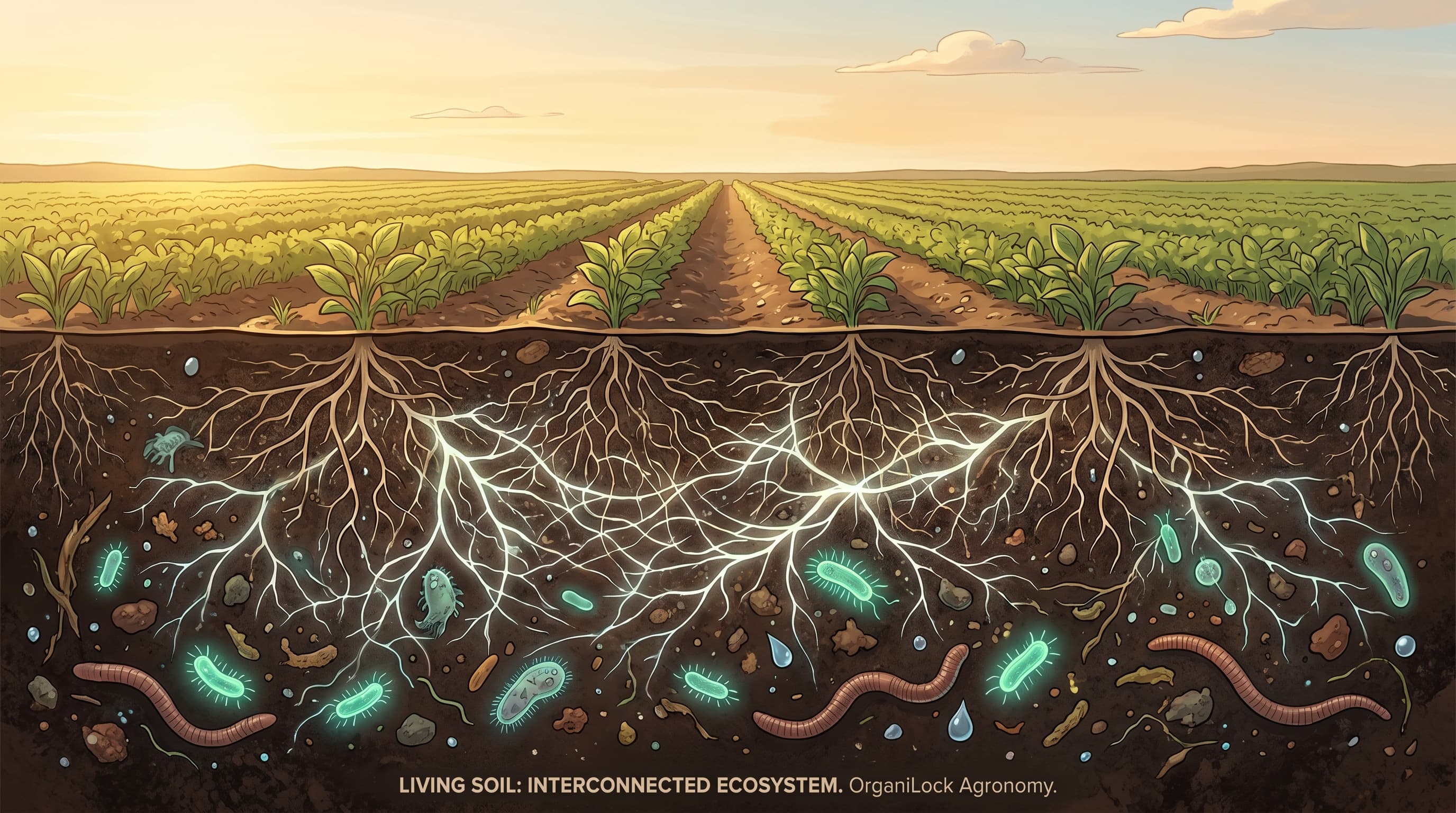
Here is the secret most people never learn: a beautiful lawn is not grown by feeding the grass - it is grown by feeding the soil. The conventional approach treats a lawn like a patient on life support, applying a quick dose of soluble nitrogen every few weeks to force a flush of green, then watching it fade and applying again. It works in the sense that the grass greens up, but it never addresses why the lawn was hungry in the first place, so the lawn becomes dependent on the next feeding, and the next. The soil-first approach asks a better question: what if the soil under the lawn were alive and fertile enough to feed the grass on its own? Build that soil - rich in organic matter, full of biology, open enough for roots and water - and the grass it grows is thicker, deeper-rooted, and far more self-sufficient. You stop forcing green from the top and start growing it from the ground up. That single shift, from feeding the plant to feeding the soil, is the whole secret, and everything else in this guide follows from it.
What living soil does under a lawn
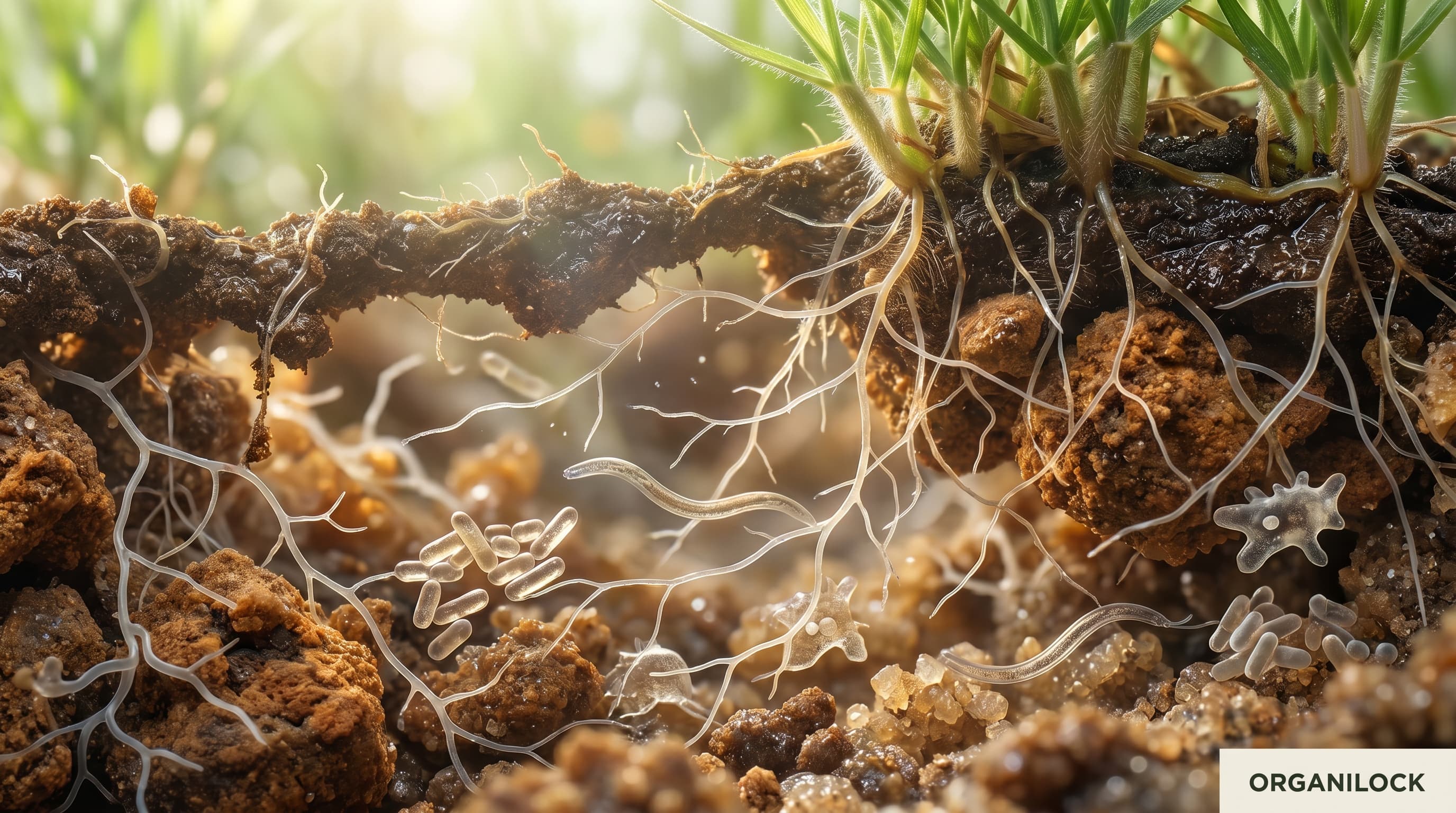
It is worth understanding what is actually happening down there, because it explains why the approach works. A living soil beneath a lawn is a working partnership: beneficial fungi and bacteria break down organic matter and release nutrients gradually, in step with what the grass can use, so the lawn is fed steadily instead of in jolts; the same biology, along with the roots it feeds, keeps the soil open and crumbly so water soaks in instead of running off and roots drive deep instead of staying shallow; and a soil rich in organic matter holds moisture like a sponge, so the lawn stays green longer between rains and watering. A deep-rooted lawn grown in living soil is more drought-tolerant, more wear-tolerant, and better at crowding out weeds simply by being thick and vigorous. None of that comes from a jug of soluble nitrogen. It comes from the soil, which is why building the soil is the highest-value thing you can do for a lawn or landscape.
Why the conventional approach works against you
To be fair, synthetic soluble lawn fertilizer is cheap, fast, and genuinely makes grass green, which is why it is everywhere - and there is no shame in having used it. But it is honest to understand its long-term costs, because they are the reason so many lawns are stuck on the treadmill. Soluble nitrogen forces rapid top growth at the expense of root growth, leaving a lawn shallow-rooted and thirsty. The salts in soluble fertilizers can build up over years and stress the soil biology, and heavy, repeated feeding can drive the thatch buildup that causes its own problems. Most of all, none of it builds the soil - so the lawn never becomes self-sufficient and you are locked into feeding it forever, often four or five times a year. The soil-first approach costs a little patience up front but gets you off that treadmill: a lawn that needs less feeding, less water, and less rescuing as the soil beneath it gets richer year over year. You are investing in the soil rather than renting green by the bag.
Landscape beds: the same principle, longer-lived
Everything true of a lawn is even more true of your landscape beds - the shrubs, perennials, ornamental grasses, and flowers around your yard - because they live even longer in the same spot. A shrub may grow in one place for decades, slowly drawing on and depleting the soil around it, so the quality and life of that soil matters enormously over time. The same move applies: rather than spiking the plants with soluble fertilizer, build and maintain a living soil in the beds, so your landscape plants are fed steadily and grow strong, deep-rooted, and resilient. Landscape Refresh is the OrganiLock product tuned for exactly this setting - trees, shrubs, perennials, and landscape beds - a dry amendment you work into or top-dress over the soil to keep it living and fed without disturbing established plants. We will go deep on landscape feeding in the next lesson and in the companion Trees, Shrubs, and Perennials guide; for now, hold the principle: feed the soil your landscape lives in, and the landscape takes care of itself.
Soil Food: the no-burn foundation
There is one product feature that matters more for lawns than almost anywhere else, and it is worth knowing why. The classic fear with lawn fertilizer is burning - those ugly yellow or brown streaks where someone spilled or over-applied a soluble product, scorching the grass. Soil Food sidesteps that fear entirely: because its nitrogen is the slow-release, insoluble kind that the soil biology unlocks gradually, Soil Food cannot burn your lawn the way a soluble fertilizer can. You can feed generously, you do not have to water it in within minutes to avoid scorch, and an uneven application will not leave you with striped grass. On top of that, Soil Food is OMRI Listed for organic growing and contains no synthetic chemistry - which, on a surface where your kids and pets play, is a genuine peace-of-mind difference. That combination, no-burn and OMRI Listed, is exactly what makes Soil Food such a sensible foundation for a family lawn.
An honest word on weeds and pests
Because lawns and weeds go together in everyone's mind, it is important to be completely straight about what OrganiLock does and does not do. OrganiLock products are soil and plant nutrition. They are not herbicides, not "weed and feed," and not pest or grub control - nothing here kills, repels, or prevents a weed or an insect. What a soil-first approach does do is grow a thicker, healthier, more vigorous lawn, and a dense, vigorous lawn is naturally better at crowding out weeds simply by leaving them less bare ground and light to establish in - that is sound horticulture, not a pest claim, and it is the honest benefit. But it is not a substitute for weed or pest control when you need it. If you have a real weed problem, a grub infestation, or a lawn disease, those are handled with proper, correctly-labeled products and cultural practices, and your local extension office can point you to the right ones. Growing strong turf in living soil means you face those problems less often; it does not mean you never will, and we will keep that distinction honest throughout this guide.
Plain-English takeaway: Lawns and landscapes are large, permanent plantings in soil you usually inherited and your family lives on - which makes the soil-first secret ideal: feed the soil, not the grass, and you grow a thicker, deeper-rooted, more self-sufficient lawn over time instead of renting green by the bag. Soil Food is the no-burn, OMRI-Listed foundation; OrganiLock is nutrition, never a weed or pest killer.