Once you accept that the goal is to feed the soil rather than the grass, feeding a lawn and landscape becomes refreshingly simple - and a great deal less work than the conventional four-or-five-times-a-year fertilizer schedule. This lesson lays out exactly how to feed both, using the same build-maintain-boost system you have met elsewhere in the Academy, with the right OrganiLock product for each job. The result is a feeding plan you can actually keep, that grows a better lawn while you do less.
Feed the soil, and the lawn feeds itself
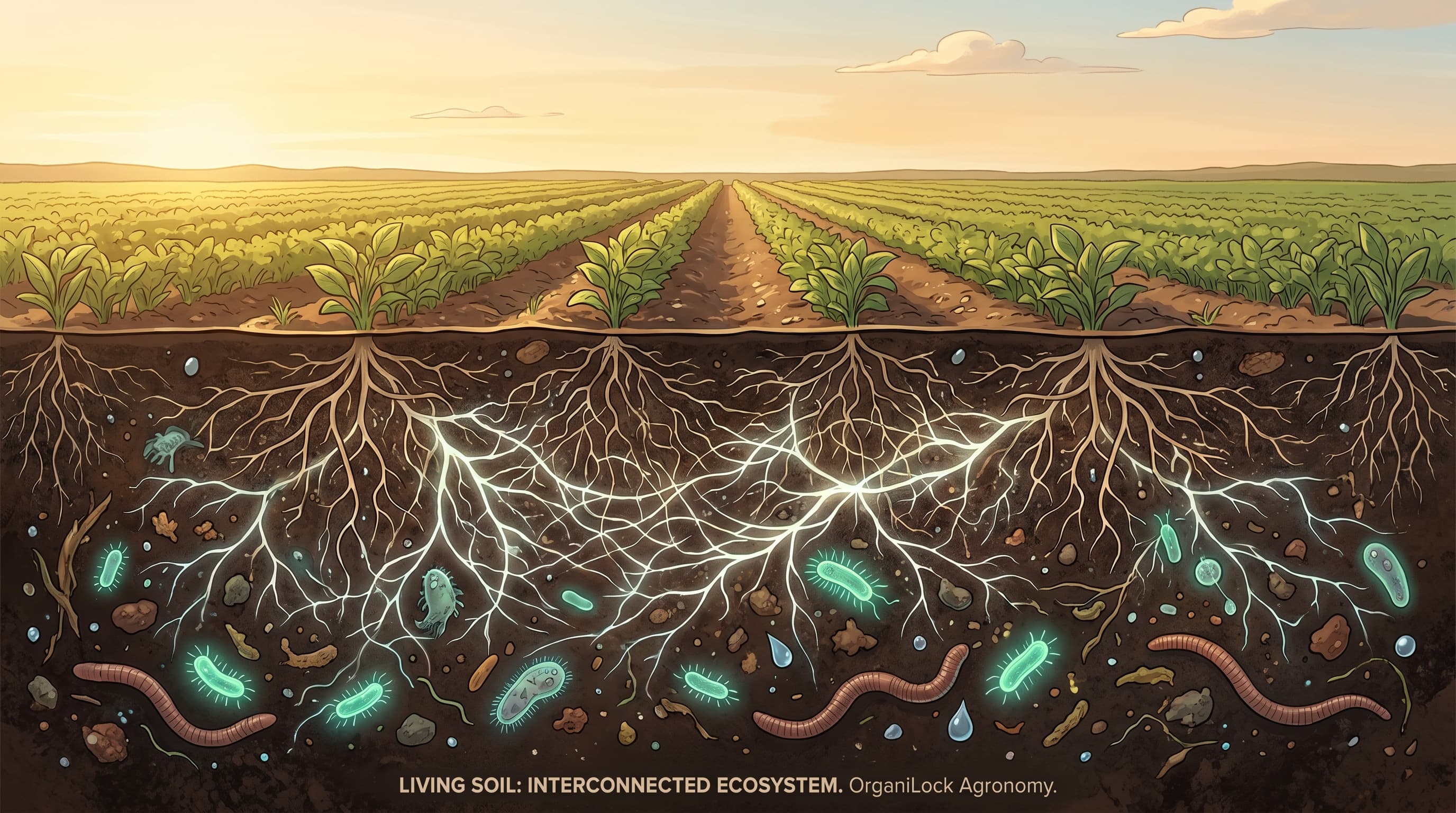
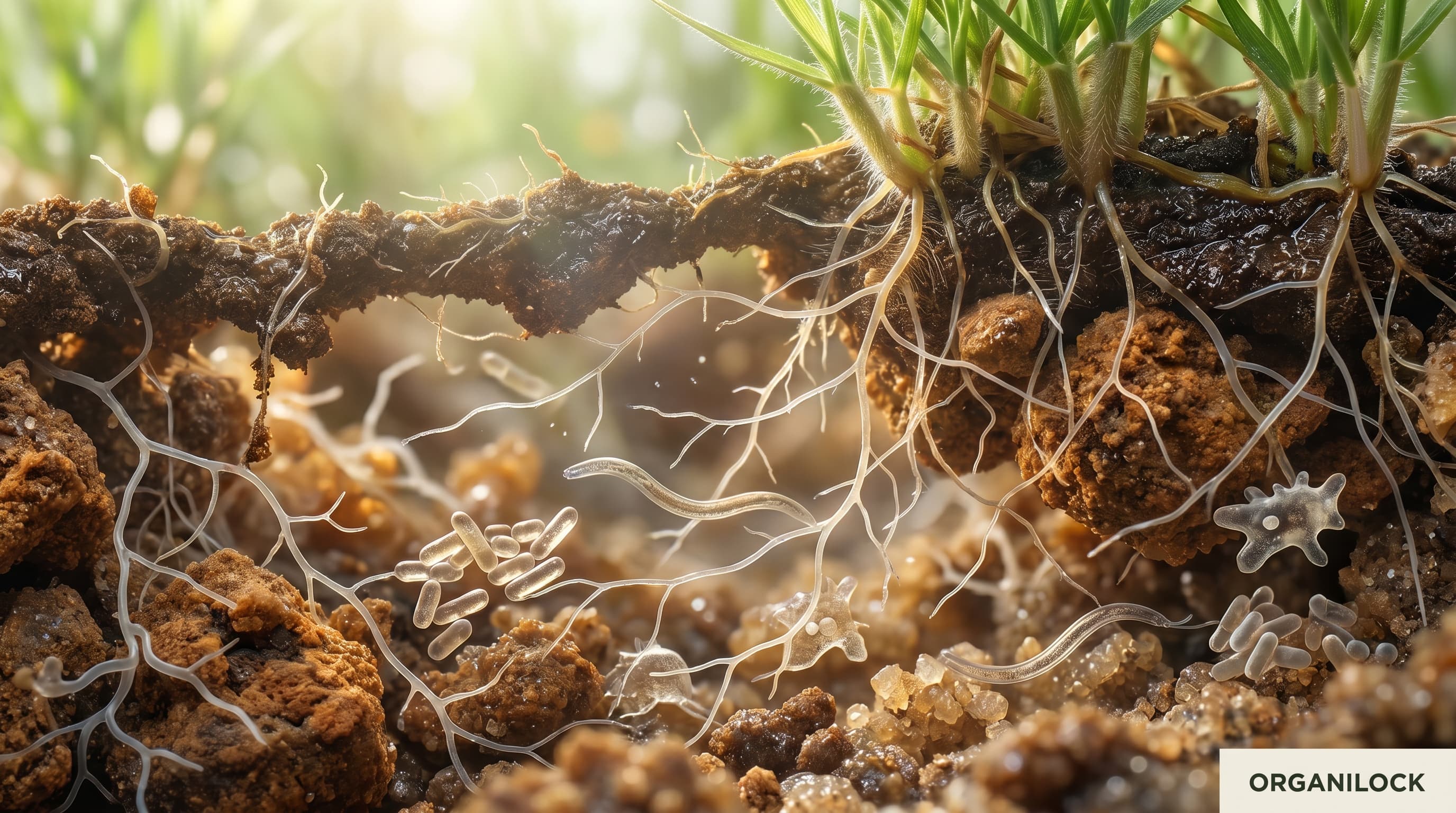
It bears repeating because it reorders everything you do: in a soil-first lawn, the living soil does most of the feeding. Your job is not to spoon-feed the grass on a tight schedule but to keep the soil under it alive, fertile, and topped up, and then let that soil release nutrients steadily to the roots. This is why a soil-first lawn needs feeding far less often than a conventional one - you are not chasing the fade of each soluble dose, you are maintaining a soil that feeds continuously. So as we walk through the products and timing, keep the frame in mind: every application is really an investment in the soil, and the green lawn is the soil's output, not the fertilizer's.
The build-maintain-boost system
The simplest way to feed a lawn or landscape well is to think in three roles and use the right product for each:
- Build - establish or rebuild the living soil with Soil Food, a dry amendment you spread over the lawn or work into a bed. This is the foundation: it adds whole-food organic matter, beneficial biology, and biochar, and because Soil Food is OMRI Listed and cannot burn, you can apply it generously over a lawn where kids and pets play without any scorch risk.
- Maintain - keep the soil topped up over time with the matched Refresh. For landscape beds, trees, shrubs, and perennials, that is Landscape Refresh, worked in or top-dressed to re-feed the soil season to season without disturbing established plants. For the lawn itself, a renewed feeding of Soil Food does the maintaining.
- Boost - when a specific plant or area wants a faster feed, Plant Food is the quick, direct option (a soluble feed sprayed or drenched, about 1/2 oz per gallon, at label rate). Two honest notes: Plant Food is not organic-certified, and unlike Soil Food it can burn if over-concentrated, so always follow the label rate - which matters even more on a wide-open lawn.
Feeding an established lawn
For a lawn that is already growing, you do not rebuild the soil all at once - you feed it from the top and let it improve over the seasons. The move is simple: spread Soil Food evenly across the lawn with a broadcast or drop spreader, then water it in so it settles down to the soil surface and the biology gets going. Because Soil Food is no-burn, you have none of the usual anxiety - no need to race the clock watering it in to avoid scorch, no streaking from an uneven pass, no dead patches from a spill. Over repeated feedings, that steady addition of organic matter and biology works its way down, thickening the turf and deepening the roots. The best results come from pairing the feeding with the soil-building habits later in this guide - mowing high, leaving the clippings, watering deeply - so the whole system pushes the lawn toward thicker, more self-sufficient growth. For exact rates and the best times of year, lean on the calculator and the label; the rhythm itself is easy.
Feeding landscape beds, trees, and shrubs
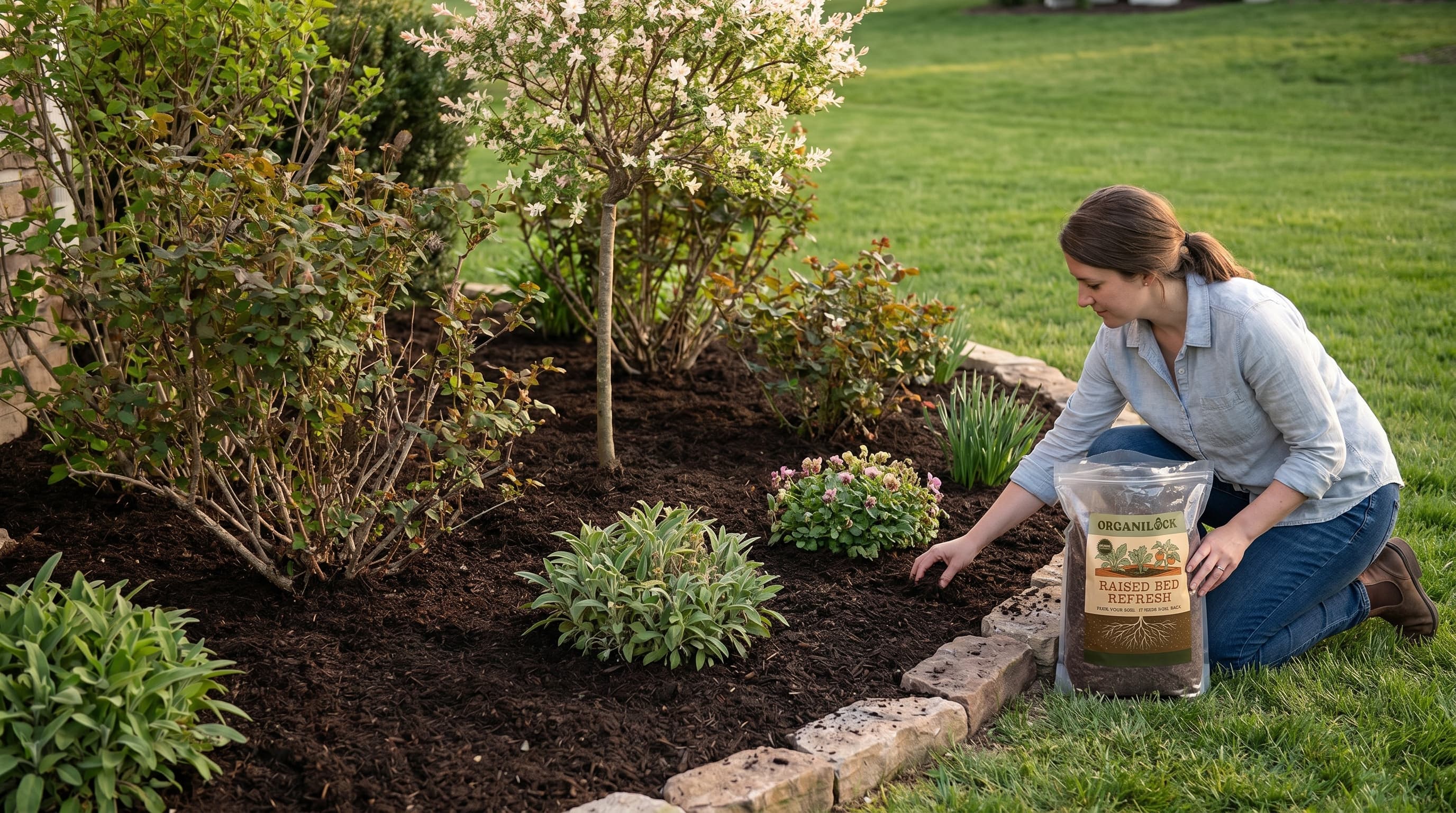
Landscape beds are fed on the same logic, tuned to longer-lived plants. When you plant a new shrub, tree, or perennial, mix Soil Food into the planting soil so the roots grow into living soil from day one. For established beds and plantings, top-dress Landscape Refresh over the root zone - spread it over the soil under and around the plants and let it work in with watering and time - to keep the soil fed without digging around established roots. A layer of mulch over the bed completes the picture, holding moisture and feeding the soil as it breaks down. Because woody and perennial plants feed slowly and steadily, this gentle, soil-building approach suits them perfectly; they rarely want or benefit from the hard soluble feeding lawns are often given. The companion Trees, Shrubs, and Perennials guide goes deeper, but the headline is the same as everywhere: feed the soil the plants live in, and they thrive.
Fewer feedings than you are used to
One of the most pleasant surprises of feeding a lawn the soil-first way is how much less often you do it. A conventional soluble program often means four or five feedings a year, each timed to catch the lawn before the last dose fades - a lot of trips across the yard with a spreader, and a lot of fertilizer bought. A soil-first lawn works on a different schedule entirely, because you are maintaining a soil that feeds continuously rather than chasing the fade of each soluble jolt. In practice that usually means feeding the soil once or twice a year at the right season for your grass type, plus the free soil-building habits - leaving the clippings, mowing high, watering deeply - that feed and improve the lawn between applications. The result is less work, less product, and a lawn that gets better rather than just briefly greener. If the conventional grind of feeding every few weeks is what has made lawn care feel like a chore, the soil-first schedule is a genuine relief: you feed the soil well at the right time and then largely let it, and your good habits, do the rest.
Why no-burn changes how you feed a lawn
It is worth dwelling on how much easier a no-burn foundation makes lawn feeding, because it removes the very things that make conventional lawn fertilizing stressful. With a soluble fertilizer, an uneven spreader pass leaves dark-green stripes and a missed strip leaves pale ones; a spill leaves a dead spot; feeding before a hot, dry stretch can scorch the grass; and you have to water it in promptly to move the salts off the blades. Soil Food has none of that drama. Apply a little unevenly and the worst case is slightly uneven feeding, not burn scars. Forget to water it in right away and nothing is harmed. Feed going into a warm spell and the grass is not at risk. That forgiving quality is not just a convenience - it is what makes a generous, soil-building feeding practical on a large surface, where a soluble product would have to be applied cautiously and precisely to avoid damage. The no-burn nature of Soil Food is a big part of why the soil-first approach is so well suited to lawns.
How much, and the calculator
You do not have to guess at quantities, which matters most on a lawn where the area is large and over-buying or under-applying are both easy. The OrganiLock calculator sizes the right amount for your specific lawn or bed - enter the area and it tells you how much to buy and apply - turning "how many bags do I need for the front yard?" into a clear number. For exact application rates and the best timing, the product label is always your authority. The general shape is easy to hold, though: a measured spread of Soil Food to build and feed the lawn, a top-dress of Landscape Refresh to maintain the beds, and Plant Food on hand for the occasional boost. Size it with the calculator, follow the label, and you have a real plan rather than a guess - and you avoid the common mistake of buying far more soluble fertilizer than a lawn ever needed.
Safe for the places your family lives
There is a real, often-overlooked benefit to feeding a lawn the soil-first way: it is genuinely safe for the spaces your family actually uses. The lawn is where children play, pets nap, and people walk barefoot, so what you spread on it matters. Soil Food is OMRI Listed for organic growing, contains no synthetic chemistry, and because it cannot burn, there is no caustic salt sitting on the blades after application. For a lot of families, being able to feed the lawn and let the kids back out to play without worry is reason enough to choose this approach. Just keep the honest boundaries from your other lessons in mind: that OMRI Listing and no-burn safety belong to Soil Food specifically; Landscape Refresh is built on a Soil Food base but is not itself OMRI Listed; and Plant Food is a soluble feed to be used at its label rate. Match the product to the job, follow the label, and you can keep a beautiful lawn and a yard that is safe to live on.
Plain-English takeaway: Feed the soil and the lawn feeds itself: build with Soil Food (OMRI Listed, no-burn, safe to spread where kids and pets play), maintain landscape beds with Landscape Refresh, and boost with Plant Food when wanted (not organic, can burn, follow label). Soil Food's no-burn nature makes a generous soil-building feeding practical on a large lawn, and the calculator sizes it so you stop guessing.