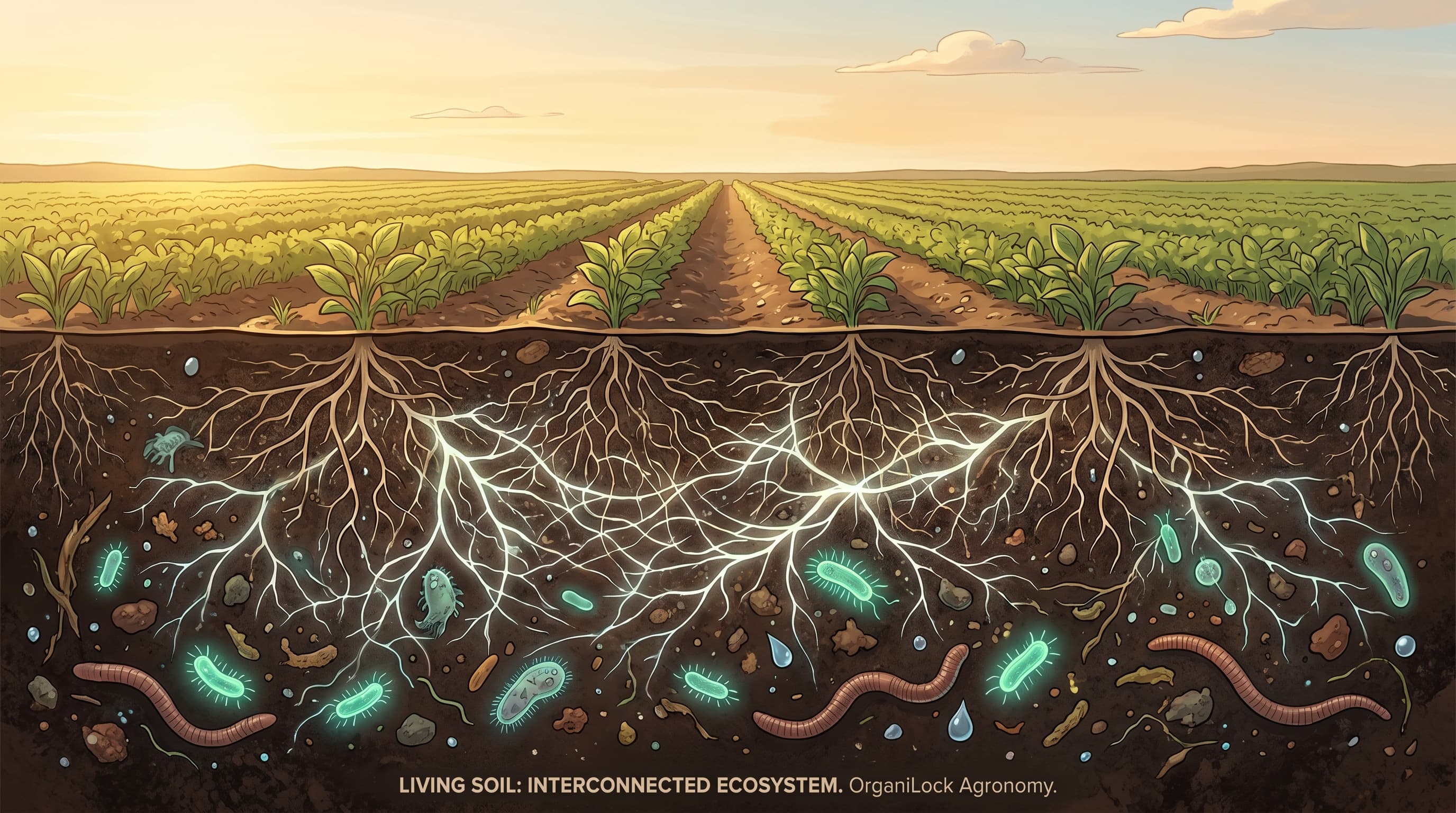
Every lawn and landscape runs into trouble - thin patches, weeds creeping in, plants that sulk, areas that just will not thrive. The encouraging news is that most lawn and landscape problems trace back to the same small set of causes, and most of those causes live in the soil. This lesson walks the common ones and the honest fix for each, drawing on the diagnostic thinking from the Diagnose and Fix course. As always, the durable answer is usually to improve the soil and the basics rather than to reach for a quick fix - and where a problem genuinely needs a pesticide or herbicide, we will say so plainly.
The thin, tired, struggling lawn
The most common lawn complaint is simply a lawn that is thin, weak, and struggling no matter how much you feed it - pale, sparse, slow to fill in, quick to brown in summer. The reflex is to add more fertilizer, but a chronically thin lawn is usually telling you about its soil: it is compacted, low in organic matter, and shallow-rooted, so the grass cannot establish a strong, dense stand. Pouring on soluble nitrogen forces a brief green-up but does not fix the underlying soil, so the lawn slides back. The real fix is to build the soil the grass is growing in - feed it with Soil Food to add organic matter and biology, relieve compaction (more on that next), and adopt the soil-building mowing and watering habits in the next lesson. A thin lawn is rarely just hungry; it is usually growing in poor soil, and improving that soil is what finally lets it thicken up.
Compaction: the number-one lawn problem
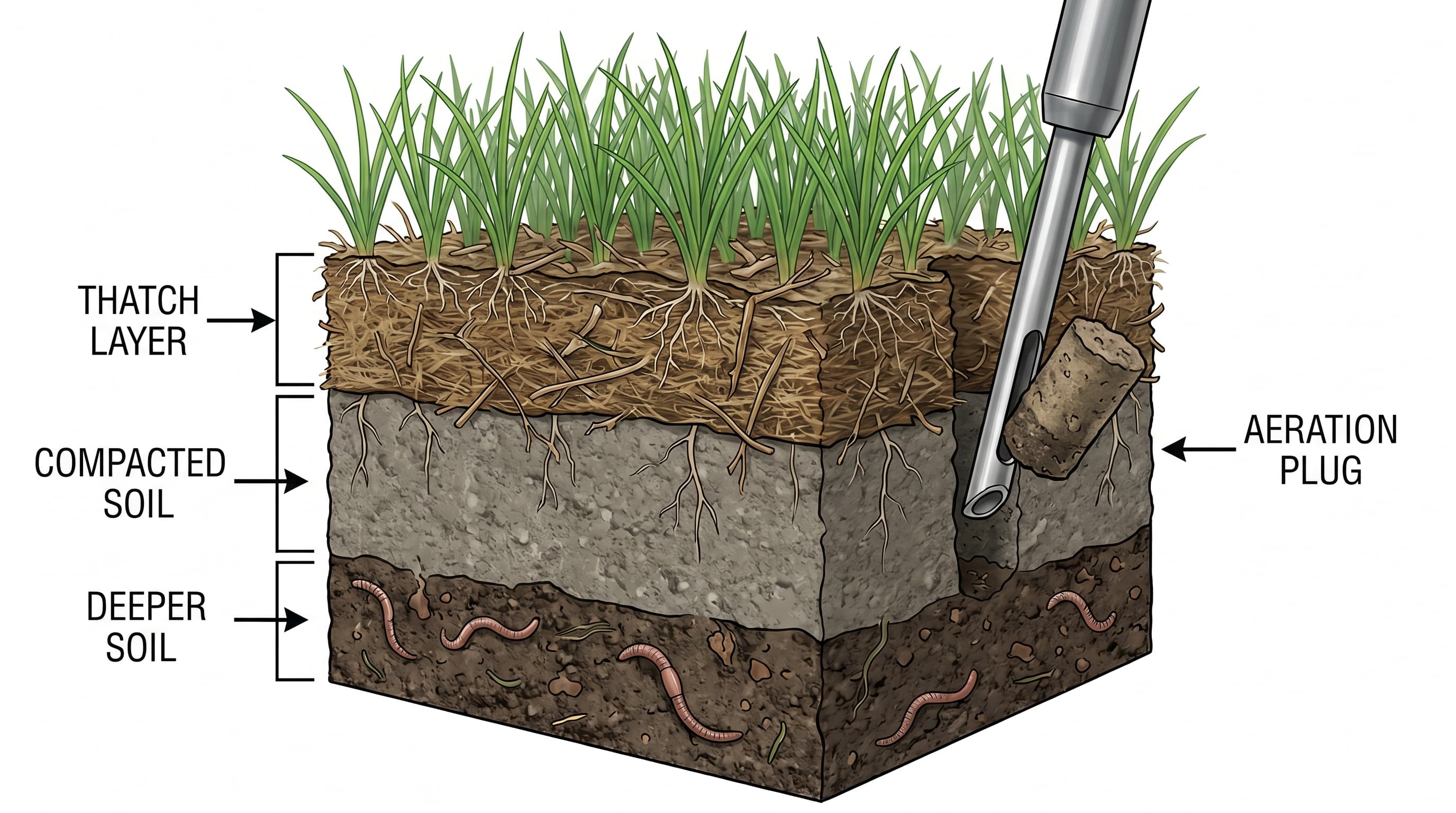
If there is a single most common and most underappreciated lawn problem, it is soil compaction. Lawns get walked on, played on, mowed over, and rained on, and over time the soil beneath them packs down hard - especially in high-traffic paths and in heavy clay soils. Compacted soil sheds water (so it runs off instead of soaking in), starves roots of air, and physically blocks roots from growing deep, which leaves you with a shallow-rooted, drought-prone, struggling lawn no amount of fertilizer can fix. The classic mechanical remedy is core aeration - pulling small plugs of soil to open the lawn up - and it genuinely helps. But the lasting fix is biological: building organic matter into the soil, which feeds the earthworms and soil life that keep the soil naturally open and crumbly. Aerating and then feeding with Soil Food is a powerful combination - the aeration opens the soil and lets the amendment work down, and the organic matter and biology keep it open over time. A lawn on compacted soil will always struggle; relieve the compaction and feed the soil, and it can finally thrive.
Thatch buildup
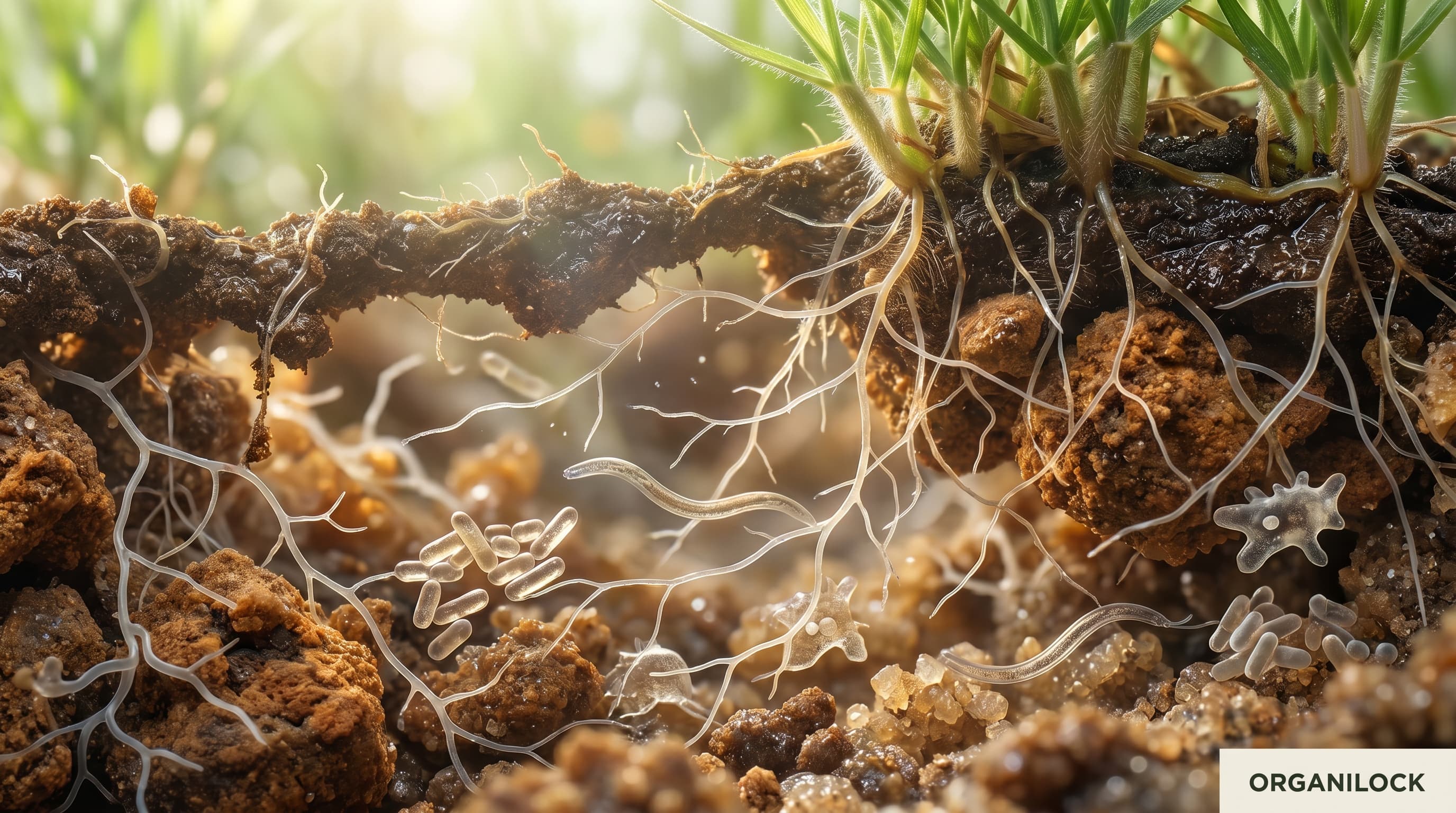
Thatch is the layer of dead and living stems, roots, and debris that can accumulate between the green grass and the soil surface, and a thick thatch layer causes real trouble - it sheds water, harbors pests and disease, and keeps roots up in the thatch instead of down in the soil. It helps to know what drives it, because the soil-first approach works against it. Heavy soluble nitrogen feeding pushes the fast, lush top growth that builds thatch faster than it breaks down, and a sterile soil lacks the biology to decompose it. A living soil, by contrast, is full of the microbes and earthworms that digest thatch naturally, so building soil biology helps keep thatch in check. If thatch is already thick, mechanical dethatching or aeration removes or breaks it up, and feeding the soil afterward helps the biology stay on top of it going forward. Ease off the heavy soluble feeding that drove it, build the biology that breaks it down, and thatch becomes far less of a recurring battle.
Weeds moving in
Weeds in a lawn are one of the most common frustrations, and it is important to be both honest and useful here. First the honest part: OrganiLock products do not kill or prevent weeds - they are nutrition, not a herbicide or a "weed and feed," and nothing in this guide will remove a weed for you. Now the useful part: weeds are very often a symptom of a weak lawn. Bare patches, thin turf, and compacted soil give weeds the open ground and light they need to establish, and many common lawn weeds are actually better adapted to the poor, compacted soil that thin lawns grow in. So the most powerful long-term weed strategy is sound horticulture: grow a dense, vigorous, deep-rooted lawn by building the soil, and that thick turf naturally leaves weeds far less room to get started. That is genuine prevention through plant health, not a pest claim. For weeds that are already established, you will need proper, correctly-labeled weed control and good cultural practices (hand-pulling, correct mowing height, overseeding bare spots) - and your local extension office can recommend the right approach for your grass and your weeds. Build the lawn's health to prevent weeds; use the proper tools to remove the ones already there.
Yellowing, struggling, or off-color areas
When a lawn or a landscape plant yellows or looks starved, the temptation is to feed - but as the Diagnose and Fix course taught, a hungry look is often not a true nutrient shortage at all. In a lawn, yellowing can come from compacted or waterlogged soil suffocating the roots, from inconsistent watering, from soil pH locking nutrients up, from dog urine spots, or from disease - none of which more fertilizer will fix, and some of which it will worsen. Before you reach for nitrogen, look at the basics: is the area compacted or staying wet, is it being watered evenly, has it had a soil test? The same holds in landscape beds, where an off-color shrub is more often dealing with poor drainage, planting too deep, or pH than a simple lack of food. The reliable move with a stubborn yellowing problem is to check the water and soil conditions and, for a persistent puzzle, get a soil test - which turns guessing into a clear plan instead of a pile of fertilizer the area never needed.
Burn and salt from over-fertilizing
Here is a problem that comes from doing too much rather than too little, and it is especially common on lawns: fertilizer burn and salt buildup. Soluble lawn fertilizers are salts, and over-applying them - or spilling concentrated product, or feeding heavily season after season - scorches the grass into yellow or brown streaks and patches and can leave a salt residue that stresses the lawn over time. If a heavily-fed lawn is looking worse, with burn streaks or crispy areas, the answer is less, not more: ease off the soluble feeding, water deeply to help flush the salts down and out, and lean on the slow-release, soil-building approach instead. This is one more place the product distinction matters: an insoluble, slow-release amendment like Soil Food releases gently through the soil biology and does not create that salt spike or burn, which is exactly why it is such a forgiving choice on a lawn, whereas a soluble feed like Plant Food behaves like any soluble salt and must be used at its label rate. When a lawn looks scorched from feeding, the cure is to stop salting it and start building it.
Grubs, pests, and disease, honestly
Lawns and landscapes do get grubs, insect pests, and diseases, and it is essential to be completely honest about the role soil plays. A healthy lawn and healthy landscape plants grown in living, balanced soil are more resilient and recover better from stress and minor pest pressure than weak, struggling ones - that is genuine horticultural wisdom and the best first line of defense. But to be perfectly clear: OrganiLock products are soil and plant nutrition, not pesticides or grub control, and nothing here will kill or repel a grub, a chinch bug, or a lawn fungus. The real toolkit for lawn and landscape pests and disease is identification plus the proper, correctly-labeled product and good cultural practices - right mowing height, deep infrequent watering, good airflow, and not over-feeding nitrogen, which grows the soft, pest-favored tissue. When a real grub infestation or disease shows up, identify it and consult your local extension office or a lawn professional for the right, properly-labeled solution. Strong turf in living soil means you meet those problems less often and bounce back better; it is not a replacement for handling them when they come.
Plain-English takeaway: Most lawn and landscape problems trace to the soil: a thin lawn and compaction are fixed by relieving compaction (aeration) and building organic matter, thatch is kept in check by soil biology (not heavy soluble feeding), yellowing is usually a water/pH/compaction issue to check rather than feed, and burn comes from over-fertilizing. Weeds, grubs, and disease are prevented by lawn health but removed with proper labeled products - OrganiLock is nutrition, never a herbicide or pesticide.