A great lawn and landscape are tended across the whole year, in a rhythm that works with the seasons rather than against them. Once you know that rhythm - and one crucial detail about which grass you are growing - lawn and landscape care becomes far less guesswork and far more routine. This final lesson walks the year season by season, covers the soil-building habits that quietly do half the work, and ends with the payoff: a lawn and landscape that need less from you every year instead of more.
First, know your grass: cool-season vs warm-season
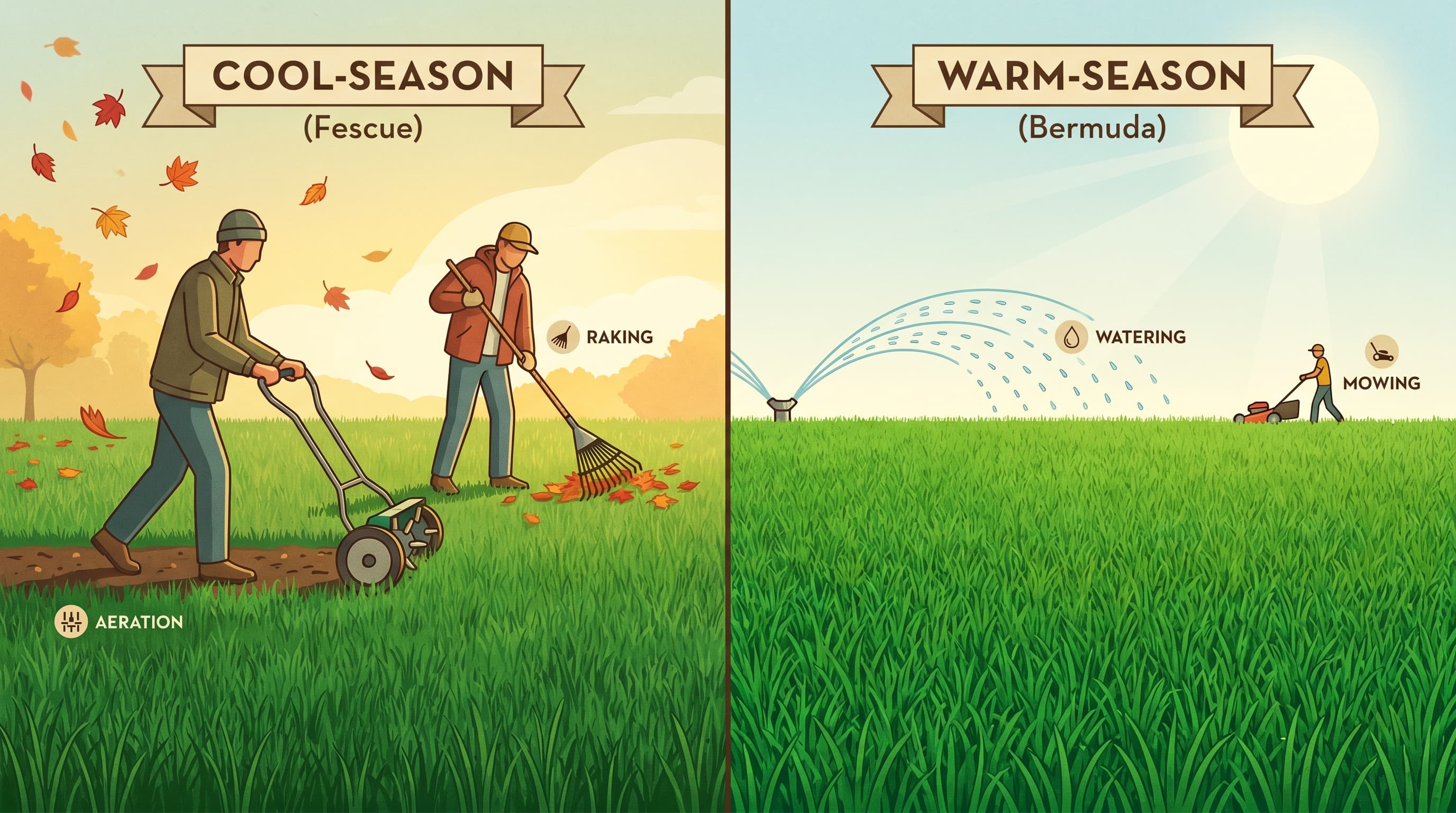
Before the seasons make sense, you need one piece of information that changes the entire calendar: whether you have cool-season or warm-season grass. Cool-season grasses (like fescue, ryegrass, and Kentucky bluegrass, common in northern regions) grow most vigorously in the cool of spring and fall and tend to slow or go dormant in summer heat - which means fall is their most important season for feeding and overseeding. Warm-season grasses (like Bermuda, Zoysia, and St. Augustine, common in the south) do the opposite: they thrive in summer heat and go dormant and brown in winter, so late spring into summer is their main feeding window. Getting this right matters because feeding a grass hard when it is dormant is wasted at best and harmful at worst. So the seasonal guidance below gives the principle, but always tune the timing to your grass type - if you are unsure which you have, your local extension office can tell you in a moment, and it is worth knowing.
Spring - wake and feed
Spring is when the lawn and landscape come back to life, and your job is to support that reawakening without overdoing it. As the soil warms, the grass and plants begin growing again and it is a natural time to feed the soil - spread Soil Food across the lawn and top-dress Landscape Refresh in the beds to fuel the season's growth. Spring is also the prime window for soil-building projects: aerating a compacted lawn, overseeding thin areas (especially for cool-season grass), and working amendments into beds before plants fill in. A word of restraint, though: resist the urge to force a hyper-green flush with heavy soluble feeding, which drives soft growth and thatch - feed the soil and let the lawn green up steadily and strongly. For warm-season grass, hold the main feeding until the grass is fully greened up and actively growing in late spring. A measured, soil-building spring sets the lawn and landscape up for the whole year.
Summer - support through the stress
Summer is the season of stress for most lawns - heat, drought, foot traffic, and for cool-season grass, a natural slowdown. The key in summer is to support, not push. Mow high (taller grass shades its own roots, holds soil moisture, and crowds out weeds), water deeply and infrequently rather than with frequent shallow sprinklings (deep watering drives deep, drought-resilient roots), and leave your clippings on the lawn to return moisture and nutrients to the soil. Ease off heavy feeding during summer heat, especially for cool-season grass that is trying to coast through dormancy - forcing growth in heat stresses the lawn. Warm-season grasses, in their element, can be fed and will thrive now. In the landscape beds, keep the soil mulched and watered, and let the living soil carry the plants through. Summer is mostly about good habits and restraint, letting the soil and the right mowing and watering see the lawn through the hard months.
Fall - the most important season for a lawn
For cool-season lawns especially, fall is the single most important season of the year, and getting it right is what separates a thin lawn from a lush one. As the heat breaks and the grass shifts back into vigorous growth, fall is the prime time to feed the soil, to overseed thin and bare areas (the cooling soil is still warm enough to germinate seed but cool enough to favor the grass), and to aerate compacted soil. A fall feeding with Soil Food, worked into an aerated lawn, lets the organic matter and biology integrate and feeds the strong root growth that happens underground in fall and even into early winter - which is exactly what builds a dense, deep-rooted lawn that comes back thick in spring. This is the soil-first lawn's equivalent of the garden's fall feeding: the quiet, high-leverage step most people skip. In the landscape beds, fall is likewise a great time to top-dress Landscape Refresh and add organic matter so the soil rebuilds over the cooler months. Do the fall work, especially on a cool-season lawn, and you bank a better lawn for next year.
Winter - rest and plan
Winter is the rest season for most lawns and landscapes, and there is little to do but a few protective and forward-looking things. Keep landscape beds mulched to protect the soil and the roots through the cold, and avoid heavy foot traffic on a frozen or dormant lawn, which can damage the crowns. The soil beneath is alive but slow, quietly continuing to break down the organic matter you added in fall. Winter is mostly planning season: think about what worked and what did not, plan any lawn renovation or new landscape plantings for spring, and if a lawn area or a bed gave you persistent trouble, this is a good time to send off a soil test so you start the year with facts rather than guesses. For warm-season lawns, winter dormancy and browning is normal and expected - do not try to force green from a dormant warm-season lawn. Little is asked of you in winter; protect the soil, let the lawn rest, and plan a good year.
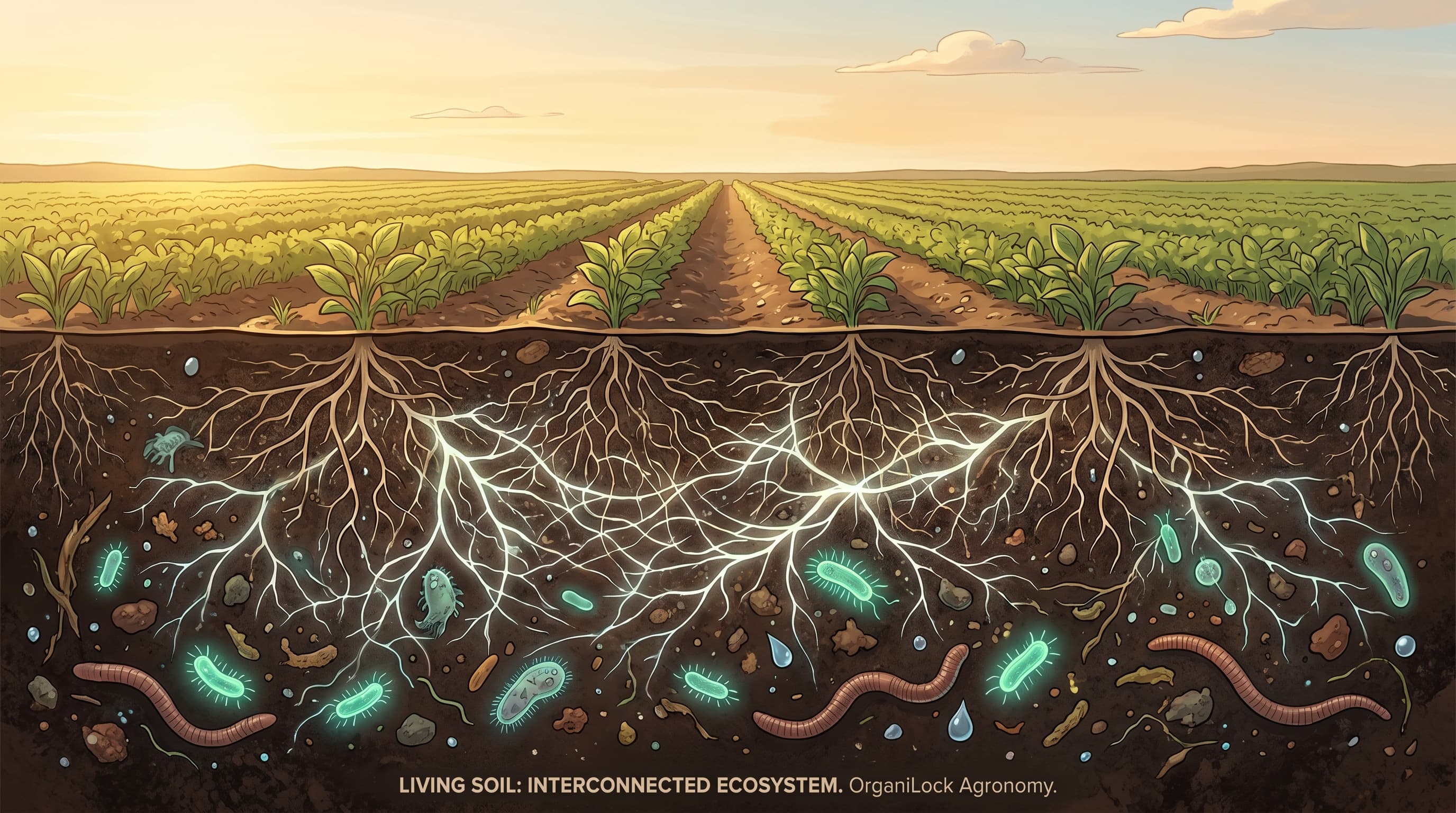
The soil-building habits that do half the work
Here is something that surprises people: how you mow and water builds soil and grows a better lawn as much as anything you spread, and these free habits quietly do half the work. Mow high - keeping the grass taller shades the soil, encourages deeper roots, holds moisture, and crowds out weeds, while scalping a lawn short stresses it and invites problems. Leave the clippings - grasscycling returns nitrogen, moisture, and organic matter straight to the soil (it does not cause thatch; that is a myth), effectively feeding the lawn for free with every mow. Keep the mower blade sharp so it cuts cleanly rather than tearing and stressing the grass. And water deeply but infrequently, encouraging deep roots, rather than the daily light sprinkling that grows shallow, thirsty, weak roots. None of these costs a thing, and together they do more for a lawn's health and self-sufficiency than any product - the feeding and these habits reinforce each other, both pushing the lawn toward thick, deep-rooted, soil-fed growth.
Overseeding: the soil-first way to thicken a lawn
One practice deserves a closer look because it pairs so naturally with the soil-first approach: overseeding, the act of spreading fresh grass seed over an existing lawn to thicken it and fill thin or bare spots. A thick, dense lawn is the goal of everything in this guide - it is what crowds out weeds, resists wear, and looks lush - and overseeding is how you actively build that density rather than waiting for the existing grass to spread on its own. The soil-first method makes overseeding work better: seed germinates and establishes best in living, loose soil, so the strongest results come from overseeding right after aerating and feeding the soil, when the new seedlings can root into improving ground. Time it to your grass type - early fall for cool-season lawns, late spring for warm-season - keep the seeded area consistently moist until the new grass is up and growing, and avoid anything that would disturb or smother the tender seedlings while they establish. Combine overseeding with feeding the soil once or twice a year and a thin, patchy lawn fills in to a thick, healthy stand far faster than feeding alone, because you are adding new plants and improving the soil they grow in at the same time.
The payoff: a lawn that needs less every year
Tend the full cycle this way and the payoff compounds, exactly as it does in the garden. A lawn and landscape built on living soil - fed to build the soil, aerated to relieve compaction, mowed high with the clippings left, watered deeply, and fed again in fall - does not just hold steady; it improves year over year. Each season the soil gains organic matter and biology, the turf thickens, the roots drive deeper, and the whole lawn becomes more drought-tolerant, more wear-tolerant, more weed-resistant, and less needy. That is the opposite of the conventional treadmill, where a lawn stays shallow and dependent and demands the same heavy feeding and watering forever. The soil-first lawn asks for patience and good habits up front and then steadily gives back, needing less feeding, less water, and less rescuing as the soil beneath it gets richer. Feed the soil through the seasons, and in time you have a lawn and landscape that look after themselves far more than they ever did - which is the whole reward of growing this way.
Plain-English takeaway: The lawn and landscape year has a rhythm tuned to your grass type: feed and build in the growing seasons (fall is the big one for cool-season lawns, late spring/summer for warm-season), support with restraint through summer stress, and protect and plan in winter. The free soil-building habits - mow high, leave clippings, water deeply, sharp blade, aerate - do half the work, and tending the full cycle gives you a lawn that needs less every year.