Vegetables are hungry. A bed of tomatoes, squash, peppers, and greens pulls a lot of nutrition out of the soil over a season, which is why feeding matters more in a productive vegetable bed than almost anywhere else in the garden. But - and this is the part that trips people up - feeding well is not the same as feeding heavily. This lesson shows you how to feed a vegetable bed the way that actually works: build the soil, maintain it, and boost it when needed, with the right product for each job.
Heavy feeders, but balance still rules
It is true that vegetables, especially the big producers like tomatoes and squash, are heavy feeders that draw down soil nutrients quickly. But it is a mistake to conclude that more fertilizer is always better. As you may have learned in the Diagnose and Fix course, most garden problems are balance problems, not shortage problems, and over-feeding - especially with heavy soluble nitrogen - causes its own troubles: lush, weak growth that attracts pests, blocked uptake of other nutrients, and a soil knocked out of balance. The goal is steady, balanced nutrition that keeps up with hungry plants without overwhelming the system. That is exactly what a living soil delivers, which is why the approach below leads with feeding the soil rather than spoon-feeding the plant.
The build-maintain-boost system
The simplest way to feed a vegetable bed well is to think in three steps, and to use the right product for each:
- Build - rebuild the living soil with Soil Food, a dry amendment worked in (about 1 lb per 50 sq ft mixed into the soil before planting). This is the foundation: it adds whole-food organic matter, beneficial biology, and biochar, and because Soil Food is OMRI Listed and cannot burn, it is a sensible, safe choice for a food garden with kids and pets around.
- Maintain - re-feed the bed each season with Raised Bed Refresh, the setting-tuned amendment, worked into the top few inches at spring prep and again as a fall reset. This keeps the soil topped up year over year without starting over.
- Boost - when a heavy-producing plant wants a faster feed mid-season, Plant Food is the fast, direct option (a liquid you spray on the leaves or pour at the roots, about 1/2 oz per gallon, weekly or as needed). Two honest notes: Plant Food is not organic-certified, and unlike Soil Food it can burn if over-concentrated, so follow the label rate.
Heavy feeders and light feeders
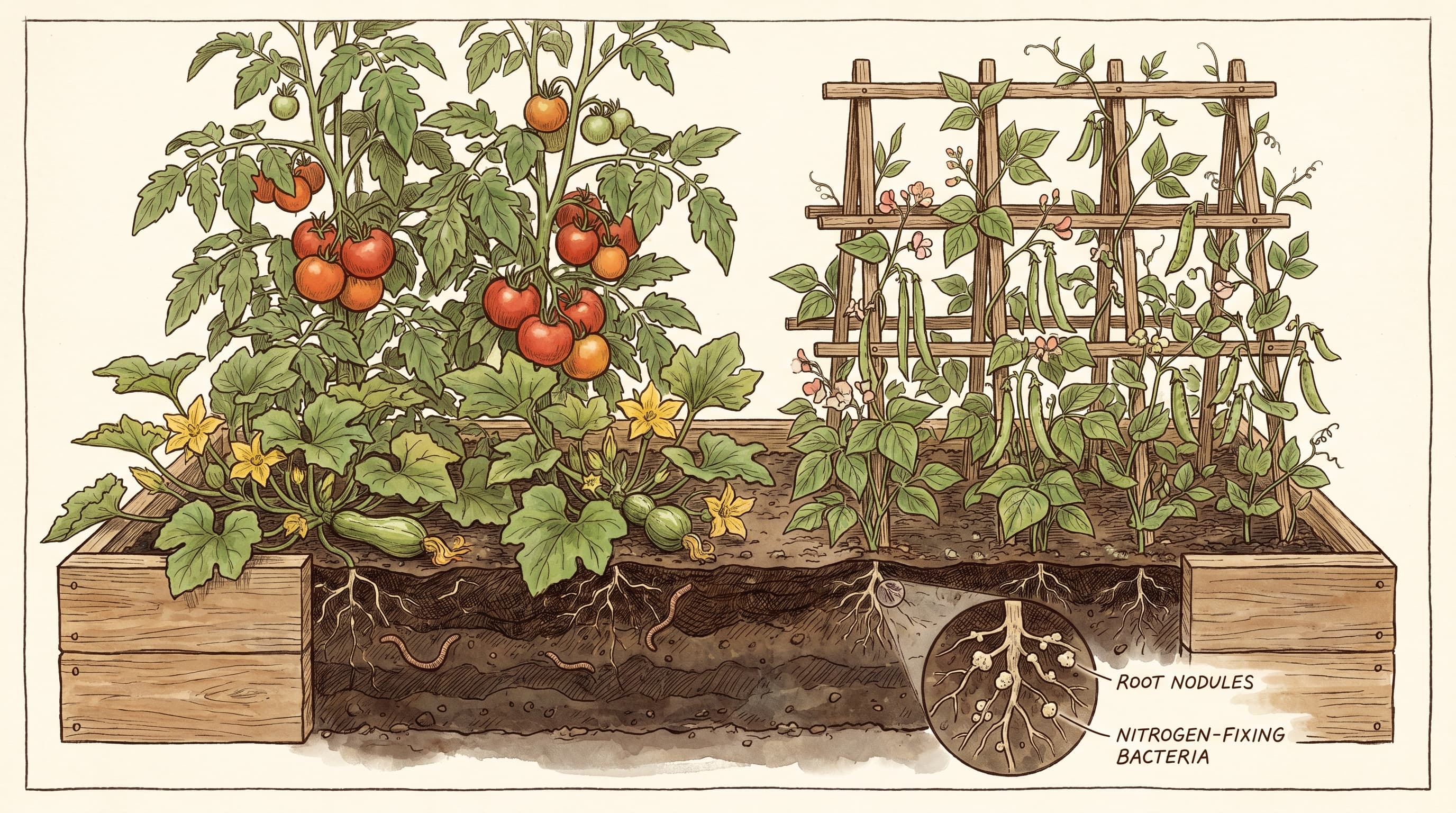
Not every vegetable is equally hungry, and matching your attention to the crop saves effort and prevents over-feeding. The heavy feeders - tomatoes, peppers, squash, corn, broccoli, and the other big leafy or fruiting producers - draw down the most and benefit most from a well-built, well-maintained bed and the occasional boost during peak production. The light feeders - beans, peas, and many herbs - need much less, and some (beans and peas especially, which partner with bacteria to draw their own nitrogen from the air) can actually leave the soil richer than they found it. Root crops like carrots and beets sit in the middle and care more about loose, stone-free, not-overly-rich soil than about heavy feeding. The practical takeaway: build a good living soil across the whole bed, then concentrate any extra feeding on the heavy producers, go light on the beans and herbs, and let the nitrogen-fixing legumes do you a favor. Knowing which is which keeps you from the common mistake of feeding everything as if it were a tomato.
Why feed the soil, not just the plant
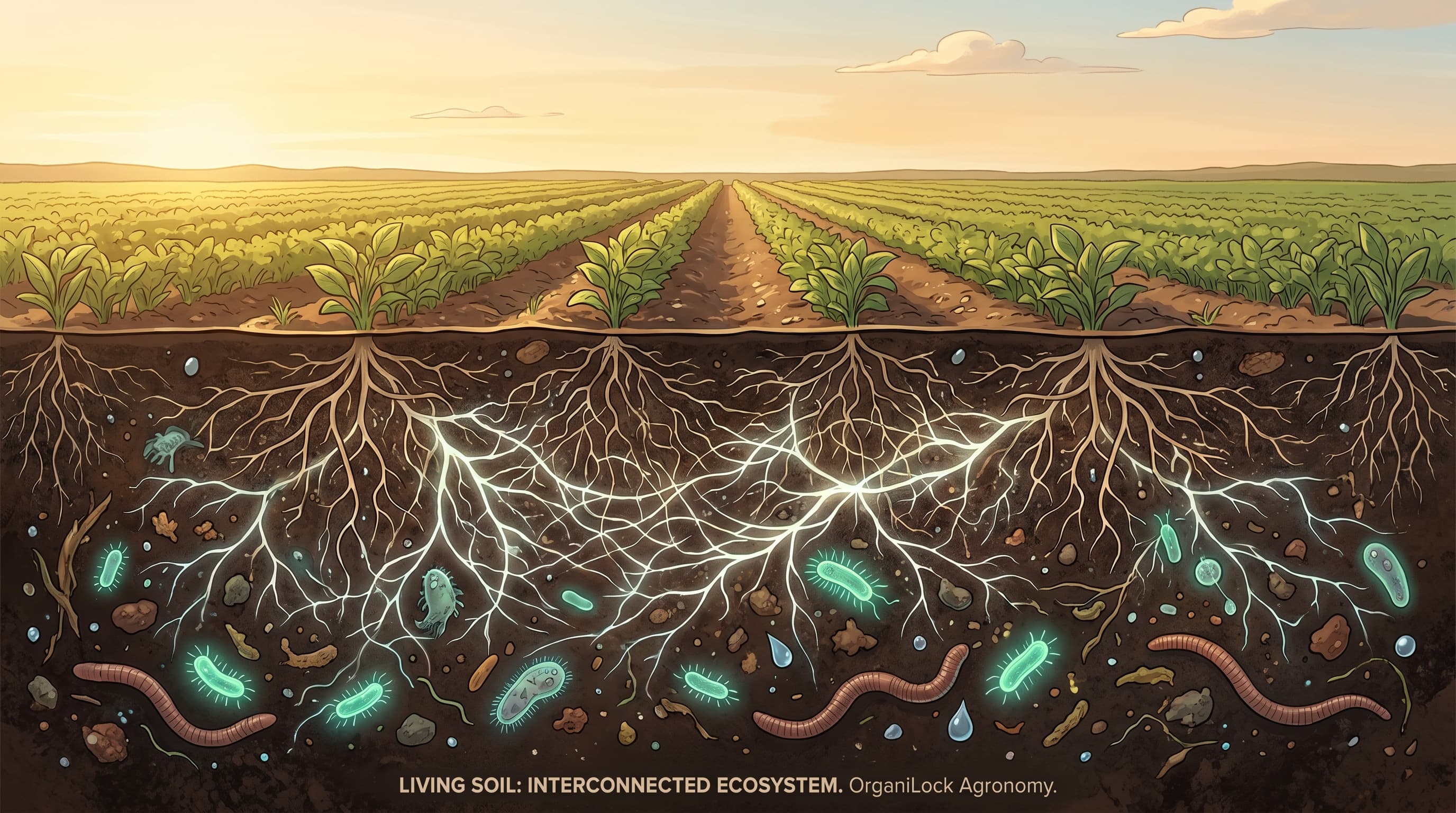
You could try to manage a vegetable bed by pouring on soluble fertilizer every week, timing each dose to each crop's needs - and many gardeners do, with mixed results and a lot of guesswork. Feeding the soil sidesteps most of that. A living soil holds nutrients and releases them gradually, more or less in step with what the plants can take up, so you are not constantly chasing the right dose at the right moment. It also builds over time: a bed fed this way gets richer and more productive each year rather than needing more inputs to stand still. To be fair, soluble synthetic fertilizer is cheap and fast and has its place - but the strongest case for the soil-building approach in a vegetable bed is the steady, season-long, year-over-year payoff, not a quick green-up.
A simple season-long rhythm
It helps to see the feeding system laid out across a season, because the timing is most of what makes it work. At spring prep, before you plant, work your soil-building amendment into the top few inches and water it in - this is the big foundational feeding that sets up the whole season. Through the growing season, the living soil does the steady work, and you simply support it: keep the bed mulched, water consistently, and reach for a Plant Food boost only when a heavy producer clearly wants a faster feed during peak growth. Then in fall, after harvest, feed the soil again to rebuild what the season took (the next lessons cover this). That is the entire rhythm - a substantial build in spring, light support and the occasional boost through summer, and a restorative feeding in fall. You are not feeding constantly or on a rigid weekly schedule; you are building a soil that feeds your plants and then helping it along. Far less work, far better results.
Let the plants guide you
The best feeding instrument you have is your own attention. Rather than feeding on autopilot, watch your plants and let them tell you what they need - a skill the Diagnose and Fix course builds in depth. Vigorous, deep-green, productive plants in a well-built bed usually need very little extra; they are being fed by the soil. A plant that is genuinely lagging is a prompt to investigate - but to investigate, not to immediately dump on fertilizer, because as you have learned, a hungry look is often a water, pH, or balance issue rather than a true shortage. The discipline of feeding the soil well and then observing, rather than reflexively feeding the plant, is exactly what keeps a bed in balance and saves you from the over-feeding that causes so many problems. Feed the soil, watch the plants, and respond to what you actually see.
How much, and the calculator
You do not have to guess at quantities. The OrganiLock calculator will size the right amount for your specific bed - enter your bed dimensions and it tells you how much to buy and apply - which takes the uncertainty out of "how much do I need?" and prevents both under-feeding and waste. For exact application rates and timing, the product label is always your authority. The general shape, though, is easy to hold: a measured amount of Soil Food mixed in to build, a seasonal top-dress of Refresh to maintain, and Plant Food as an occasional boost. Right-size it with the calculator and you have a feeding plan, not a guessing game.
Safe food, safely grown
One of the quiet pleasures of feeding a vegetable bed the soil-first way is that it is genuinely safe to grow food this way. Soil Food is OMRI Listed for organic growing, contains no synthetic chemistry, and because its nitrogen is the slow-release, insoluble kind, it will not burn - which means you can feed generously around vegetables, kids, and pets without worry. That safety is a real reason the approach suits a food garden specifically. Just remember the honest boundaries from your other lessons: that OMRI Listing and no-burn safety belong to Soil Food; Raised Bed Refresh is built on a Soil Food base but is not itself OMRI Listed, and Plant Food is a soluble feed to be used at label rate.
Put the whole approach together and feeding a vegetable bed stops feeling like a chore or a science experiment. You build a living soil once, top it up each season, boost the heavy producers when they ask, and otherwise let the soil do its job while you watch the plants. It is less work than weekly soluble feeding, it is safe to do around a food garden, and it produces a bed that gets better rather than more demanding over time. That is the soil-first way of feeding in a sentence: feed the soil, support it, observe, and let a living bed feed your vegetables for you.
Plain-English takeaway: Vegetables are heavy feeders, but feed for balance, not maximum: build the soil with Soil Food (about 1 lb per 50 sq ft, OMRI Listed, no-burn), maintain it each season with Raised Bed Refresh, and boost with Plant Food when wanted (not organic, can burn, follow label) - feeding the living soil delivers steady season-long nutrition with far less guesswork.