Even a well-built bed runs into trouble eventually - production slows, plants look off, the soil stops behaving. The good news is that raised-bed problems are usually a small, recognizable set, and most trace back to the soil rather than the plant. This lesson walks the common ones and the honest fix for each, drawing on the diagnostic thinking from the Diagnose and Fix course. The theme you will notice: the durable answer is almost always to rebuild the soil, not to reach for a quick chemical patch.
The tired bed
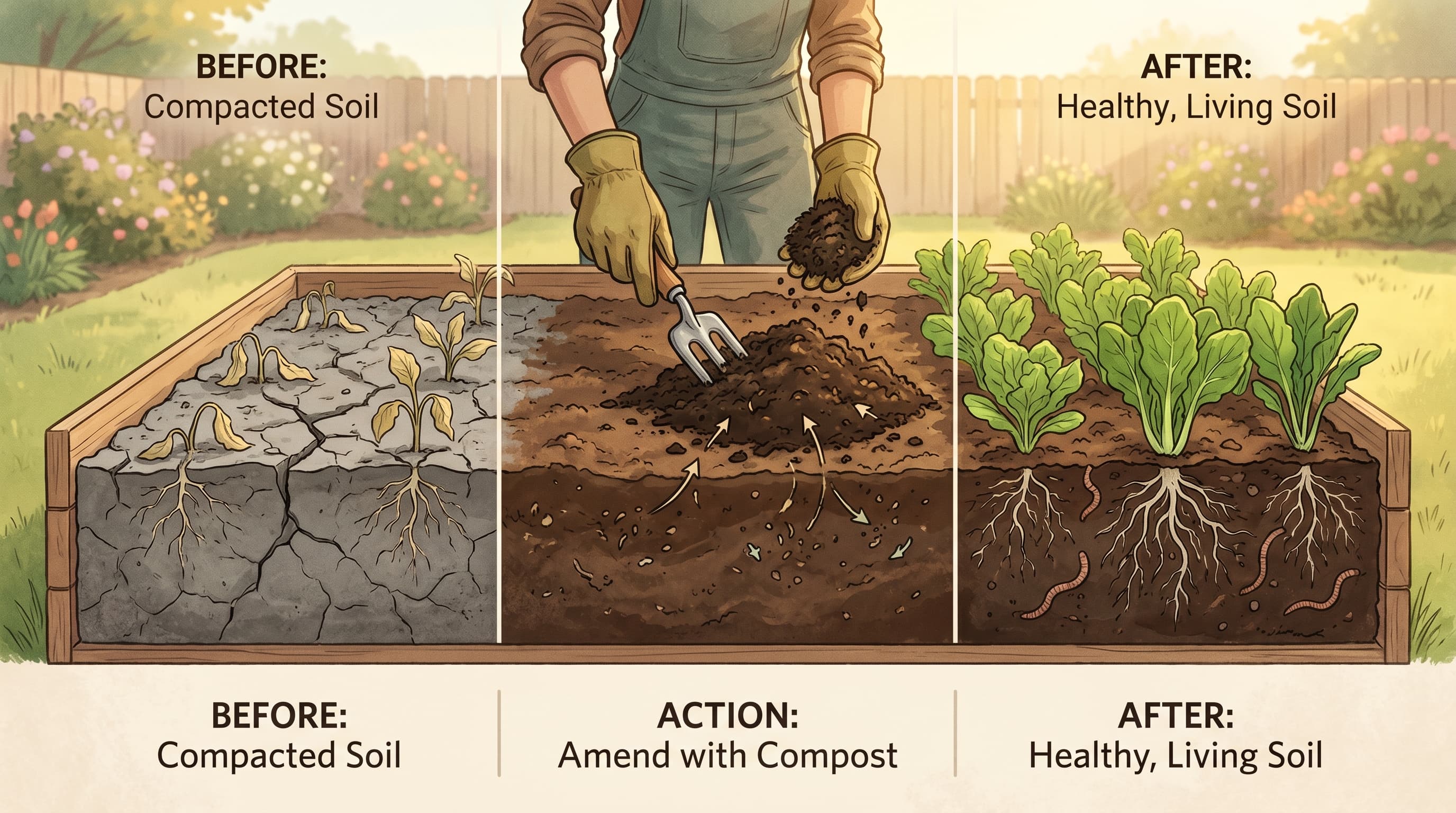
The most common raised-bed complaint is simply that a bed produces worse each year - smaller harvests, weaker plants, soil that looks gray and lifeless. This is depletion: a season of hungry vegetables, plus rain leaching nutrients through that well-draining soil, gradually mines out the organic matter and biology that made the bed productive. The instinct is to pour on more fertilizer, but that treats the symptom. The real fix is to rebuild what was lost - work in a soil-building amendment like Soil Food or Raised Bed Refresh to restore organic matter, biology, and structure. A tired bed is not a bed that needs more feeding; it is a bed whose soil needs rebuilding, and once you make that distinction you will fix the problem instead of chasing it.
Drainage gone wrong, in both directions
Raised beds drain well, which is usually a virtue, but drainage can go wrong at either extreme. A bed that stays soggy - because the underlying ground is heavy clay, or the soil mix is too dense - drowns roots, causes yellowing, and invites root disease. A bed that dries out within hours of watering - because the mix is too sandy or thin on organic matter - leaves plants drought-stressed and lets nutrients (especially potassium) wash straight through. Here is the satisfying part: the fix for both is the same. Building organic matter opens up a heavy, soggy soil so water can move, and acts like a sponge in a fast-draining soil so water and nutrients stay in the root zone. The same amendments that feed your bed also fix its water behavior.
Compaction creeping in
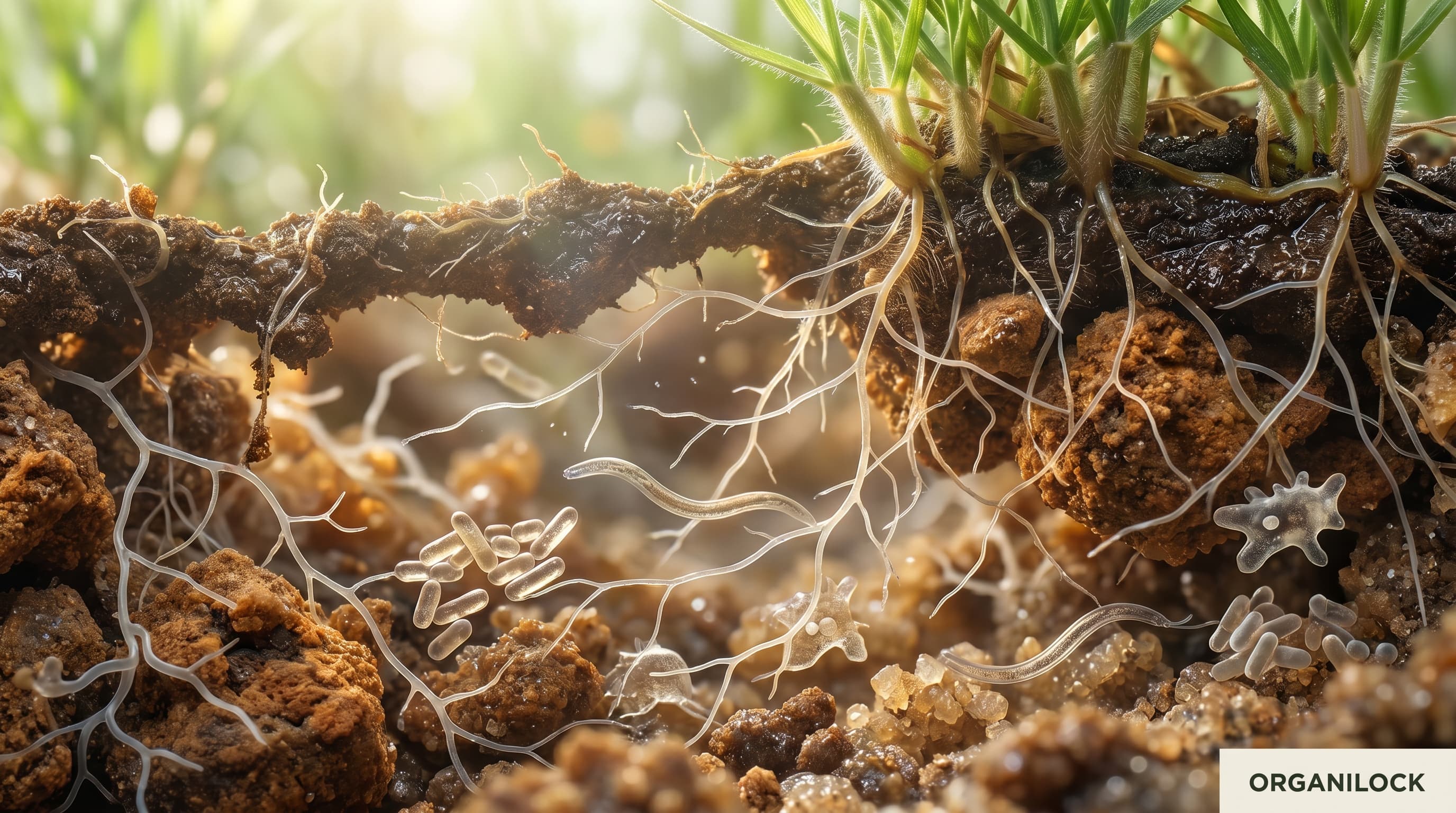
You might think a raised bed cannot compact since you never walk on it, but soil settles and packs down over time anyway, especially if it is low on organic matter and structure. Compacted bed soil sheds water, stunts roots, and grows hard. The fixes are gentle: avoid stepping into the bed (work from the edges), do not dig or turn the soil when it is wet (that smears and compacts it), and keep adding organic matter, which - together with the roots and biology it feeds - rebuilds the crumbly, open structure that water and roots can move through. A living soil keeps itself loose far better than a sterile one does.
Watering problems in disguise
A surprising number of raised-bed troubles are really watering problems wearing a disguise, and they fool people into blaming the soil or reaching for fertilizer. Inconsistent watering - letting a bed swing between bone-dry and soaked - is a classic culprit: it stresses roots, and it disrupts the steady uptake of nutrients like calcium, which is why erratic watering is a common cause of blossom-end rot on tomatoes and squash (the dark, sunken bottoms) and of cracked or split fruit. Too little water leaves plants wilted and unable to take up nutrients that can only move in water; too much drowns roots and causes the same yellowing you might blame on a deficiency. The fix is rarely a product - it is consistent, deep watering and a soil rich enough in organic matter to hold moisture evenly between waterings (one more payoff of building living soil, which acts as a sponge). Before you diagnose a nutrient problem in a bed, look hard at how it is being watered; the answer is often there, and it is usually free.
Hungry-looking plants that are not actually hungry
When bed plants yellow or look starved, the temptation is to feed - but as the Diagnose and Fix course taught, a hungry-looking plant is often not short on that nutrient at all. The cause may be soil pH locking nutrients up, overwatering suffocating roots, or an imbalance from over-feeding one thing. Before you reach for more fertilizer, check the water, consider the pH, and ideally test the soil - because adding a nutrient that was never the problem only knocks the bed further out of balance. The most reliable move with a stubborn bed problem is a soil test, which turns the guessing into a clear plan.
Salt buildup from over-fertilizing
Here is a problem that surprises people because it comes from doing too much, not too little: salt buildup from over-fertilizing. Soluble fertilizers are salts, and applying them heavily season after season - or feeding a bed with frequent strong soluble doses - can leave a salt residue that scorches roots and leaf edges and stresses plants in ways that look like other problems. If a heavily-fed bed is doing worse rather than better, with crispy leaf margins and struggling plants, the answer is usually less, not more: ease off the soluble feeding, water deeply to help flush the salts down and out, and lean on the slow-release, soil-building approach instead. This is one more place the product distinction matters: an insoluble, slow-release amendment like Soil Food releases gently through the biology and does not create that salt spike, whereas a soluble feed like Plant Food behaves like any soluble salt and must be used at its label rate. When in doubt, build the soil rather than salt it.
When to test your bed soil
For most of these problems, the single most useful tool is a soil test - and a raised bed is an easy thing to test well, since you control its soil. You do not need to test constantly; a test every couple of years keeps you on top of pH and organic matter, with an extra test any time a bed gives you persistent trouble you cannot diagnose by eye. Your local land-grant university extension service offers reliable, low-cost tests, and the result tells you what your bed is actually short on, what is in excess (often phosphorus, in a well-fed bed), and whether pH is quietly locking nutrients up. That turns the guessing into a plan: correct pH first if it is off, build organic matter if it is low, and add a targeted nutrient only where the test shows a real shortage. A stubborn bed problem and a soil test are a perfect match - stop guessing, and test.
Pests and disease, honestly
Notice the pattern running through all of these: the durable fix for a bed problem almost always lives in the soil, not in a bottle. Tired production, drainage trouble, compaction, mysterious yellowing, salt stress - the common thread is the condition of the soil, and the common cure is to rebuild it (organic matter, biology, structure), correct the basics (water and pH), and only then consider a targeted nutrient. The gardener who reaches for a different product at every symptom is forever firefighting; the gardener who keeps the soil living and balanced simply has fewer fires. Hold that frame and most raised-bed problems become far less mysterious - and far less frequent.
Vegetable beds attract pests and disease, and it is worth being clear and honest about the role soil plays. A healthy plant grown in living, balanced soil resists pests and disease better than a stressed one - that is genuine gardening wisdom, and it is the best first line of defense. But to be completely straight: OrganiLock products are soil and plant nutrition, not pesticides, and nothing here controls or repels a pest. The real toolkit for pests and disease in a bed is cultural: space plants for airflow, water at the base in the morning so leaves stay dry, rotate where crops grow each year, remove diseased material, and avoid over-feeding nitrogen (which grows the soft, sappy tissue pests love). When a real infestation or disease shows up, identify it and consult your local extension office or a professional for the right, properly-labeled solution. Growing strong plants in living soil means you face those moments less often; it is not a substitute for handling them when they come.
Plain-English takeaway: Most raised-bed problems trace back to the soil: a tired bed needs its soil rebuilt (not just more fertilizer), drainage extremes and compaction are both fixed by building organic matter, hungry-looking plants are often a pH/water/balance issue to test rather than feed, and pests and disease are managed by healthy soil plus cultural practices - OrganiLock is nutrition, never a pesticide.