Trees, shrubs, and perennials are the long-term residents of your garden - the bones of the landscape that, planted and cared for well, can outlive the gardener who put them in the ground. That permanence changes everything about how you feed and tend them. A vegetable is a sprint; a tree is a marathon that lasts decades. This first lesson is about playing that long game: why woody and perennial plants are a different kind of growing, what they actually need from their soil, and the single planting decision that shapes a plant's entire life.
A different kind of plant, a different kind of care
Trees, shrubs, and perennials differ from annual vegetables and flowers in ways that reshape how you care for them:
- They are permanent. They live in one spot for years or decades, so you cannot rebuild their soil each season - you have to build it right at planting and then feed it gently in place for the life of the plant.
- They grow slowly and steadily. Woody and perennial plants are not in the hurry an annual vegetable is; they grow at a measured pace and feed slowly, so they rarely want or benefit from heavy, fast feeding.
- They are an investment. A mature tree or established shrub represents years of growth and real value to your property, which makes getting their care right far more consequential than with a replaceable annual.
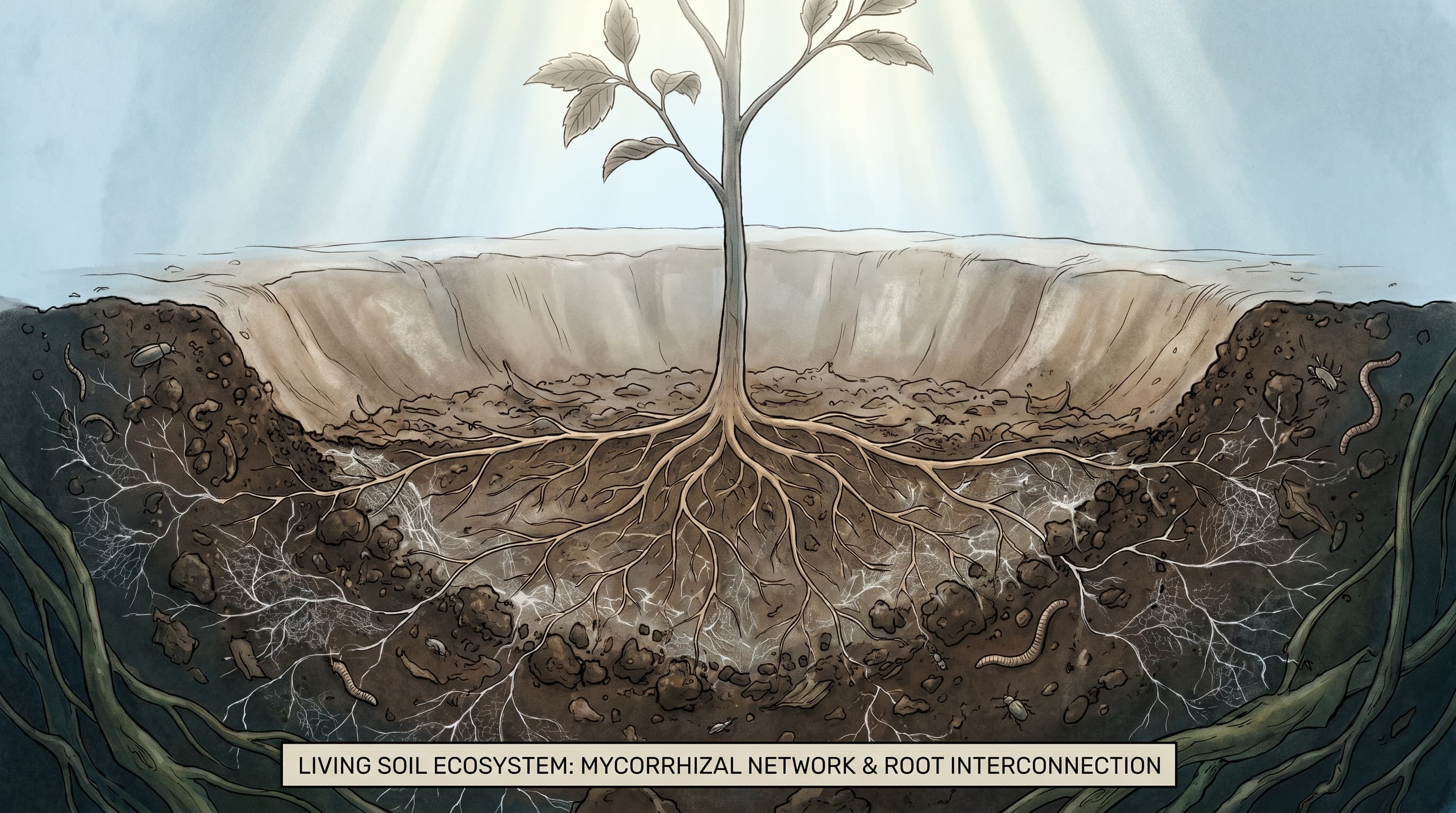
- They build their own world. Over time, a tree or shrub shapes the soil around it - dropping leaves, growing roots, partnering with soil fungi - so the health of that soil and the plant are deeply intertwined across many years.
The thread through all of these is patience and permanence. You are not managing a quick crop; you are stewarding a long-lived plant in soil it will occupy for a very long time. That is why the soil-first approach suits trees, shrubs, and perennials so naturally - it builds and maintains the living soil these plants depend on, gently and over time, which is exactly the timescale they live on.
What woody and perennial plants need from their soil
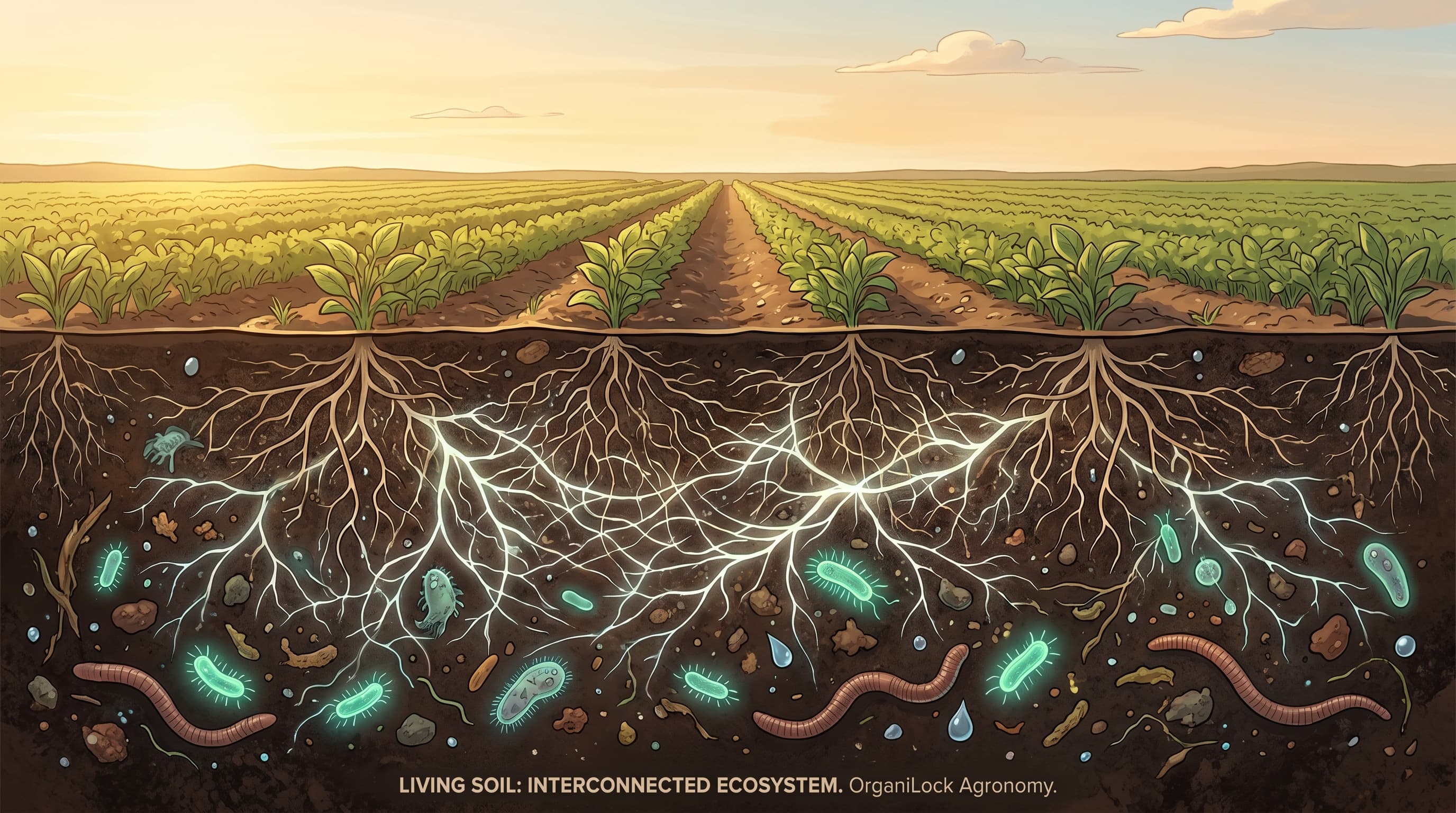
Because these plants live so long in one place, the quality of their soil matters more than almost any other factor in their health. What they need is a living, well-structured soil: open and well-drained enough that their roots get the air they need and never sit waterlogged (poor drainage is one of the most common killers of trees and shrubs), rich enough in organic matter to hold moisture and release nutrients slowly and steadily, and biologically alive - full of the beneficial fungi, including the mycorrhizal fungi that partner with woody roots to extend their reach for water and nutrients across the soil. A tree or shrub in that kind of soil grows strong, deep-rooted, and resilient, able to withstand drought, cold, and stress. A plant stuck in dead, compacted, poorly-drained soil struggles for its whole life no matter what you pour on it. So with long-lived plants more than anywhere, the goal is to build and maintain the living soil they root into - because they will live with that soil, for better or worse, for many years.
The decision that shapes a plant's whole life: planting
Here is the most important thing to understand about trees, shrubs, and perennials: how you plant them shapes their entire life, and planting mistakes made on day one can haunt a plant for decades. Because these plants stay put, the soil conditions and the way the roots are set at planting time become the conditions the plant lives with for years - there is no easy do-over. A tree planted too deep, in a glazed hole in heavy clay, with circling roots, in dead soil, will struggle for its whole life. The same tree planted at the right depth, in soil improved with organic matter, with roots spread into living soil, gets a start it benefits from for decades. This is why the next lesson devotes itself entirely to planting it right - because no amount of later feeding fully fixes a bad start, while a good start pays dividends for the life of the plant. With long-lived plants, the beginning matters most.
Feed slowly, feed the soil
One of the biggest mistakes people make with trees and shrubs is feeding them like they would a hungry vegetable - reaching for heavy, fast, soluble fertilizer to force growth. Woody and perennial plants do not work that way. They grow slowly and steadily and are fed best by a soil that releases nutrients slowly and steadily to match, which is precisely what a living soil does. Forcing fast growth with heavy soluble nitrogen can actually harm a woody plant - producing weak, sappy growth that is more vulnerable to cold, pests, and breakage, and in some cases doing more harm than good. The soil-first approach fits these plants perfectly: build a living soil at planting, then maintain it gently over the years with Landscape Refresh and organic matter, and let the plant feed itself at its own measured pace. Slow, steady, soil-based feeding is not a compromise for trees and shrubs - it is genuinely what they want.
Soil Food and Landscape Refresh: the long-lived plant's pair
Two OrganiLock products do most of the work for trees, shrubs, and perennials, each in its role. Soil Food is the builder, used to improve the soil at planting - mixed into the soil you plant into so the roots grow into a living, organic-rich, well-structured medium from the start. It is OMRI Listed for organic growing and, because its nitrogen is the slow-release, insoluble kind, it cannot burn the tender roots of a new planting, which makes it a safe, gentle choice right in the planting zone. Landscape Refresh is the maintainer, tuned specifically for trees, shrubs, perennials, and landscape beds - a dry amendment you top-dress over the root zone of established plants to keep their soil living and fed, year after year, without disturbing the roots. Together they cover the long arc of a woody plant's life: Soil Food to build the soil at the start, Landscape Refresh to maintain it for the decades that follow. We will use this pair throughout the guide.
Right plant, right place
Before the soil and the planting and the feeding, there is an even earlier decision that shapes a long-lived plant's whole future: choosing the right plant for the right place. Because a tree or shrub stays put for years or decades, matching it to its spot matters enormously - far more than with an annual you can move or replace at will. A plant suited to your climate, your soil, and the specific conditions of the spot (sun or shade, wet or dry, the space it has to grow into) will thrive with little fuss, while a plant fighting its location struggles no matter how perfectly you feed and tend it. So think before you plant: choose species adapted to your region and hardiness, be honest about how big the plant will actually get so it is not crammed against the house or under power lines in ten years, and match it to the light and drainage of the spot. Native and well-adapted plants are often the easiest and most resilient choices, asking less water and care once established. This is not strictly a soil topic, but it belongs at the front of any guide to long-lived plants, because the soil-first approach gives a well-chosen plant its best life - and cannot rescue a plant that was simply wrong for the place. Choose well, then plant and feed well, and you set the plant up to succeed for the long haul.
An honest word on pests and disease
Trees, shrubs, and perennials face their share of insect pests and diseases over their long lives, and it is important to be completely honest about what OrganiLock does and does not do. OrganiLock products are soil and plant nutrition - they are not insecticides, fungicides, or any kind of pest or disease control, and nothing here will kill, repel, or cure a pest or disease. What growing a plant in living, balanced soil does do is produce a stronger, more resilient plant that is better able to withstand stress and recover from problems than a weak, struggling one - that is genuine horticultural wisdom and a real first line of defense, especially valuable in plants you intend to keep for decades. But it is not a substitute for proper pest and disease control when a real problem appears. When a tree or shrub faces a genuine insect infestation or disease, identify it and consult a certified arborist, a nursery professional, or your local extension office for the right, properly-labeled treatment. Strong plants in living soil meet those problems less often and recover better; they are not immune, and we will keep that honest throughout.
Plain-English takeaway: Trees, shrubs, and perennials are the long game: permanent, slow-growing, valuable plants whose soil they live in for decades - so build a living, well-drained, organic-rich soil at planting (the decision that shapes their whole life) with Soil Food, maintain it gently over the years with Landscape Refresh, and feed slow and steady, never fast and hard. OrganiLock is nutrition, never a pesticide.