If there is one lesson in this guide to get right, it is this one - because how you plant a tree, shrub, or perennial shapes its entire life, and the most common reasons these plants fail trace straight back to planting mistakes. The good news is that planting well is not complicated; it just requires knowing a handful of things that most people get wrong. This lesson walks the right way to plant, from the hole to the soil to the aftercare, so the long-lived plants you put in the ground get the start they deserve.
Dig the hole wide, not deep
The single most important rule of planting woody plants is counterintuitive: dig the hole wide, but no deeper than the root ball. A planting hole should be two to three times as wide as the root ball, which loosens a broad area of soil for the roots to spread out into - roots grow outward far more than straight down, so width is what helps them establish. But the hole should be no deeper than the height of the root ball, so the plant sits at the same level it grew at (or even slightly high), resting on undug, firm soil. Why not deeper? Because loose soil under a root ball settles over time, and a tree or shrub that sinks ends up planted too deep - which is one of the most common causes of slow decline and death in woody plants. Wide gives the roots room to spread; shallow keeps the plant at the right depth for life. Get this geometry right and you have avoided the most damaging planting mistake there is.
Plant at the right depth
Depth deserves its own emphasis because planting too deep is such a frequent and fatal mistake. A tree or shrub should be planted so that its root flare - the place where the trunk widens and the roots begin to spread - sits right at or just slightly above the soil surface. Burying the trunk below that flare suffocates the bark and roots, invites rot and disease, and slowly strangles the plant over years, often long after the planting is forgotten as the cause. When in doubt, plant a little high rather than a little deep; a plant set slightly proud of the soil settles into place, while one set too deep only gets worse as the soil settles further. For perennials, the same principle applies more gently - set them at the depth they grew in the pot, with the crown at soil level, not buried. Right depth is not a detail; for a long-lived plant it can be the difference between a thriving specimen and a slow, mysterious failure.
Improve the soil, but do not over-amend the hole
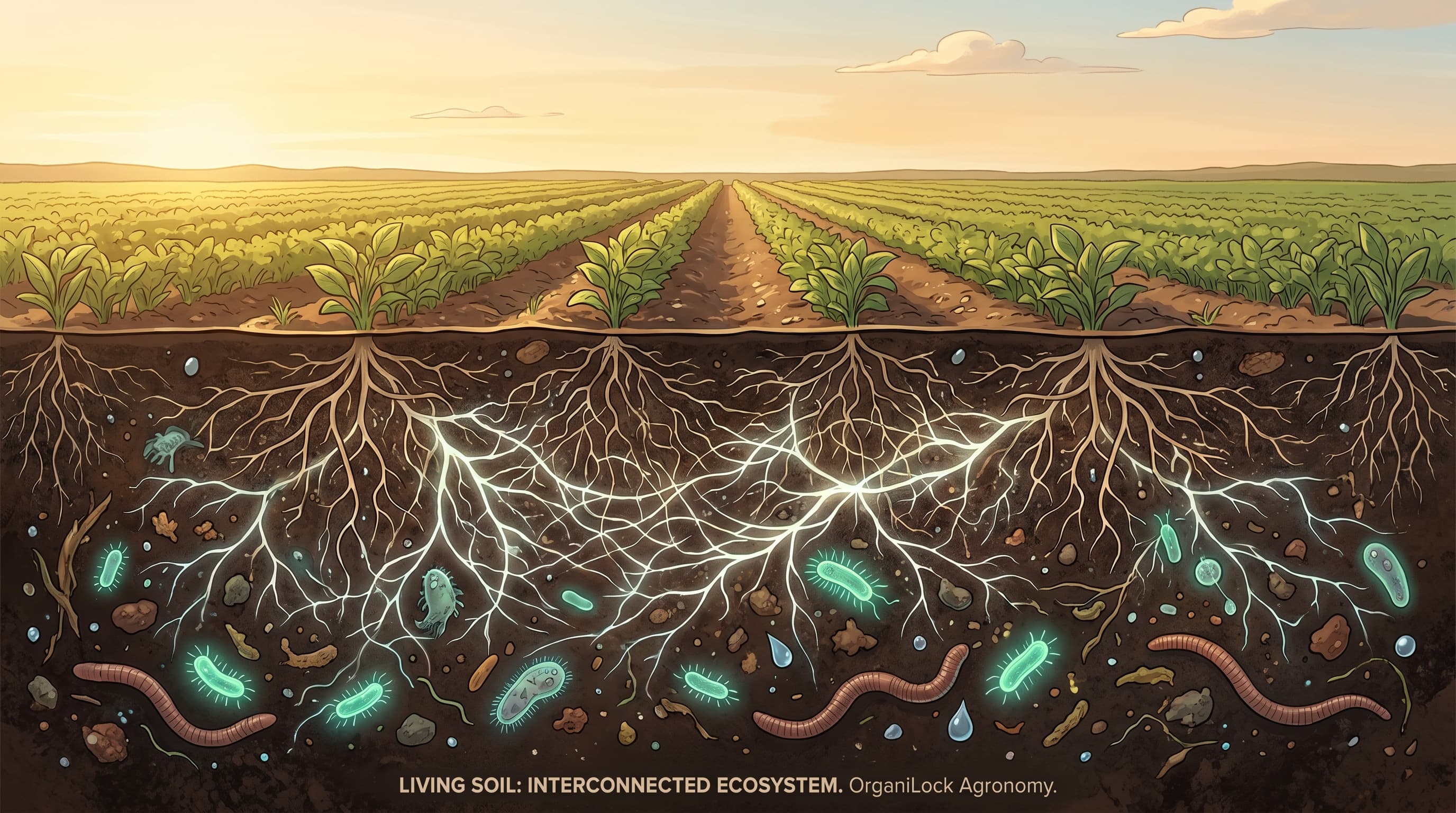
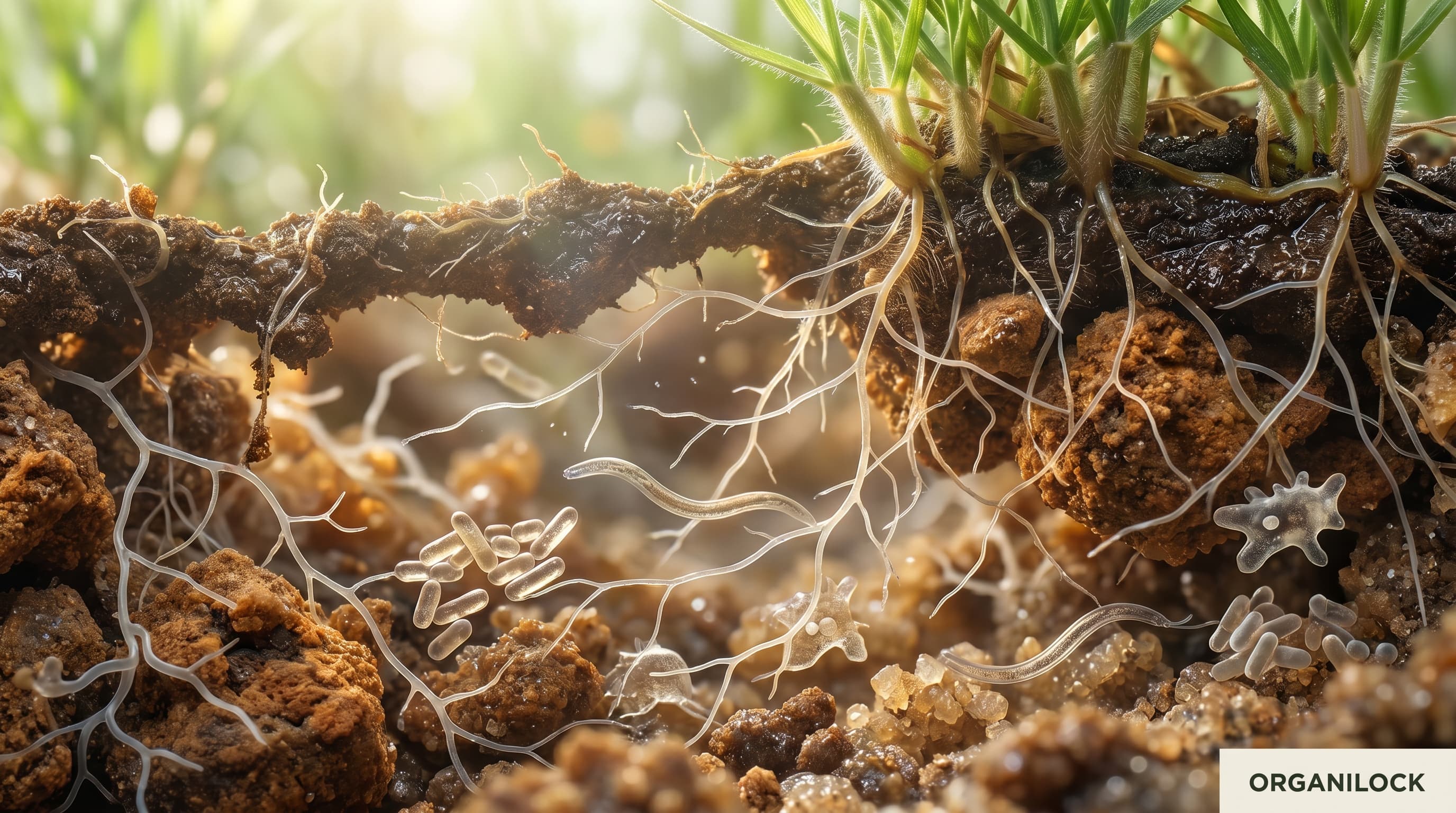
Here is where the soil-first approach meets a useful nuance worth understanding. You absolutely want to plant into good, living soil - so improving the soil is right - but modern guidance is to improve a broad area moderately rather than to create a rich, fluffy pocket in an otherwise poor hole. If you backfill a planting hole with pure compost or heavily amended soil surrounded by hard native clay, you can create a "bathtub" effect: water collects in the rich pocket, roots circle inside it rather than venturing into the surrounding soil, and the plant never establishes into the wider ground. The better approach is to mix a soil-building amendment like Soil Food into the backfill and, ideally, into a broad area around the hole, raising the whole zone's organic matter and biology moderately so roots are encouraged to grow outward into improving soil rather than staying trapped in a pocket. Soil Food is well suited to this - it adds organic matter, biology, and mycorrhizal fungi that partner with the new roots, and because it is no-burn it is completely safe right in the planting zone against tender roots. Improve the soil generously across the area, not lavishly in just the hole.
Handle the roots right
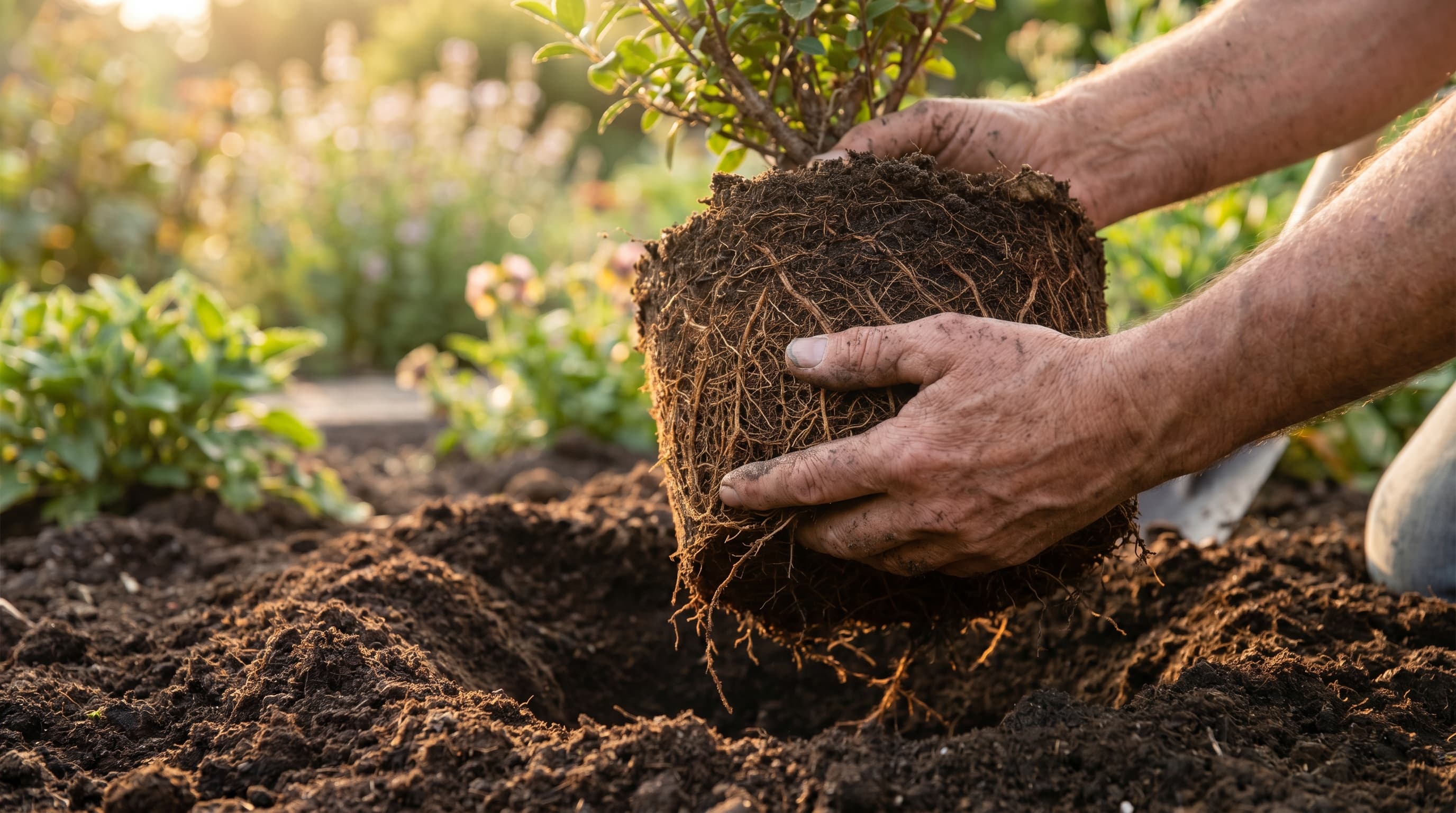
How you handle the roots at planting makes a lasting difference, especially for container-grown plants. A plant that has been in its pot a while often has circling or pot-bound roots - roots that have wrapped around the inside of the container - and if you plant it as-is, those roots keep circling and can eventually strangle the plant (girdling) years down the road. So before planting, gently loosen the outer roots, teasing them apart with your fingers or making a few shallow vertical cuts on a badly pot-bound root ball, to encourage them to grow outward into the surrounding soil. For balled-and-burlapped trees, remove or fold back the burlap, twine, and any wire basket from the top of the root ball after setting it in the hole. Spread the roots out into the planting zone so they head into the living soil you have built rather than continuing in a tight knot. A few minutes of attention to the roots at planting prevents girdling problems that can quietly kill a tree a decade later.
Backfill, water, and mulch
With the plant set at the right depth and the roots handled, finish the planting carefully. Backfill with your improved native soil, firming it gently as you go to remove large air pockets but without packing it down hard - you want the soil settled around the roots, not compacted. Then water deeply and thoroughly, which settles the soil, eliminates remaining air pockets, and gives the roots the moisture they need to begin establishing. Finally, mulch - apply a few inches of organic mulch (wood chips, shredded bark, or leaves) over the planting area, which holds moisture, moderates soil temperature, suppresses competing weeds, and feeds the soil as it breaks down. But keep the mulch pulled back a few inches from the trunk itself - the classic "mulch volcano" piled against the bark traps moisture and causes rot, undoing the good. A proper mulch ring, like a doughnut rather than a volcano, is one of the kindest things you can do for a new tree or shrub. Backfill gently, water deeply, mulch well but off the trunk.
The planting mistakes that come back to haunt you
It is worth gathering the most damaging planting mistakes in one place, because nearly every premature tree and shrub failure traces back to this short list - and every one is avoidable. Planting too deep, with the root flare buried, is the most common and most fatal, slowly suffocating the plant over years. Digging a deep, narrow hole instead of a wide, shallow one leaves roots no room to spread and lets the plant settle too low. Leaving circling, pot-bound roots untouched sets up girdling that can strangle the plant a decade later. Creating a rich, over-amended pocket in poor surrounding soil makes a bathtub that traps water and roots. Leaving the wire basket, twine, or burlap around the trunk and upper root ball lets it girdle the plant as it grows. Piling mulch in a volcano against the trunk rots the bark. And failing to water consistently through the first season leaves a plant that never established its roots. Notice that none of these show up immediately - a badly-planted tree often looks fine for a year or two and then slowly declines, which is exactly why the cause is so often missed and blamed on something else. Get the handful of things in this lesson right at planting, and you avoid the whole list of slow, mysterious failures before they can start.
The first year: establishment
The work is not quite done at planting - the first year, the establishment period, is when a new tree, shrub, or perennial is most vulnerable and most needs your attention. The single most important thing during this period is consistent water: a new planting has not yet grown the wide root system it needs to find its own moisture, so it depends on you to keep the root zone evenly moist (not waterlogged) through the first growing season, and into the second for trees. Deep, thorough watering that encourages roots to grow down and out beats frequent shallow sprinkling. Hold off on heavy feeding in the first season - the plant is putting its energy into roots, and the living soil you built at planting, with its slow-release Soil Food, is feeding it gently and appropriately; forcing top growth now works against the root establishment that matters most. Keep the mulch in place, keep the water consistent, and let the plant establish. Patience in the first year sets up decades of health.
Plain-English takeaway: Plant trees and shrubs right because it shapes their whole life: dig the hole wide (2-3x the root ball) but no deeper than the root ball, set the root flare at or just above soil level (never too deep), improve the soil broadly with Soil Food (no-burn, safe in the planting zone) rather than over-amending just the hole, loosen circling roots, then backfill gently, water deeply, and mulch off the trunk - and water consistently through the first-year establishment.