If the soluble-only approach has hidden costs, what is the alternative? It is not "no nitrogen" - plants need nitrogen, and plenty of it. The alternative is nitrogen delivered the way nature delivers it: slowly, by biology, alongside carbon, in balance. This lesson explains how that works, then shows where OrganiLock's products fit - told straight, including exactly what each product does and does not claim.
How slow-release organic nitrogen works
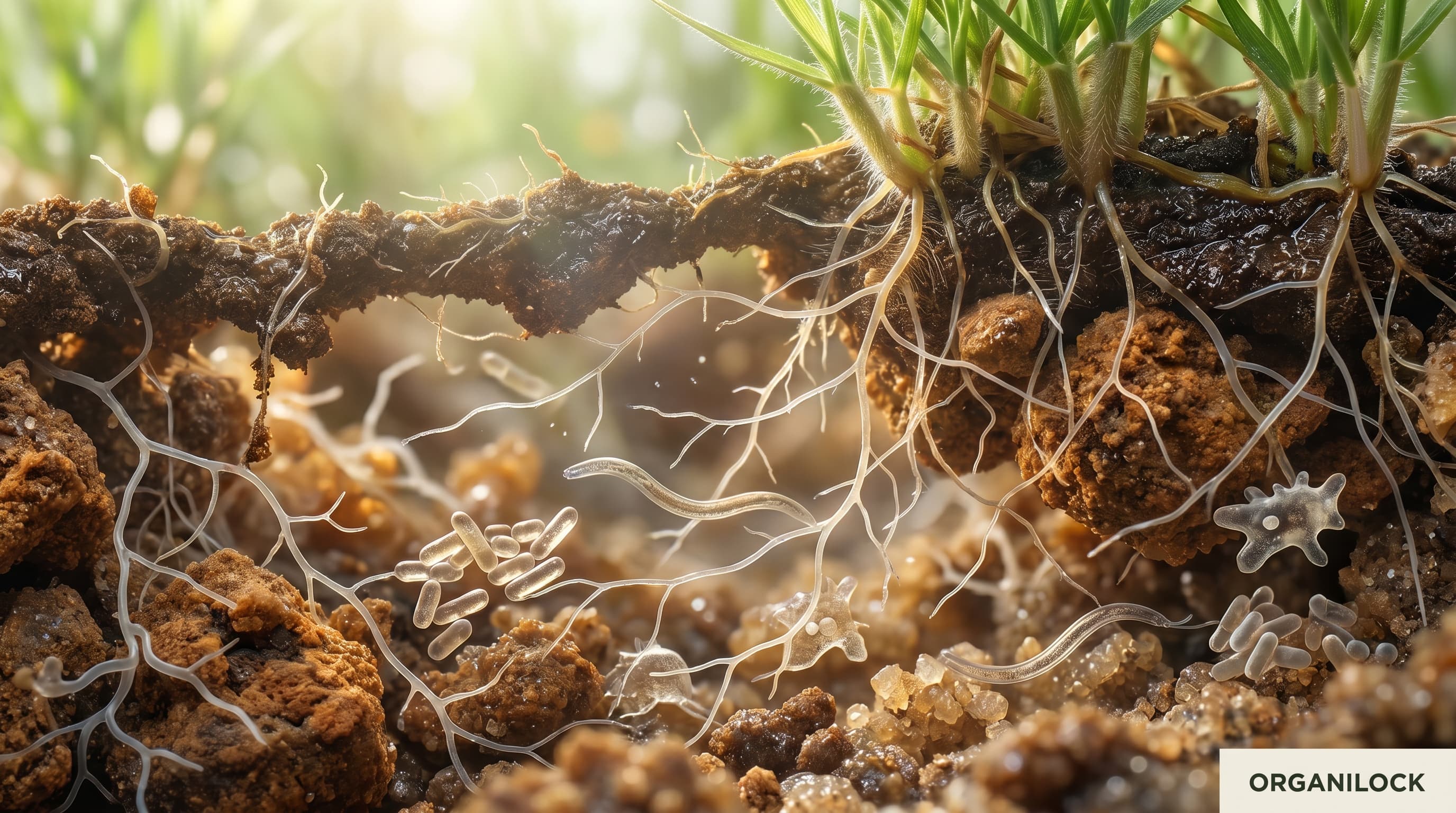
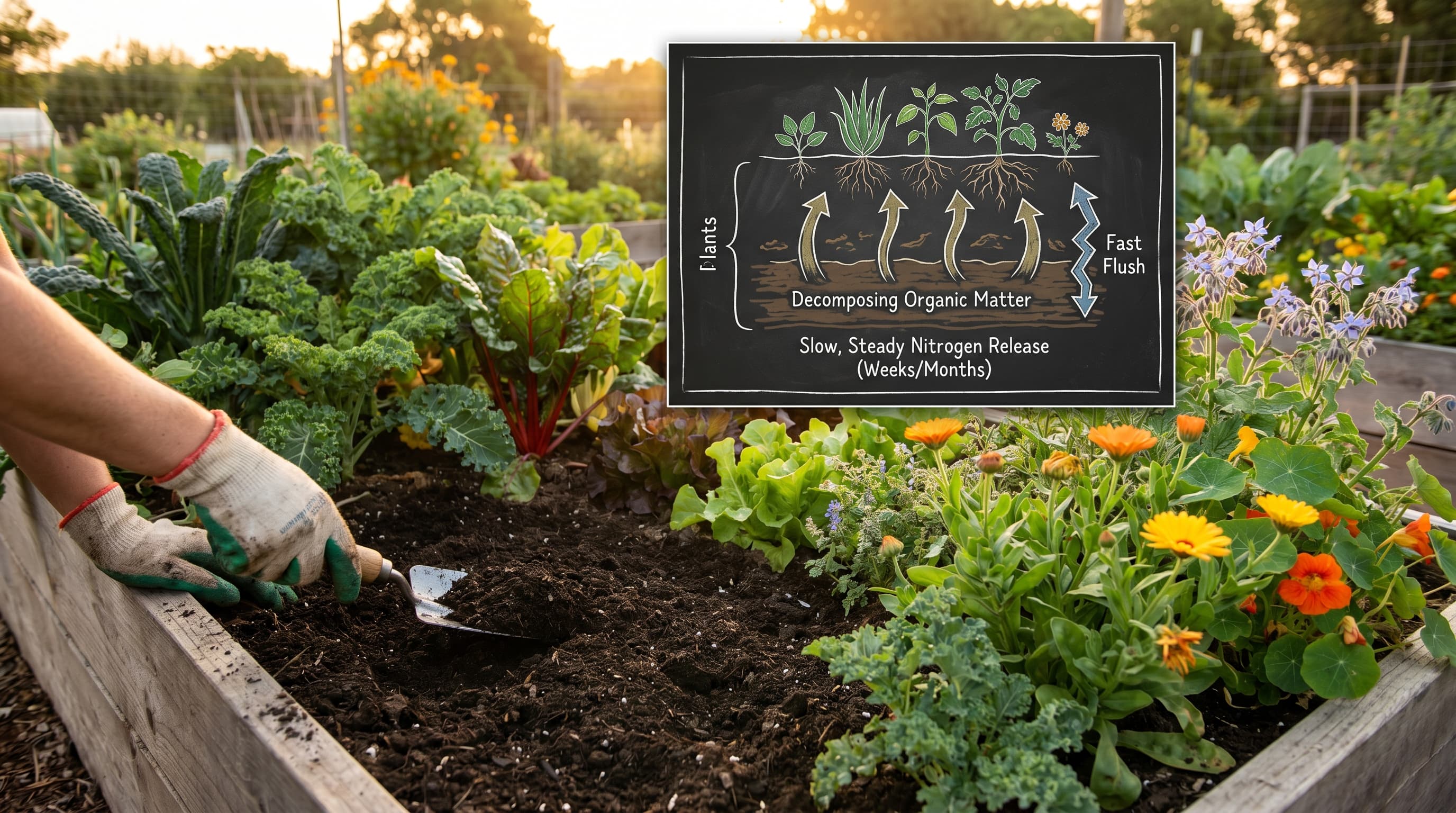
Organic nitrogen is nitrogen bound inside organic matter - proteins and the remains of living things - and plants cannot take it up directly. That sounds like a drawback and is actually the whole advantage. Soil microbes break that organic matter down and release the nitrogen gradually, as ammonium and then nitrate, in the process called mineralization. Because microbes work faster in warm, moist conditions - exactly when plants are also growing fastest - the release tends to track plant demand instead of dumping everything at once.
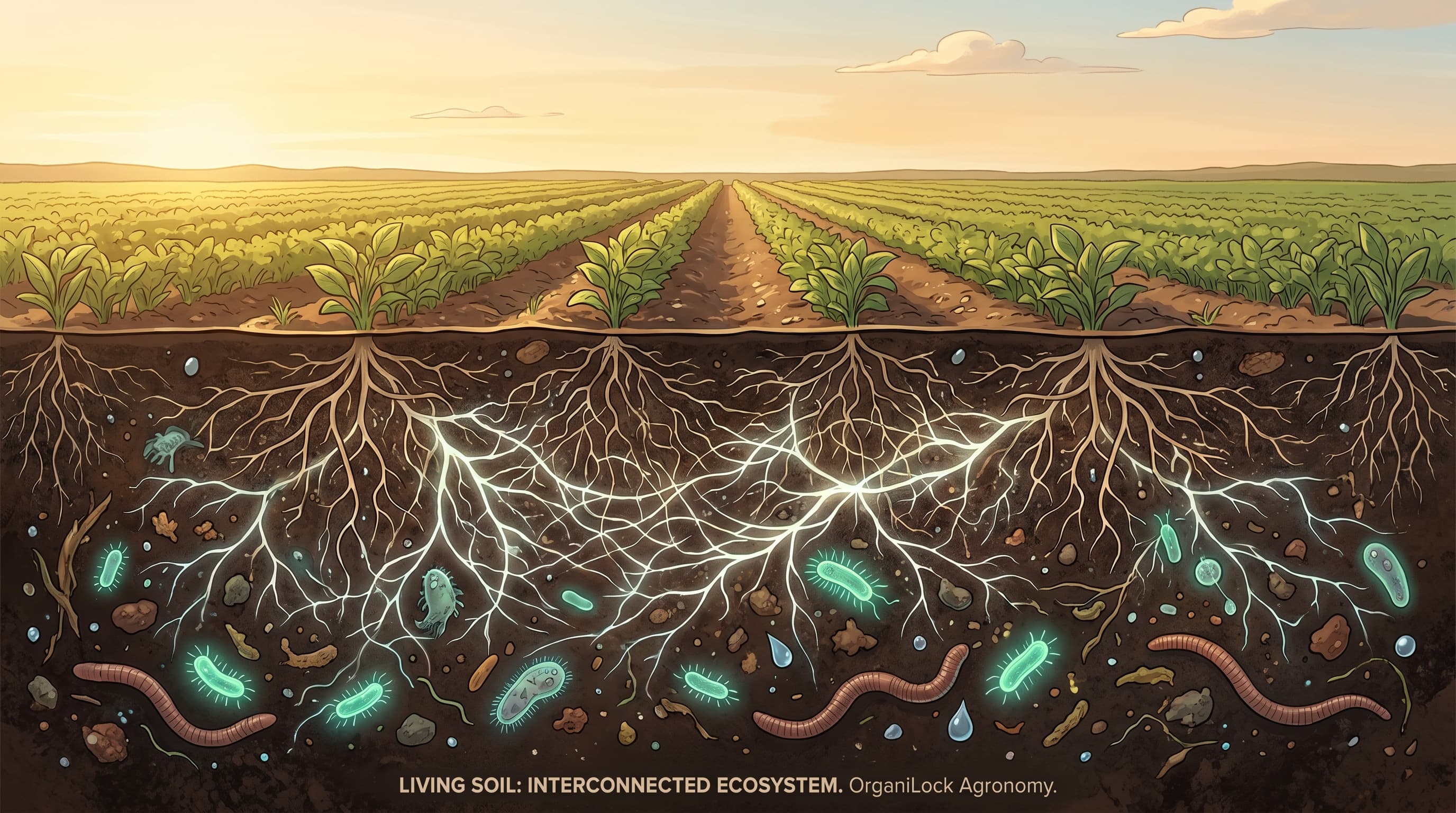
That single difference cascades into all the benefits the last lesson was missing. Slow-release organic nitrogen is far less likely to burn, because it never creates a salt spike. It is far less likely to leach or run off, because it is held in organic matter rather than dissolved in the soil water. And it arrives with carbon, which feeds the soil biology that builds structure and long-term fertility. It is nitrogen that works with the living soil rather than around it.
Plain-English takeaway: Organic nitrogen is released slowly by soil microbes, roughly in step with plant demand. That makes it resist burning and loss - and because it comes with carbon, it feeds the soil, not just the plant.
What slow-release means for you in the garden
The science translates into real, practical advantages a gardener feels. Because the nitrogen is released gradually, a single application keeps feeding for weeks or months instead of flushing through in days, so you feed less often. Because it will not burn, you have a wide margin for error - a little extra will not scorch your plants or your lawn, which is exactly the worry that makes people tentative with soluble feeds. And because the release roughly follows soil warmth and moisture, the supply tends to rise when plants are growing hardest and ease off when they are not, without you having to manage the timing. It is, in the best sense, a more forgiving way to feed.
Why carbon has to come with the nitrogen
There is a reason nature never delivers nitrogen alone. Soil biology needs two things: nitrogen as a building block, and carbon as an energy source. A soluble salt supplies the first and none of the second, so it feeds the plant but starves the soil. An organic input supplies both, which is why it can feed the plant and the living soil at the same time. This is the same carbon-and-nitrogen balance you met in Module 1's composting lesson - too much raw carbon ties nitrogen up, the right balance keeps the whole system fed. A nitrogen source that is rich in carbon as well as nitrogen is a complete diet for soil, not just a dose for the plant.
Feeding the soil, not just the plant
Put the last two lessons together and you arrive at the philosophy behind everything OrganiLock makes: feed the soil, and let the soil feed the plant. Build organic matter and biology; let the living soil meter nitrogen out to plants on demand; resist the losses that plague soluble nitrogen; and watch fertility compound rather than deplete over the seasons. This is what "regenerative" means in practice, and nitrogen is at the center of it - the right kind of nitrogen, delivered the right way.
It is worth being clear about what this does and does not mean. It does not mean nitrogen is unimportant or that you should starve your plants - they need it, and a good amendment supplies it. It means the nitrogen should arrive in a form the soil can manage: held, released on demand, and accompanied by the carbon and biology that keep the whole system working. Done that way, feeding becomes less about chasing numbers and more about tending a living thing that increasingly feeds itself.
Where OrganiLock's nitrogen comes from
Most organic nitrogen products are a single, separated ingredient: blood meal, feather meal, bone meal, fish meal - one piece of an animal, stripped out and sold on its own. Each delivers a narrow slice of nutrition (blood meal is essentially nitrogen; bone meal is essentially calcium and phosphorus). OrganiLock takes a different path. Its nitrogen comes from whole-animal sources - poultry and fish such as invasive Asian carp - combined with woody biomass and biochar.
Using the whole animal matters for two reasons. First, animal tissue is built from protein, and protein is where biological nitrogen is held, so the nitrogen is naturally abundant and overwhelmingly in the slow-release, insoluble organic form - the no-burn, biology-feeding kind this module has been describing. Second, a whole animal carries far more than nitrogen: it brings phosphorus and potassium, secondary nutrients like calcium and magnesium, and a full range of trace minerals - the broad spectrum a plant is actually built from, in one input rather than a narrow slice. The woody biomass then supplies the carbon and energy the nitrogen-rich animal material is short on, so the finished product is rich in both nitrogen and carbon: food and energy for soil and plant together. It is, in a phrase, whole food rather than packaged food.
That broad spectrum is not just a nice extra - it is part of why a whole-food input is gentler on the plant. As the later lessons on the other nutrients explain, spiking a single nutrient can actually block a plant's uptake of another and create a brand-new deficiency. A source that delivers nitrogen alongside phosphorus, potassium, calcium, and trace minerals, all released together by biology, sidesteps those imbalances by feeding the way a plant is actually built to eat. Bone, for instance, brings calcium and phosphorus together; the whole animal brings the supporting cast that a single stripped-out meal leaves out.
There is a stewardship story here too. Animal mortality and the byproducts of the wood industry are abundant materials that would otherwise be disposal problems; turning them back into living soil is a circular, regenerative use of resources, and it is one of the few nutrient sources plentiful enough to matter at real scale. The conversion is done through a patented process; what matters to you as a grower is the outcome - the biology is preserved in a dry, shelf-stable form that wakes up when watered, and the nitrogen is held in its slow-release organic form until the soil calls for it.
Plain-English takeaway: OrganiLock's nitrogen comes from whole-animal sources plus woody biomass - whole food, not a single stripped-out meal. That delivers slow-release nitrogen, a broad spectrum of other nutrients, and the carbon that feeds soil life, all from one circular, regenerative source.
Soil Food: the facts
Soil Food is OrganiLock's flagship soil amendment, and here are its verified facts. Its guaranteed analysis is 4-2-1 - 4% total nitrogen, 2% available phosphate, and 1% soluble potash - with 2.2% calcium. Of that nitrogen, 3.6% is water-insoluble (the slow-release fraction) and only 0.4% is water-soluble, which is a large part of why it feeds gradually and does not burn. It is OMRI Listed for organic production.
But Soil Food is more than an analysis. Its label frames it as four products in one: a fertilizer carrying organic nitrogen, the soil microbes themselves, the carbon that feeds those microbes, and biochar to house them. The biology is real and specific - seven species of mycorrhizal fungi (four of the type that partners with most vegetables and flowers, and three of the type that partners with trees and shrubs) and five species of beneficial bacteria. Because it includes both kinds of mycorrhizae, it suits a wider range of plants than a product carrying only one. And because its nitrogen is insoluble and microbe-released, it carries a genuine no-burn property: the salt-spike mechanism from Lesson 5 simply does not occur.
In OrganiLock's own field trials, Soil Food has shown directional yield improvements compared with synthetic fertilizer. Results vary with conditions and are shared as trial results, not as a guarantee - but they point in the direction the science in this module would predict: feed the soil well, and the plants respond.
Plain-English takeaway: Soil Food is OMRI Listed with a 4-2-1 analysis and 2.2% calcium, most of its nitrogen slow-release. It is "four products in one" - organic nitrogen, microbes, the carbon to feed them, and biochar to house them - and because its nitrogen is insoluble, it genuinely will not burn.
Straight talk: what applies to what
Honesty is part of the OrganiLock approach, so here is the precise picture, because the no-burn, slow-release, OMRI story above is specific to Soil Food and does not automatically apply to every product.
- Soil Food is the slow-release, OMRI-Listed amendment described above - the foundation product for building living soil.
- Plant Food is a different tool: a liquid feed that gives plants a fast, direct boost when you want one, used as a foliar spray or a root drench. Because it includes a quick-release soluble fraction, it follows the normal rules of a soluble feed - dilute it, follow the rate directions, and do not over-apply - and it does not carry Soil Food's no-burn property or its organic certification. It is the right tool for a fast push; it is simply a different tool.
- The Refresh line is a family of biology-and-amendment products tuned to specific settings - raised beds, containers, houseplants, and landscapes - covered in their own lessons.
That precision is the point. The biology-first case is strong enough that it does not need to be stretched, so each product is described for exactly what it is.
Using the OrganiLock system together
The three products are designed to work as a system rather than compete, and the nitrogen story is what ties them together. Soil Food is the foundation - the slow-release, OMRI-Listed amendment you use to build and rebuild living soil, mixed in or top-dressed. The Refresh line keeps that soil fed season to season in the specific setting you grow in. And Plant Food is the fast boost for when a plant wants a direct, immediate feed - a transplant settling in, a mid-season push - used with the rate discipline any soluble feed calls for. A common rhythm is to build with Soil Food, maintain with the right Refresh, and reach for Plant Food when you want speed.
You do not have to use all three, and which ones fit depends on what and where you grow - a question the product and use-case lessons answer in detail. The point here is that they share one philosophy: get good nitrogen and a broad spectrum of nutrients into a living soil, and let that soil do most of the work.
The bottom line on nitrogen
OrganiLock's nitrogen is the kind that feeds soil biology, builds organic matter, releases in step with plant demand, and resists the losses that send so much conventional nitrogen into the air and water. That is the long-term soil-health case this whole module has built, and it is offered as responsible stewardship of soil and resources - not as a guaranteed outcome, and not as a dismissal of synthetic nitrogen, which has its place. It is simply the biology-first path.
And unlike a feed that washes away at the end of the season, the work compounds. Each year of feeding the soil leaves more organic matter, more biology, and better structure than the year before, so the soil holds more water, releases nutrients more steadily, and asks for less help over time. That slow, compounding gain - a garden that gets easier and more resilient as the soil gets richer - is the real promise of the biology-first approach, and it is the thread that runs through every remaining module of this course. The next module widens the lens from nitrogen to the full cast of nutrients that work alongside it.