All the science in this module leads to one practical question: what does the plant in front of you actually want? There is no single right way to feed, because a tomato, a carrot, a blueberry bush, and a lawn want genuinely different things. This final lesson of the module turns the nutrient rules into a feeding guide by plant type, stage, and setting - and it is the most directly useful of the four.
Feeding by what the plant grows for
The simplest way to predict a plant's nutrient needs is to ask what part of it you are growing for.
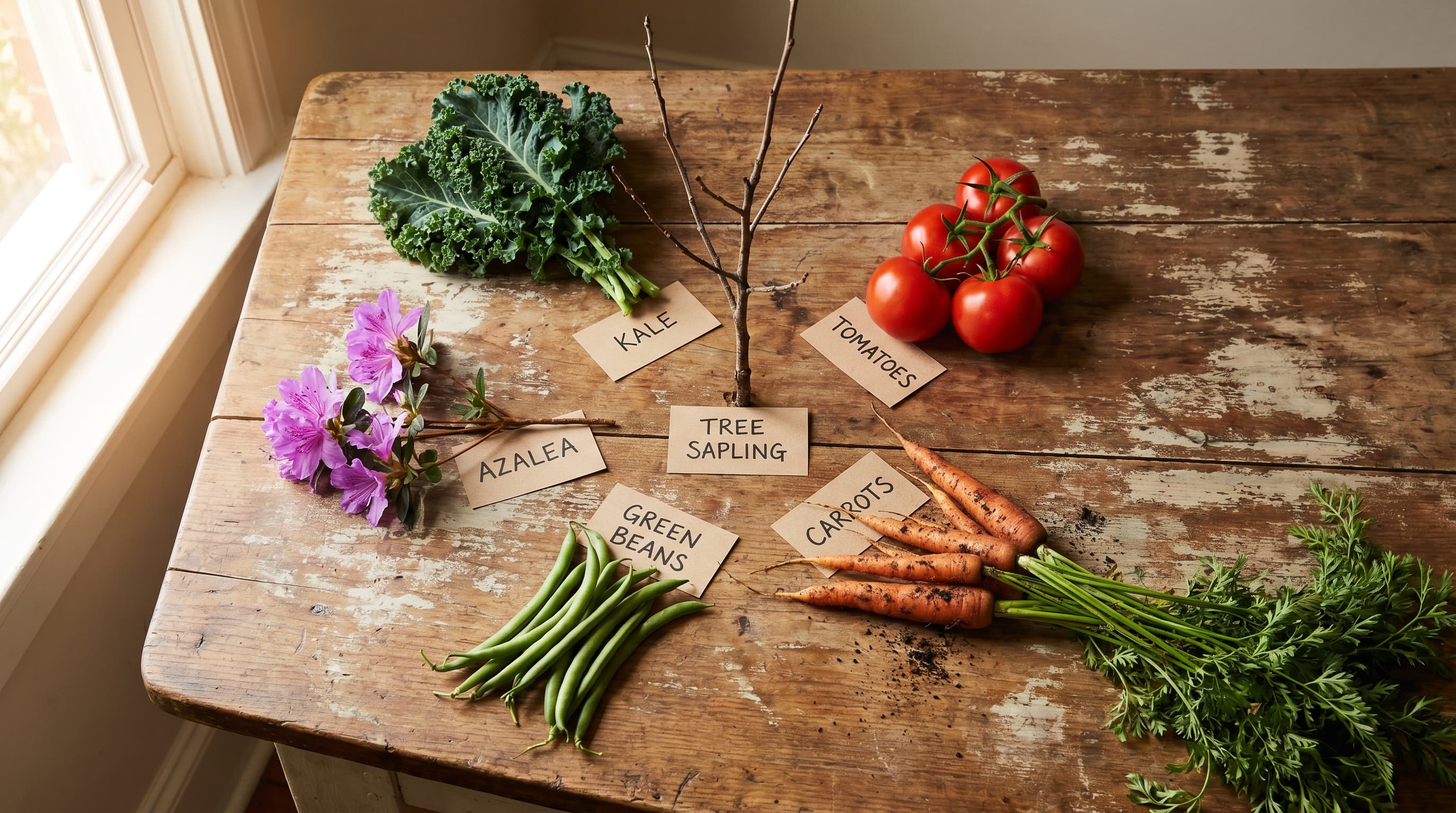
- Leafy crops and lawns - lettuce, spinach, kale, chard, turfgrass. The leaf is the harvest, so these are nitrogen-forward: steady nitrogen and good biology drive the result. They are the heavy nitrogen feeders.
- Fruiting crops - tomatoes, peppers, squash, cucumbers, eggplant. These want a balanced supply with strong potassium and real restraint on nitrogen. The classic mistake is too much nitrogen, which grows a lush green bush that never sets fruit - "all leaves, no tomatoes." Once flowering starts, potassium for fruit quality and steady moisture for calcium delivery (to prevent blossom-end rot) matter more than more nitrogen.
- Root and bulb crops - carrots, beets, potatoes, onions, garlic. These want phosphorus and potassium with restrained nitrogen; too much nitrogen grows leafy tops at the expense of the root and can cause forking and hairy roots.
- Legumes - beans, peas, clover, vetch. They fix their own nitrogen through their bacterial partnership, so they need little or no added nitrogen (over-feeding it suppresses fixation), but they do want phosphorus, potassium, and molybdenum, and they reward inoculation.
- Flowering ornamentals - these lean on phosphorus and potassium through bud set and bloom, with enough nitrogen for healthy foliage but not so much that the plant runs to leaf instead of flower.
- Woody perennials, shrubs, and trees - these want slow, steady, balanced feeding and partner heavily with the ectomycorrhizal type of fungi rather than the endomycorrhizae most vegetables use. Avoid heavy late-season nitrogen, which pushes tender growth that will not harden before winter.
- Acid-loving plants - blueberries, azaleas, rhododendrons, conifers. They need low pH and the ammonium form of nitrogen to keep iron available; in neutral or alkaline soil they yellow with iron chlorosis no matter how much you feed. For these, fixing pH is the whole game.
Plain-English takeaway: Match the nutrient to the harvest: nitrogen for leafy crops and lawns, balanced-with-strong-potassium for fruiting crops, phosphorus and potassium with restrained nitrogen for roots, little nitrogen for legumes, slow steady feeding for trees, and low pH for acid-lovers.
Feeding by stage
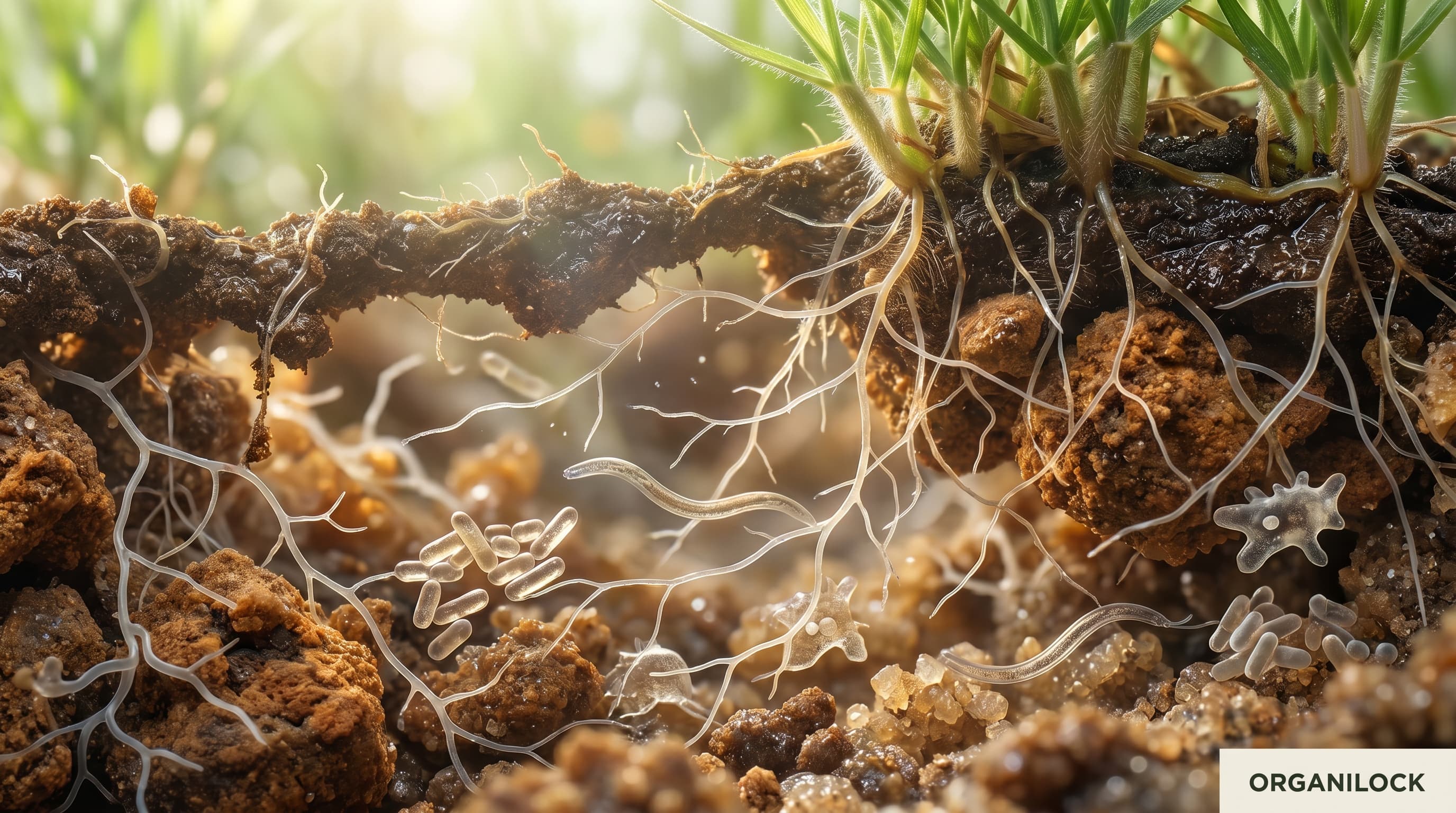
A single plant's needs shift as it grows, which is why one feeding rarely fits a whole season. Seedlings and transplants prioritize phosphorus and biology to build roots and establish. Vegetative growth leans on nitrogen to build leaf and frame. Flowering and fruiting shift the emphasis toward potassium for quality and steady calcium delivery for sound fruit. The beauty of feeding the soil rather than the plant is that a living soil meters nutrients to the plant's changing demand on its own, so you are not forced to micromanage the timing - the biology does much of it for you.
Feeding by setting
Where a plant grows changes how you feed it as much as what it is. Containers and raised beds leach far faster than open ground: frequent watering flushes the mobile nutrients - nitrate first, then potassium and magnesium - out the bottom, so they need more regular replenishment and benefit from products tuned to that setting. Open ground holds a larger reserve and swings more slowly. This is exactly why OrganiLock's Refresh line is built around specific settings - raised beds, containers, houseplants, and landscapes - each tuned to how fast that environment draws down, a subject the use-case lessons cover in detail.
One more useful shorthand is the heavy-feeder versus light-feeder distinction. Corn, tomatoes, squash, brassicas, and most leafy greens are heavy feeders that want rich, well-fed soil; herbs, root crops, legumes, and many native plants are light feeders that grow better lean and resent being pushed. Feeding a light feeder like a heavy one is a common way to get lush plants and poor harvests.
Plain-English takeaway: Containers and raised beds leach fast and need regular replenishment; open ground holds more and swings slowly. And match the amount to the plant - heavy feeders want rich soil, light feeders grow better lean.
Putting it together with the OrganiLock system
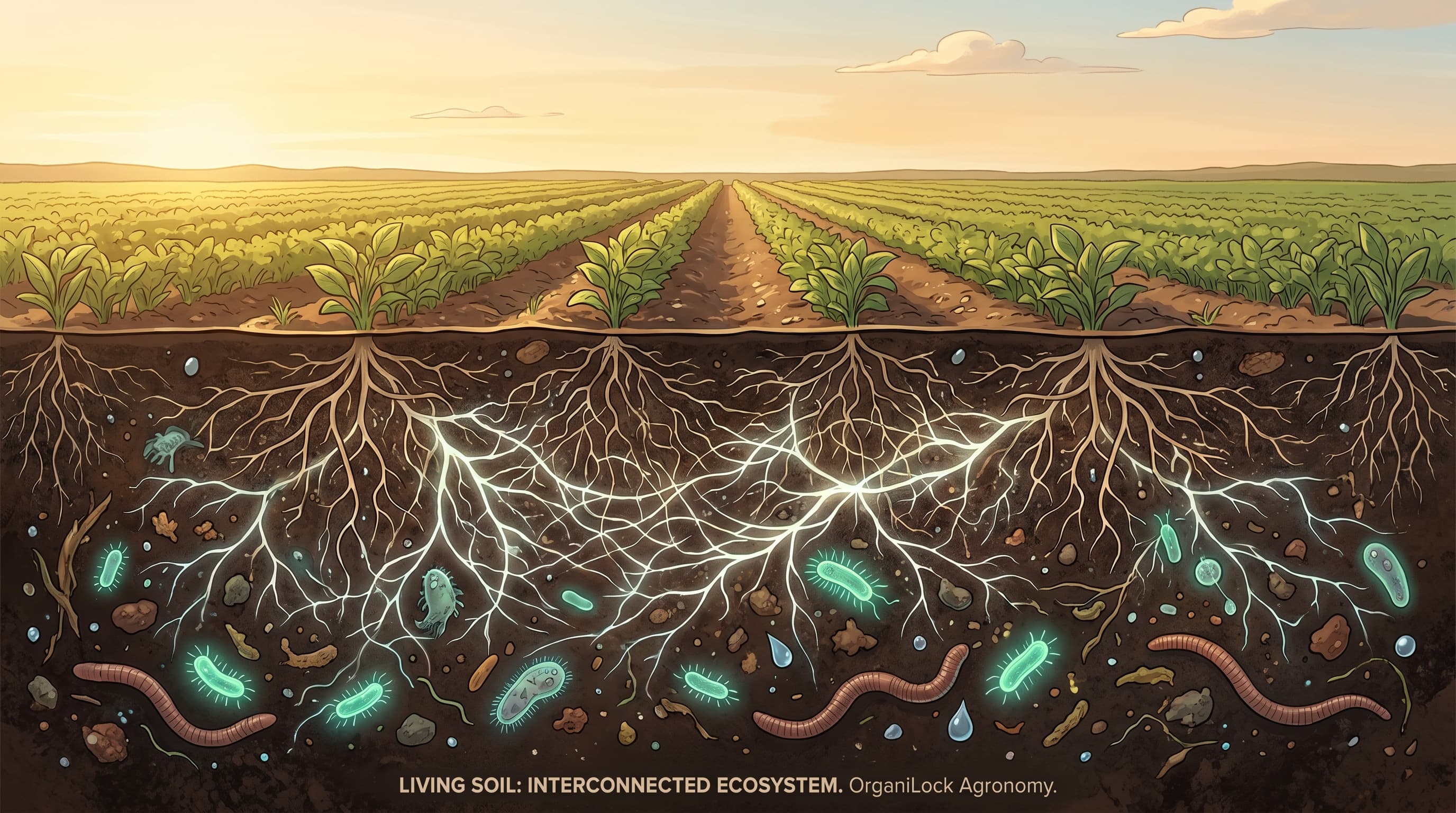
The nutrient rules also explain why OrganiLock's products are built the way they are. Soil Food works as a broad-spectrum foundation for almost any plant, in part because it carries both types of mycorrhizal fungi - the kind that partners with vegetables and flowers and the kind that partners with trees and shrubs - so the same amendment suits a vegetable bed, a flower border, or a new tree. The Refresh line keeps that soil fed in the specific setting you grow in, and Plant Food gives a fast, direct boost when a particular plant wants one, used with the rate discipline any soluble feed calls for. And when it comes to how much to apply, the OrganiLock calculator turns all of this into a number for your particular beds, pots, or planting area, so the guidance in this lesson becomes an actual amount rather than a guess.
Feeding containers and houseplants
Container growing deserves its own note, because it breaks some of the usual rules. A pot or a raised bed is a closed, fast-draining world: there is no deep reserve of native soil to buffer mistakes, every watering flushes mobile nutrients out the bottom, and roots are confined, so salts concentrate quickly and burn is easier. The practical consequences are that containers need lighter, more frequent feeding than open ground, that slow-release and biological inputs are especially valuable because they will not spike the limited soil volume, and that the mix itself matters as much as the feeding - a living, well-built potting medium holds and meters nutrients far better than a sterile one. Houseplants add one more wrinkle: indoors, with low light and slow growth, they need far less feeding than people assume, and more houseplants are killed by overfeeding than by neglect. This is exactly the territory OrganiLock's Refresh line is built for, with versions tuned to containers, houseplants, raised beds, and landscapes.
How much do I actually apply?
Knowing what to feed still leaves the question of how much, and this is where many growers either guess or over-apply. The honest answer is that the right amount depends on the product, the plant, the soil, and the setting - which is precisely why a single rate on the back of a bag is only a starting point. The reliable approach is to start from the product's directions, adjust down for light feeders and up for hungry long-season crops, lean toward less rather than more (you can always add, but you cannot un-burn), and let a soil test catch the cases where the soil is already rich or genuinely short. For OrganiLock products, the calculator turns your specific beds, pots, or planting area into an actual amount, so you are not translating a vague rate into a guess.
And remember that with a biology-first approach the stakes on getting the number exactly right are lower than with soluble feeds: a slow-release, broad-spectrum amendment has a wide margin for error, so "close" is usually good enough. That forgiveness is part of what makes feeding the soil less stressful than chasing precise doses of soluble nutrients.
Try the OrganiLock calculator - size it for your own beds, pots, or planting area ->
A closer look at the trickiest feeders
Four groups cause most of the feeding mistakes, so they are worth a closer look. Fruiting crops are the classic trap: gardeners feed them like leafy crops, get a magnificent green plant, and wonder where the tomatoes went. The fix is to ease off nitrogen once flowering starts and let potassium and steady watering take over - and to remember that blossom-end rot is a watering problem, not a calcium shortage. Lawns are the opposite mistake: they are heavy nitrogen feeders, but the quick soluble feeds people reach for are also the ones most likely to burn, to leach, and to run off into storm drains, which is why a slow-release approach suits a lawn especially well - steady green without the flush and crash.
Trees and shrubs ask for patience. They want slow, steady, balanced feeding and a deep, fungal-rich soil, and the best thing you can do for a new one is often not fertilizer at all but a wide ring of mulch and time to establish - with heavy late-season nitrogen actively avoided so the plant hardens off before winter. Acid-lovers like blueberries and azaleas are a category of their own: their whole struggle is pH. In neutral or alkaline soil they yellow with locked-up iron no matter what you feed, so the real work is acidifying the soil (with elemental sulfur or acidic organic matter) and using the ammonium form of nitrogen, not piling on more nutrients.
Feeding through the season
A simple seasonal rhythm covers most gardens. In spring, build and wake up the soil before and at planting - this is when a foundation amendment does its work, setting up the biology for the year. Through late spring and summer, feed growing and fruiting plants according to what they are - more for the heavy feeders and the long-season fruiting crops, little or nothing for the light feeders and the legumes - and replenish containers and raised beds more often, since they draw down fast. In fall, ease off nitrogen (especially around woody plants), and think about feeding the soil itself for next year with compost, cover crops, and organic matter. Feeding the soil in autumn is one of the most overlooked and highest-return habits in growing.
The most common feeding mistakes
If you avoid a short list of errors, you will out-grow most gardeners by a wide margin.
- Too much nitrogen - the number-one mistake, giving lush plants and poor fruit, weak tissue, and pollution.
- Ignoring pH - feeding harder when the real problem is that nutrients are locked up by the wrong pH.
- Feeding light feeders like heavy ones - pushing herbs, roots, and natives that grow better lean.
- Neglecting containers - forgetting that pots and raised beds leach fast and need regular replenishment.
- Chasing single numbers - dumping a "bloom booster" or a single nutrient instead of feeding a balanced, living soil.
- Guessing instead of testing - adding nutrients by habit rather than letting a soil test say what is actually needed.
If you remember one thing
If all the nutrient detail of this module blurs together, hold onto the single rule it keeps returning to: feed the soil a broad, balanced diet and let the living soil feed your plants. Match the broad strokes to the plant - nitrogen for leaves, balance for fruit, restraint for roots and legumes, patience for trees, pH for acid-lovers - and let biology handle the fine print. That one habit prevents more problems than any amount of corrective feeding ever fixes.
Closing the module
That completes the nutrient story. You have met the full cast of seventeen elements, learned what each does and how to read it, seen how they interact and why balance beats excess, and matched them to the plants and settings you actually grow. One piece remains to make all of it usable: how to read your own soil's test and the labels on the products you buy, and how to put the whole approach into practice. That is Module 4 - the final module before your certificate.