Fall is the secret season of the living-soil gardener - the most overlooked, and arguably the most important, time of the whole year. While most people are winding down and tidying up, the gardener who understands soil is doing the single most valuable thing they will do all year: feeding the soil for next year. This lesson is about that quiet, powerful step. Get fall right and you turn the page to a garden that improves; skip it, and you start each spring from a little further behind.
What is happening in fall
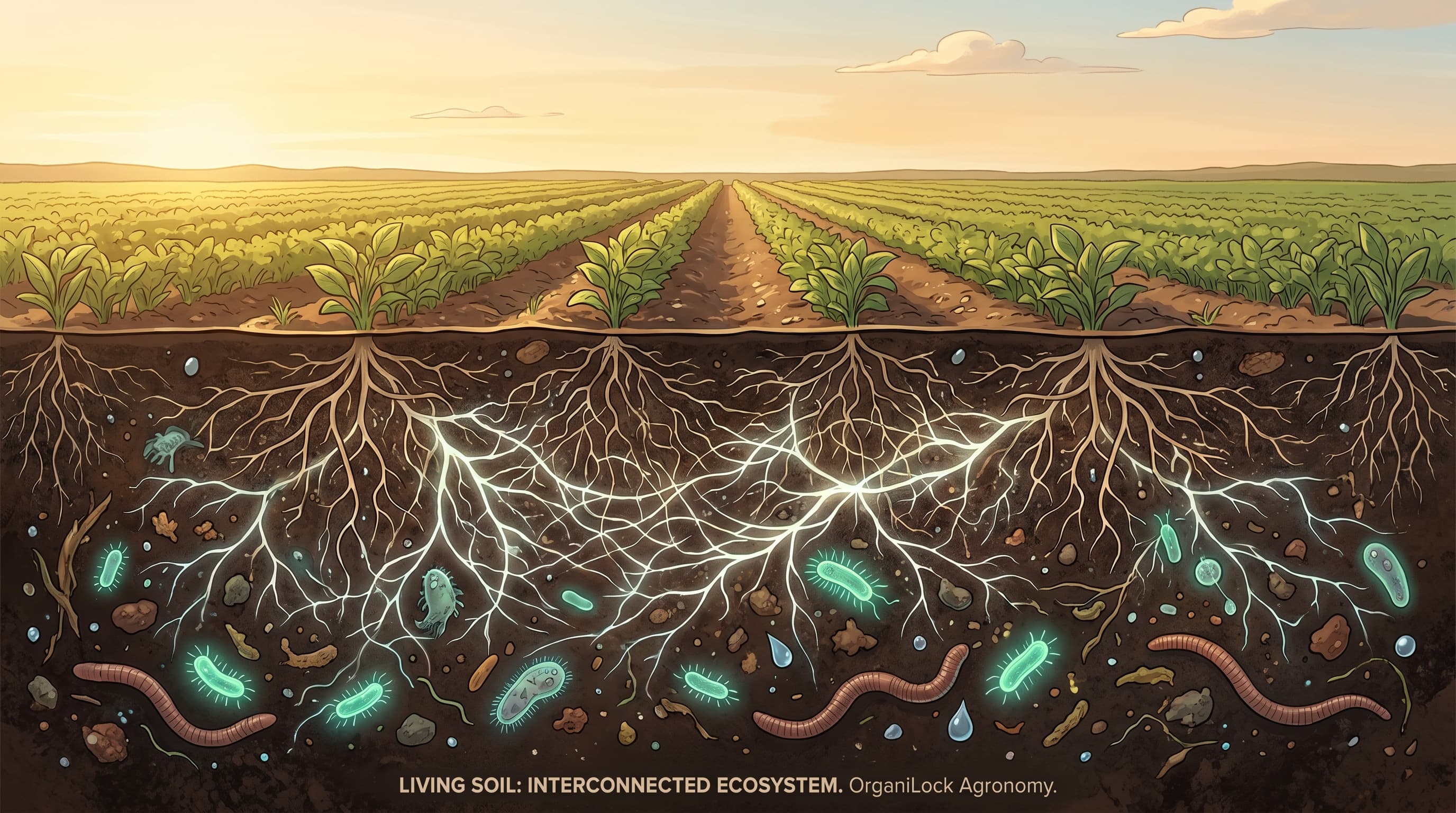
As the days shorten and the air cools, growth above ground winds down - plants finish fruiting, annuals fade, and the garden begins to rest. But here is the key insight: the soil below is still very much alive. The biology keeps working as long as the soil is not frozen, and the cool, moist conditions of fall are excellent for breaking down organic matter. That is what makes fall such an opportunity. The plants no longer need the soil's full output, so anything you give the soil now goes toward rebuilding it - and the active biology has time to work that material in before winter. Fall is when the garden's attention shifts, almost invisibly, from feeding the plants to rebuilding the soil.
The big job: give back
After a season of growth, your soil has given a lot - your hungry summer plants drew down its organic matter and nutrients, and rain leached more away. Fall is the time to give it back, and there are a few good ways to do it:
- Feed the soil with an amendment. Work a soil-building amendment - Soil Food, or the matched Refresh - into your beds and containers after harvest, rebuilding the organic matter and biology the season used up.
- Add organic matter. Spread compost, shredded leaves, or other organic matter over and into the soil; fall's active biology will break it down over the cooler months.
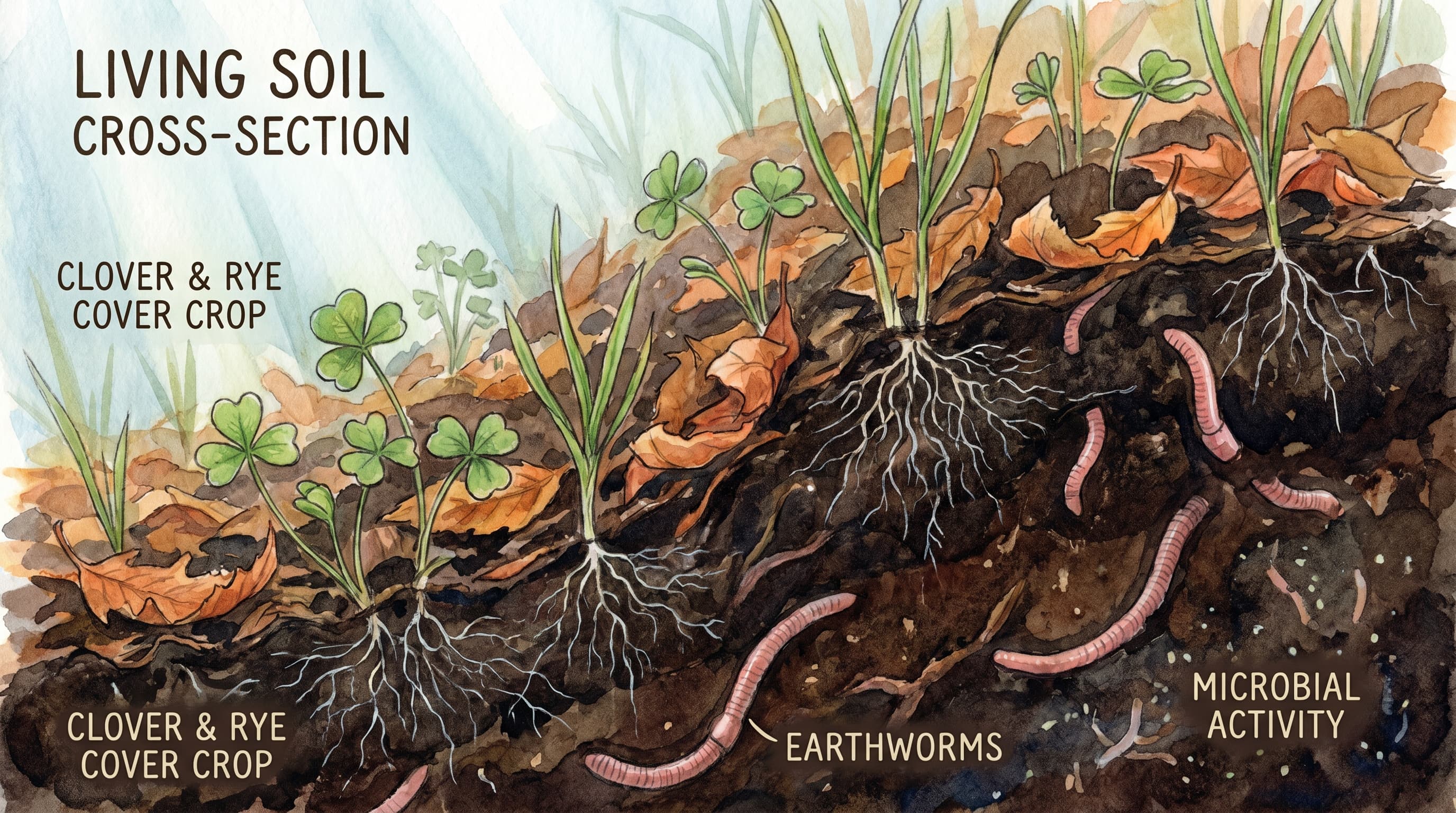
- Sow a cover crop. Where you can, plant a cover crop (a "green manure") that grows over fall and into winter, protecting the soil and adding organic matter and, with legumes, nitrogen when you turn it in or cut it down.
Any of these gives back to the soil what the season took, and the best gardeners do a combination. The point is the same: do not let the soil go into winter depleted and bare. Feed it now, and it rebuilds while you rest.
Why fall feeding matters most
It is worth understanding why this step is so uniquely valuable, because that is what makes it worth the effort. When you feed the soil in fall, the organic matter and amendments have months to break down and integrate before you plant again, with the soil's biology actively working them in through the cool, moist autumn. By spring, that material is no longer a fresh addition sitting on top - it has become part of a rebuilt, enriched, living soil ready to feed. Feed only in spring and you are racing the clock; feed in fall and you give the soil the time it needs to truly transform what you add. This is the quiet difference between gardeners whose soil improves year over year and those whose soil slowly declines: the ones who improve feed the soil in fall, not just the plant in summer. It is the single most leveraged habit in the whole living-soil year.
Do not leave the soil bare
One simple fall principle deserves its own emphasis: never let your soil go into winter naked. Bare soil over winter is exposed to erosion from rain and wind, to the loss of nutrients, and to the structure-breaking effects of repeated freezing and thawing - and it loses the protection that keeps its biology alive. So cover it. A cover crop is the gold standard, actively growing and protecting, but a generous layer of mulch or shredded leaves works too, shielding the soil and feeding it as it breaks down. Covered soil holds its life, its structure, and its nutrients through the hard months; bare soil gives them up. This one habit - keep the soil covered through winter - protects everything you built all year.
Cover crops, made simple
Cover crops sound like advanced gardening, but the idea is simple and the payoff is large, so they are worth a plain explanation. A cover crop is just a planting you grow not to harvest but to feed and protect the soil - things like cereal rye, oats, clover, or field peas, sown over an empty bed in fall. While they grow, their roots hold the soil against erosion and keep its structure open, and their top growth shields the surface through winter. Then, before they set seed in spring, you cut them down or turn them in, and all that growth becomes organic matter that feeds the soil - which is why they are also called "green manure." Legumes like clover and peas do something extra: they work with soil bacteria to capture nitrogen from the air, leaving the soil richer for what you plant next. You do not need a farm to use them - even a single raised bed sown with a handful of cover-crop seed in fall comes through winter protected and improved. If you try one new soil habit this fall, a simple cover crop is a strong choice.
Putting a bed to bed, step by step
Closing out a bed for the year follows an easy sequence once you have done it once. Start by harvesting the last of what is ready and pulling the spent plants, setting aside anything diseased to discard rather than compost. Next, spread your gifts to the soil: a layer of compost or shredded leaves, and a soil-building amendment - Soil Food, or the matched Refresh - worked lightly into the surface. If you are sowing a cover crop, scatter the seed now and rake it in. Then cover whatever is left bare with mulch or leaves, so no soil faces winter naked. Finally, jot a quick note for yourself about how the bed did this year and what you want to grow there next - tomorrow-you will be grateful at planning time. Harvest, clear, feed, sow or cover, note: a single unhurried session per bed, and you have handed it into winter fed and protected, doing its quiet rebuilding while you rest.
Cleanup and looking ahead
Fall is also the natural time for a sensible cleanup, done with the soil in mind. Remove spent and diseased plant material (diseased material is best discarded rather than composted, so it does not carry problems forward), but you do not need to scrub the garden sterile - some leaf litter and standing stems shelter beneficial insects through winter. As you clear, you are also setting up next year: noticing what did well and what struggled, and planning where things will go, with crop rotation in mind. Fall cleanup is less about tidiness for its own sake and more about closing the season responsibly and handing the soil into winter protected and fed. Do it well, and you have already done the hardest and most valuable work of next year's garden.
Plain-English takeaway: Fall is the secret season: growth winds down but the soil is still alive, so give back what the season took - feed the soil with an amendment, add organic matter, and sow a cover crop after harvest - because fall feeding has months to break down and rebuild the soil before spring, the single most leveraged habit of the year; and never leave the soil bare over winter.