Now that you know what each product does, choosing the right one is genuinely easy - it comes down to your situation. This lesson is the decision guide: tell it where you grow and what you want, and it points you to the product. Use it as your quick reference whenever you are deciding what to buy, and you will never have to guess.
Start with where you grow
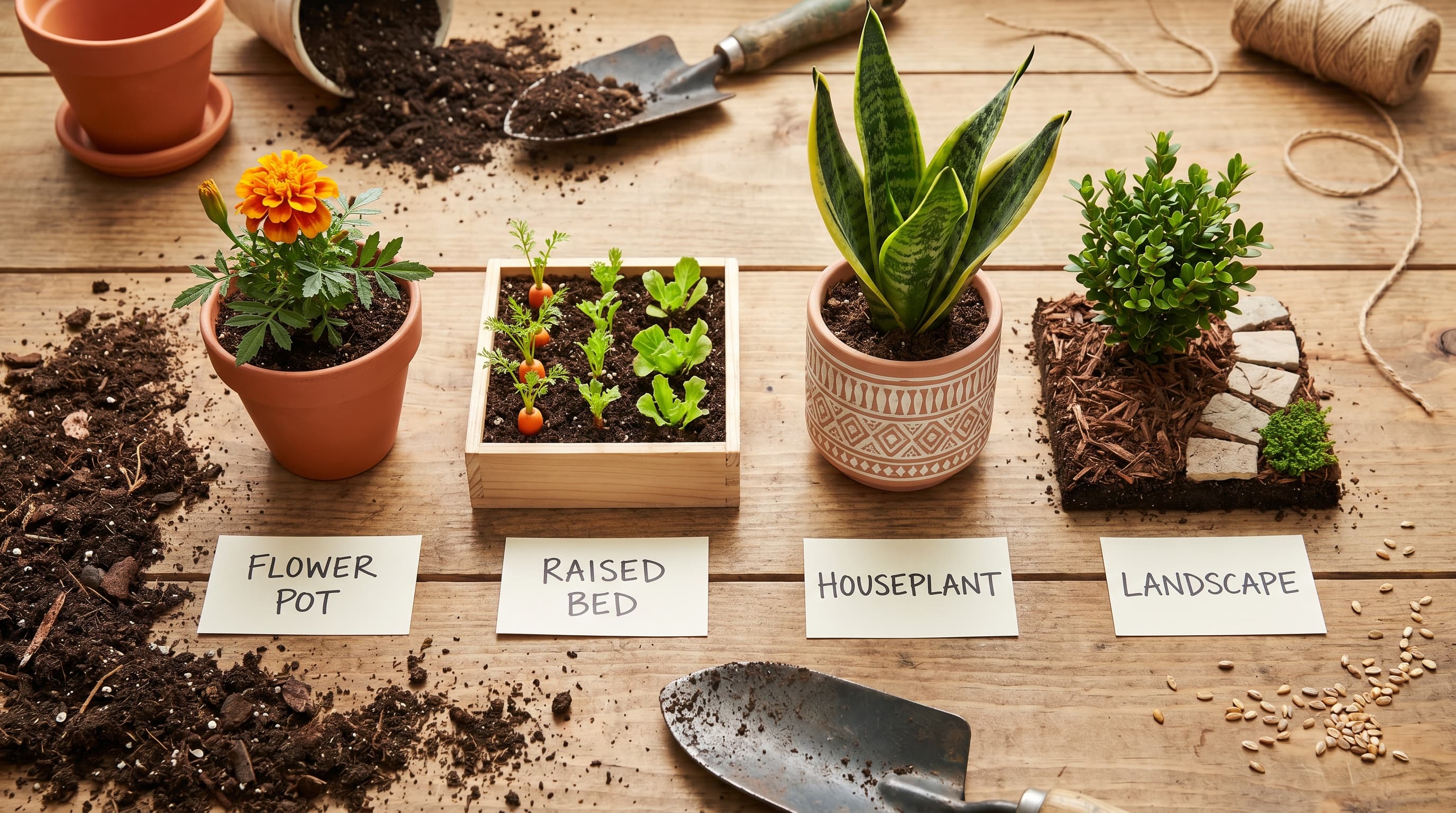
The first and biggest question is simply where your plants live, because that points straight at the right product:
- Rebuilding tired soil, a vegetable garden, or you want one all-purpose product - Soil Food. It is the flagship soil-builder and the OMRI-Listed choice, and it works in beds, in the ground, in larger containers, and across the garden.
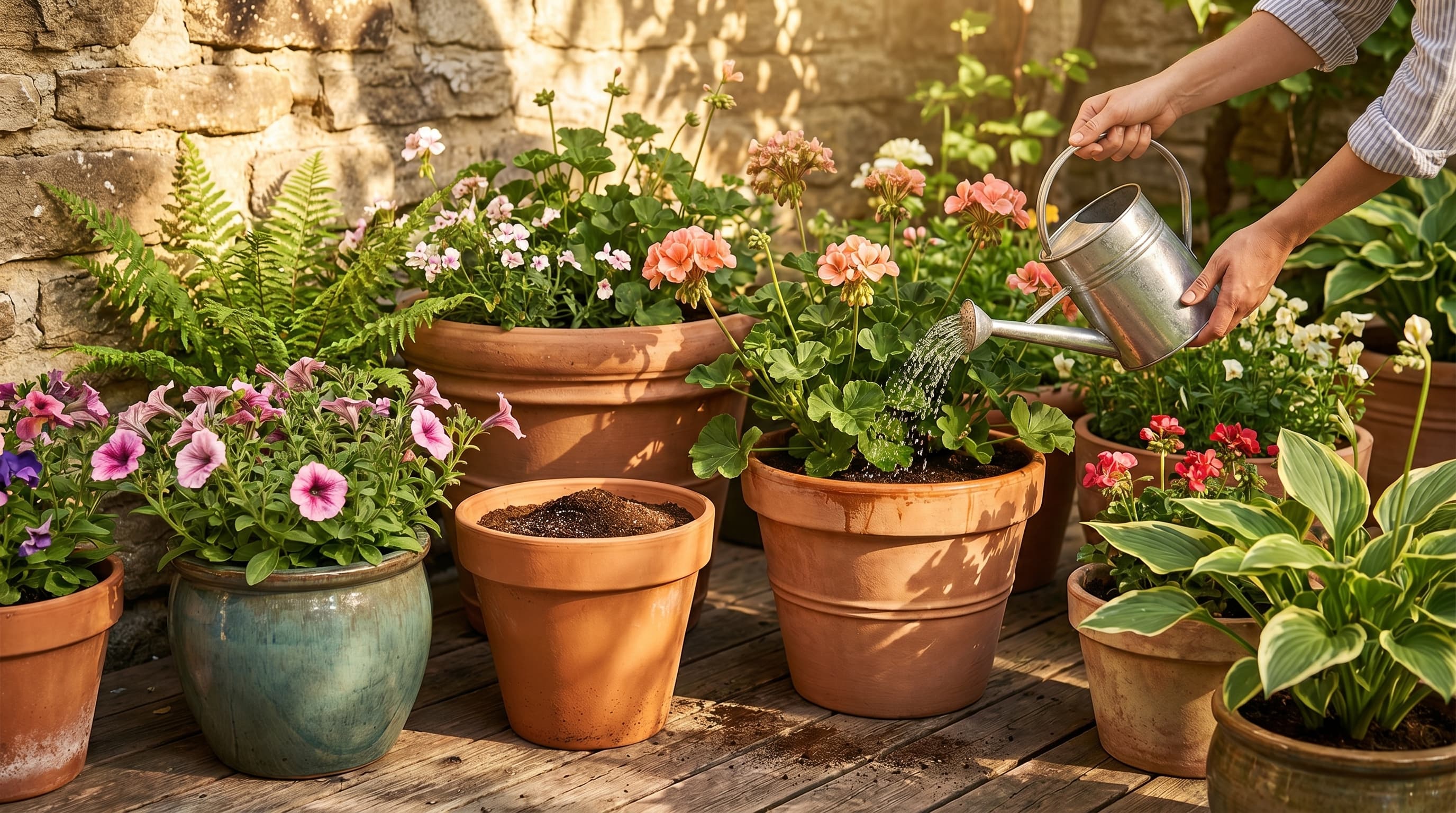
- Flower pots, planters, and outdoor containers - Flower Pot Refresh.
- Indoor houseplants - House Plant Refresh.
- Outdoor raised beds for vegetables or flowers - Raised Bed Refresh.
- Trees, shrubs, perennials, and landscape beds - Landscape Refresh.
For most people, that single question answers it. The Refresh products exist precisely so that you do not have to think about rates and formulations - you pick the one named for your setting, and it is tuned for the job.
Then ask what you want it to do
A second question fine-tunes the choice: are you building, maintaining, or boosting? If you are starting fresh or rescuing depleted soil, you are building - lead with Soil Food (or Raised Bed Refresh for a tidy bed). If your soil is decent and you just want to keep it fed season to season, you are maintaining - the matched Refresh product is your easy answer. And if a plant is growing hard and you want to give it a faster feed on top of all that, you are boosting - that is Plant Food. Notice you can combine them: many gardeners build with Soil Food, maintain with Refresh, and keep Plant Food on hand for a boost. You do not need everything at once, but knowing the three roles lets you assemble exactly the routine your garden wants.
A few common scenarios, sorted
Sometimes it is easiest to see your own situation in someone else's, so here are a few common ones sorted out:
- The new raised-bed vegetable gardener: build the bed's soil with Soil Food mixed in (or Raised Bed Refresh for a quick, tidy option), maintain it each season with Raised Bed Refresh, and keep Plant Food on hand to boost heavy producers like tomatoes.
- The apartment houseplant collector: House Plant Refresh top-dressed monthly is the whole routine, with a little Plant Food at label rate for a plant that is really growing.
- The patio container gardener: Flower Pot Refresh to keep the pots fed, plus Plant Food for a boost on heavy bloomers in summer.
- The whole-yard gardener who wants one product: Soil Food, the all-purpose flagship, used across beds, larger containers, and the garden, with Refresh products added later for specific settings if you like.
- The grower who needs to stay certified organic: Soil Food, the OMRI-Listed product, at the center of the plan.
Find the scenario closest to yours and you have a starting plan. None of these is the only right answer, but each is a sensible, simple place to begin.
You can start with just one
A reassuring word for anyone feeling like they need to buy the whole system at once: you do not. Many gardeners get wonderful results starting with a single product - usually Soil Food for the garden or the matched Refresh for their pots - and adding the others only as they settle in and want to fine-tune. Soil Food on its own builds living soil beautifully; a Refresh product on its own keeps a container thriving; Plant Food is purely optional, an extra boost rather than a necessity. So start where your situation points, with one product, and grow from there. The system is there to give you precision when you want it, not a shopping list you have to complete before you can begin. Beginning simply is not just acceptable - it is often the best way to start.
When organic certification matters
One question deserves its own moment, because it is where accuracy matters most: do you need a product that is OMRI Listed for organic growing? If so, the answer is specific - Soil Food is the OrganiLock product that carries the OMRI Listing. The Refresh products are built on a Soil Food base but are not themselves OMRI Listed, and Plant Food is not organic-certified at all. So a customer growing under organic rules, or who simply wants that certified credential, should reach for Soil Food. It is an honest, important distinction: "OMRI Listed" belongs to Soil Food specifically, not to the whole line, and choosing with that in mind keeps you on solid ground. And it is worth knowing that OMRI Listed is its own specific thing, different from the "USDA Organic" label you see on food at the store - OMRI reviews and approves products like Soil Food for use in organic growing, which is exactly the credential a careful organic gardener is looking for.
Buying for the first time
If this is your first OrganiLock purchase and you are not sure how much to get, a little guidance helps. The honest answer is to let the calculator size it to your actual space rather than guessing, because the right amount depends entirely on how much you are growing - a couple of containers need very little, while a set of raised beds needs more. As a general approach for a first buy, it is reasonable to start with enough for your current garden rather than stocking up, since the dry amendments keep well and you can always buy more once you see how it goes. Current sizes and prices live on the OrganiLock store, so you can match a package to the amount the calculator recommends. The point is simply not to over-buy on a guess or under-buy and run short mid-project: size it to your space, get enough for now, and grow from there. A right-sized first order is the easiest way to start with confidence.
Let the calculator size it
Once you know which product, the OrganiLock calculator answers the next question - how much. Enter your space (your bed dimensions, your number of containers, your area) and it tells you the right amount to buy and apply, so you order what you actually need instead of guessing and ending up with too much or too little. It is the easiest way to turn "I think I need some" into a confident, right-sized order. (Sizes and current prices always come from the live OrganiLock catalog, and exact application rates from the product label - the calculator handles the quantity.) Pick your product by your situation, size it with the calculator, and you are ready to grow.
Plain-English takeaway: Choose by your situation: where you grow points to the product (Soil Food for rebuilding/all-purpose/OMRI organic, the matched Refresh for containers/houseplants/raised beds/landscapes, Plant Food for a boost), what you want to do fine-tunes it (build/maintain/boost), Soil Food is the one for OMRI organic growing, and the calculator sizes the amount.