You have chosen your product; now let us put it to work. Applying OrganiLock is simple and, with the soil-building amendments, refreshingly forgiving. This lesson covers the how and the how-much for each product, so you can apply with confidence and get the most from what you bought. None of it is complicated - the goal is just to get the product where it does the most good and let the living soil take over.
Applying the dry amendments (Soil Food and Refresh)
Soil Food and the Refresh products are dry granular amendments, and you apply them one of two ways depending on whether you are starting or maintaining:
- Mix in - when you are preparing a new bed, pot, or planting area, work the amendment into the top several inches of soil so the biology is spread through the root zone from the start.
- Top-dress - for an established bed, pot, or plant, sprinkle the amendment over the soil surface around the plant and let it settle in with watering. No need to disturb established roots.
Whichever you do, finish by watering it in. Water is the on-switch for the biology - the fungi and microbes activate once the product is moistened - so a thorough watering after applying gets the living soil working. For containers and houseplants, a light monthly top-dress of the matched Refresh keeps the soil fed; for beds and landscapes, work Soil Food or Raised Bed/Landscape Refresh in at the start of the season and again in fall.
How much - and why you can relax
For the exact amount, the OrganiLock calculator sizes it to your space and the product label gives the precise rate. But here is the part that takes the pressure off: Soil Food and the Refresh amendments are gentle, slow-release, and will not burn your plants, so you do not have to measure to the gram. It is genuinely hard to over-apply them - the insoluble nitrogen releases slowly through the soil biology rather than as a concentrated salt, so there is no scorching even if you are generous. That forgiveness is one of the quiet pleasures of the soil-building approach: you apply a sensible amount and water it in, without the anxiety that comes with strong soluble fertilizers. As a rough feel, a common guideline is around a pound of Soil Food per fifty square feet worked into a new bed, or a tablespoon or two per square foot as a top-dress - but the calculator and label are your real guides, and precision is not critical because it cannot burn.
Applying Plant Food
Plant Food is the one product that works differently and does need its label rate respected, because it is a fast soluble feed. You dilute it in water (about half an ounce per gallon) and then apply it one of two ways: as a foliar spray onto the leaves for fast uptake, or as a root drench poured at the base of the plant, about weekly or as needed. The important discipline with Plant Food is to follow the label rate and not mix it stronger in hopes of faster results - because it is soluble, over-concentrating it can burn your plants, especially in containers where it concentrates quickly. Used at rate, foliar or drench, as an occasional boost on top of your soil-building, it gives plants a quick, direct feed when they want one.
A quick tour by setting
Applying looks a little different depending on where you are growing, so here is a quick tour:
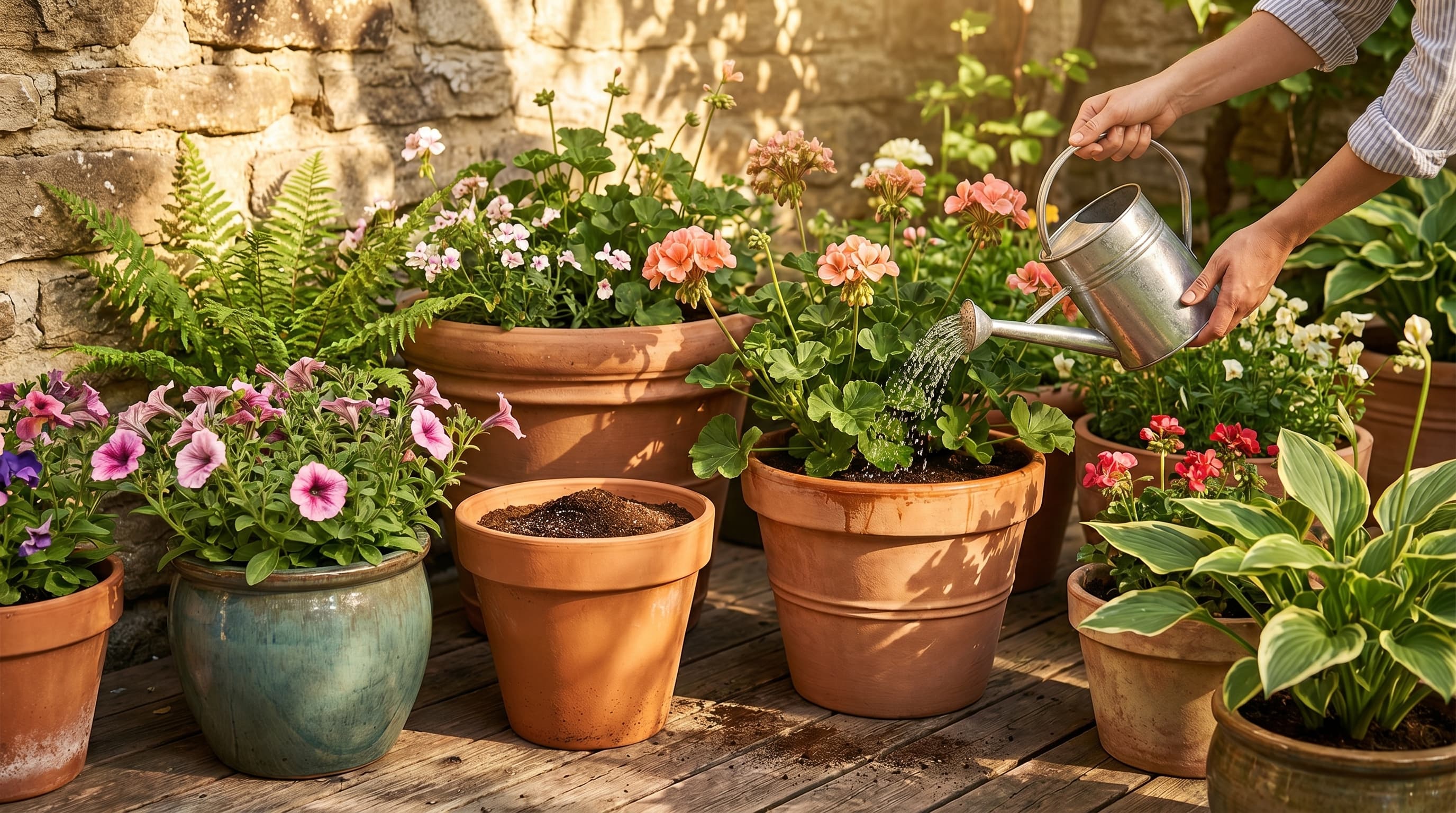
- Containers and houseplants: top-dress a tablespoon or two of the matched Refresh over the soil surface around the plant, about monthly through the growing season, and water in. When you do repot, mix some into the fresh soil.
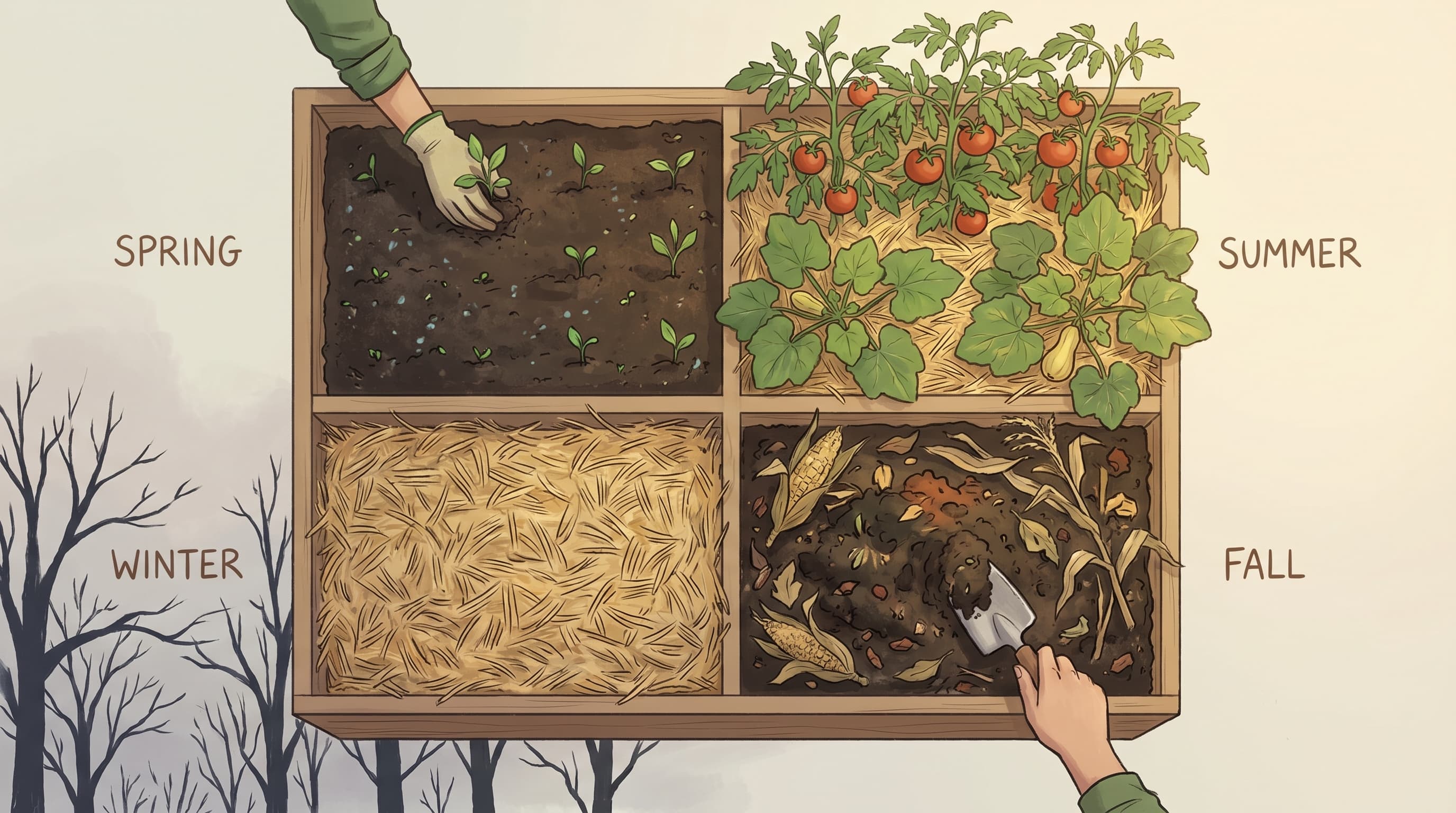
- Raised beds and in-ground vegetable beds: mix Soil Food (or Raised Bed Refresh) into the top few inches at spring prep, top-dress lightly through the season if you like, and feed again in fall.
- Trees, shrubs, and landscape beds: work Landscape Refresh into the planting zone for new plantings, or broadcast and lightly scratch it in around established plants, then water.
- A plant that wants a fast feed anywhere: mix Plant Food at about half an ounce per gallon and spray the leaves or drench the roots, at label rate.
In every case the pattern is the same: get the product into or onto the soil around the roots, and water it in. The setting changes the details, not the principle.
Keeping your product fresh
A practical note that protects your investment: store the dry amendments in a sealed container, kept dry. One of the genuine advantages of OrganiLock's products is that the biology is preserved in a dormant, shelf-stable state until water activates it - so a bag kept dry and sealed stays good for a long time, rather than arriving or going "dead" the way some fragile living-soil products can. The key is simply to keep moisture out until you are ready to use it: reseal opened bags or transfer the product to a sealed container, and store it somewhere dry. Do that and the product waits patiently for you, ready to come to life the moment you apply it and water it in. Liquid Plant Food likewise keeps well sealed; just follow any storage notes on its label.
What to expect after you apply
Set your expectations honestly, and you will be pleased rather than impatient. After you water in a soil-building amendment, the biology wakes up fast - with Soil Food, the fungal threads can be visible in the soil within a day or two, a nice sign that the living soil is coming to life. The payoff in your plants, though, builds over the weeks and the season as that biology establishes and feeds them steadily, and it compounds over the years as your soil gets richer. So you are not buying an overnight transformation; you are building a living soil that feeds your plants steadily and improves over time. Apply it, water it in, and let it work - that patience is exactly what the soil-first approach rewards.
A reassuring word for the first-timer who worries "did I do it right?": with the soil-building amendments, it is genuinely hard to get wrong. You mixed it in or sprinkled it on and watered it - that is the whole technique, and because the product cannot burn, an imprecise amount will not hurt anything. If you used a bit too little, you can simply add more; if you used a bit more than the calculator suggested, no harm done. The only product that rewards care is Plant Food, and there the rule is just "follow the label and do not over-concentrate it." So relax: the forgiving nature of feeding the soil means a beginner gets good results from day one, and any small mis-steps are easily corrected. Confidence comes quickly once you see how little can go wrong.
Plain-English takeaway: Apply the dry amendments (Soil Food, Refresh) by mixing into new soil or top-dressing established plants, then water in to wake the biology - and relax, because they will not burn (the calculator and label guide the amount, but precision is not critical); Plant Food alone is diluted (about 1/2 oz per gallon), sprayed or drenched, and used strictly at label rate because it can burn.